

Ueno Bank Collapse: How a solvency crisis froze savings for half of Paraguay

Ueno Bank Collapse: How a solvency crisis froze savings for half of Paraguay
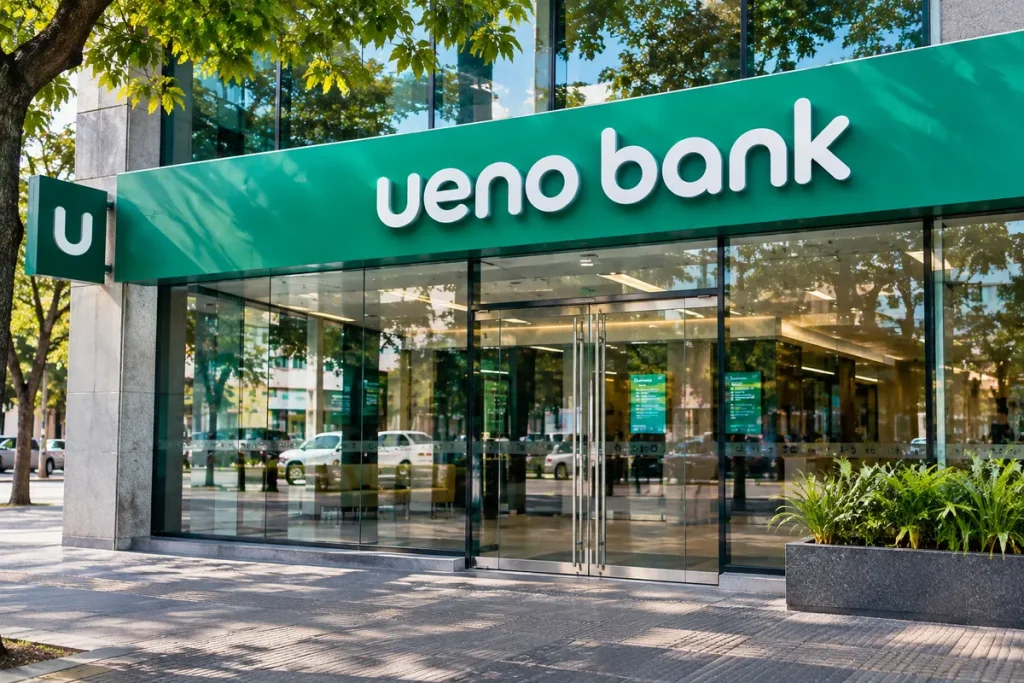
On November 3, 2026, the Central Bank of Paraguay placed Ueno Bank—one of the country’s largest digital lenders—into resolution, shutting down its operations and freezing all customer accounts. The decision followed a severe deterioration in the bank’s solvency ratio, which had fallen below 50% of the legal minimum required by Paraguayan regulators. The central bank’s board voted unanimously to initiate the process, citing accounting adjustments that revealed a critical capital shortfall.
Ueno Bank served approximately 3 million customers, a figure equivalent to roughly 60% of Paraguay’s adult population. The bank also managed between $800 million and $850 million in public funds, including about $380 million from the Instituto de Previsión Social, the state pension fund that supports retirement and healthcare coverage for workers. As a result of the intervention, customers were immediately unable to access their money through the bank’s app, cards, or branches. The Central Bank of Paraguay confirmed that neither the app, nor the cards, nor any service was active as of the intervention date.
The collapse was triggered by a sudden drop in Ueno’s solvency ratio—a measure of a bank’s capital relative to its risk-weighted assets. As recently as March 2026, the bank had reported a capital ratio of 15.01% against a required minimum of 12%. However, subsequent adjustments to its financial statements during a regularization process pushed the ratio below half of the legal threshold, prompting the central bank to act. The central bank has characterized the case as isolated, noting that the broader Paraguayan financial system maintains a capital ratio of 16.95% and a delinquency rate of 2.53%.
To protect depositors, Paraguay’s Deposit Guarantee Fund was activated. The fund covers savings up to 75 minimum wages per person and per institution, equivalent to approximately 228.3 million guaraníes or about $38,300. The Central Bank of Paraguay announced an initial payment of up to 10 million guaraníes for affected depositors, with additional payments to follow according to a schedule to be published. Any outstanding debts owed to Ueno Bank by depositors are deducted before the guarantee is paid.
The political consequences were immediate. President Santiago Peña, who had previously held shares in Ueno’s holding company and sold them in April 2025, faced an impeachment push from opposition lawmakers. Critics cited his past financial ties to the bank and two loans he had received from Ueno as grounds for misconduct allegations. On November 5, 2026, Peña resigned amid mounting pressure and protests. The head of the Central Bank, Carlos Carvallo—a former Ueno CEO—also tendered his resignation.
Protests erupted across the country as thousands of customers gathered outside Ueno’s headquarters in Asunción and its 75 branches, demanding access to their savings. The bank’s closure left many unable to pay for basic necessities, including medicine and food, creating scenes of extreme tension and despair. The government has stated that it will investigate responsibilities and apply corresponding sanctions, while seeking to reassure the public that the rest of the banking system remains sound.

