

UK defends military partnership with Kenya, says reforms underway at BATUK

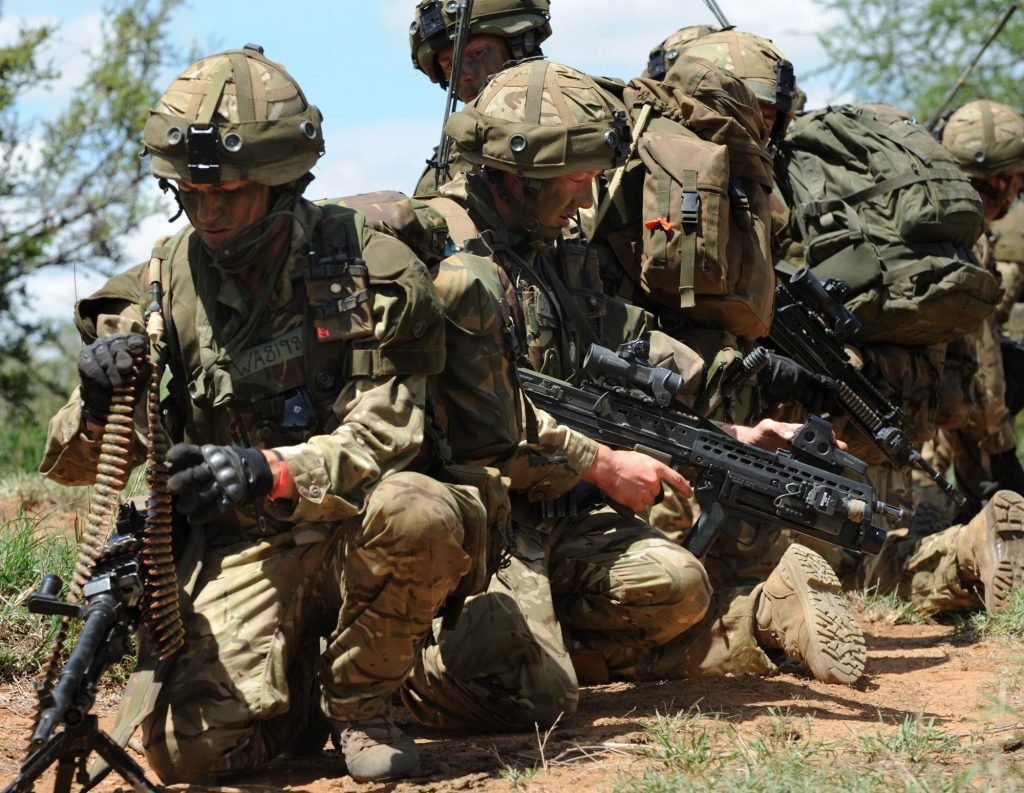
The United Kingdom defended its military partnership with Kenya, saying significant reforms have been implemented at the British Army Training Unit Kenya (BATUK) to address concerns raised by the Kenyan Parliament over the conduct of British soldiers.
In a statement issued following remarks made in the Kenyan Parliament on Friday , the UK Ministry of Defence (MoD) said it “highly values” its defence relationship with Kenya, describing it as a partnership that supports training, education and capability development to counter shared security threats.
“The UK takes very seriously the issues and challenges which have arisen in relation to our defence presence in Kenya,” the ministry said.
The MoD said that since the publication of the National Assembly Defence, Intelligence and Foreign Relations Committee (DIFRC) report on BATUK, the two governments had worked together to implement several recommendations.
According to the UK, joint operating procedures for dealing with unexploded ordnance have been finalised, environmental and land-use compliance documentation has been submitted, and new measures introduced to prevent sexual exploitation and abuse by British personnel.
Senior UK officials also met Kenyan government officials, members of Parliament and the Defence, Intelligence and Foreign Relations Committee in June to review progress and provide updates on corporate social responsibility programmes undertaken by BATUK.
The ministry reiterated that British personnel stationed in Kenya are required to comply fully with the Kenyan Constitution and all applicable laws.
“The UK expects the highest standard of behaviour from our personnel. UK personnel in Kenya must abide by and respect the Kenyan Constitution, law and regulations at all times,” the statement said.
It added that Britain stands ready to investigate allegations falling within its jurisdiction while continuing to work with the Kenyan government to address historical failures and prevent future misconduct.
On legal jurisdiction, the MoD said the Defence Cooperation Agreement between Kenya and the UK clearly outlines how criminal jurisdiction is determined, in line with international practice.
It noted that sexual offences are always under Kenyan jurisdiction unless they involve only members of the visiting forces, civilian component or their dependants.
The ministry also clarified that, under the UK’s constitutional arrangements, the negotiation and signing of international treaties are undertaken by the British Government rather than Parliament.
It said it had formally communicated its position on Kenya’s reservations regarding the Defence Cooperation Agreement to the Kenyan government and shared the same with the Defence, Intelligence and Foreign Relations Committee.
Addressing the long-running case of murdered Kenyan woman Agnes Wanjiru, whose death has been linked to a British soldier, the MoD said Kenya retains jurisdiction over the case and that the UK has continued supporting investigations whenever requested.
“Our thoughts remain with the family of Agnes Wanjiru and we remain absolutely committed to helping them secure justice,” the ministry said.
It added that a UK national wanted by Kenyan authorities in connection with the alleged 2012 murder was arrested by the UK’s National Crime Agency in November 2025.
The ministry also highlighted reforms introduced following a 2025 British Army Service Inquiry into allegations of unacceptable behaviour by UK soldiers in Kenya.
The inquiry resulted in mandatory pre-deployment training on sexual exploitation and abuse, enhanced behavioural training and the introduction of a new Army Command Standing Order on sexual exploitation and abuse.
“The UK MOD has a zero-tolerance approach to sexual exploitation and abuse, and personnel found to have breached this policy face dismissal,” the statement said.
On paternity disputes involving British soldiers and Kenyan women, the ministry said it continues to work closely with the Kenyan government to improve systems for handling such cases.
It noted that under Kenyan law both parents have a legal responsibility to maintain a child, with the Children’s Act providing for maintenance orders through Kenyan courts where necessary.
The MoD said all British soldiers deploying to Kenya must complete mandatory training on unacceptable behaviour and United Nations courses on sexual conduct, including modules covering pregnancy and children.
Before deployment, soldiers receive behavioural briefings from their units or BATUK, while additional mandatory briefings are conducted upon arrival in Kenya to reinforce expectations and explain the legal and social consequences of misconduct in the Kenyan context.
The UK concluded by expressing its commitment to continued engagement with the Kenyan government to strengthen what it described as a deep and enduring military partnership that advances the interests of both countries.

