

UK sanctions networks behind trafficking Kenyans to fight for Russia in Ukraine war

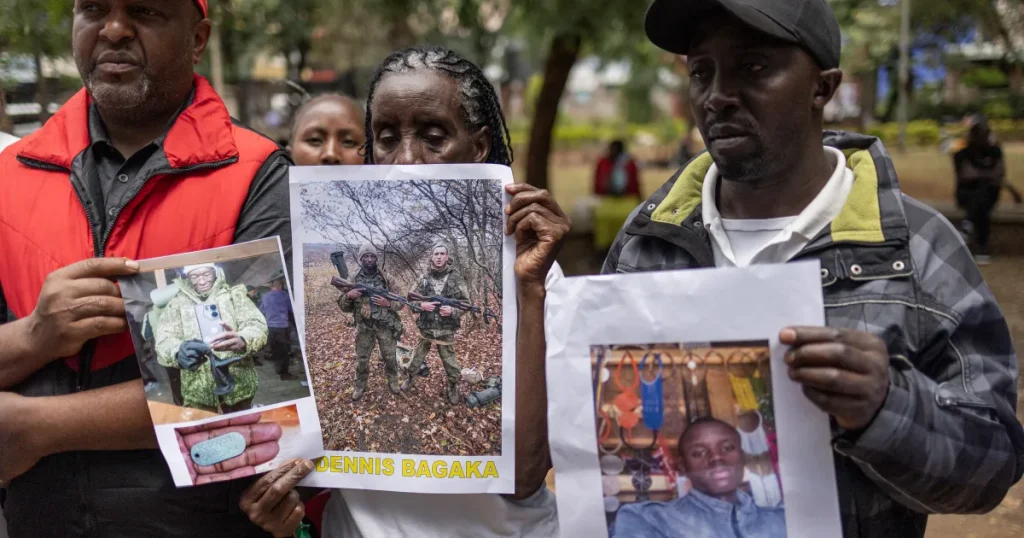
The UK imposed a fresh wave of sanctions targeting Russia’s drone supply chains and networks accused of exploiting foreign migrants — including Kenyans — to support Moscow’s war in Ukraine.
The Foreign Office announced 17 designations under its global irregular migration sanctions regime, relating to what it said were trafficking networks facilitating the travel of people to be sent “to the front line as cannon fodder”.
Britain also added 18 designations under its Russia sanctions regime, several of which related to a programme which it said used “deceptive practices” to recruit people, largely from Cameroon, to produce drones.
Sanctions minister Stephen Doughty said in a statement: “The practice of exploiting vulnerable people to prop up Russia’s failing and illegal war in Ukraine is barbaric.”
He added that the sanctions would “disrupt the operations of those trafficking migrants as cannon fodder and feeding (Russian President Vladimir) Putin’s drone factories with illicit components”.
Among those listed is Pavel Nikitin, whose company develops Russia’s VT-40 drone, described as a cheap, mass-produced attack drone used extensively in assaults on Ukraine.
The UK also sanctioned three individuals linked to recruitment efforts for fighters, including Mikhail Lyapin, whom it described as a key facilitator in the trafficking of Kenyan nationals to Russia on promises of lucrative jobs.
The UK said Kenyans were allegedly coerced into signing contracts with the Russian military and deployed with minimal training.
At least 16 Kenyans were as of April 2026 reported missing in action in Russia.
Prime Cabinet Secretary and Foreign Affairs Minister Musalia Mudavadi made the revelations amid growing concerns about the unlawful enlistment of Kenyans in foreign military operations.
According to Mudavadi, the number of missing Kenyans increased from 10 to 16.
He pointed out that it is still unclear what their precise situation is.
“When we say missing in action, we cannot pronounce outrightly whether they are dead or whether they are captured,” he told the Senate committee on national security, defence, and foreign relations.
The Prime Cabinet Secretary said the matter had attracted national concern, particularly because it involves the unlawful recruitment of Kenyan youth into Russia’s “special military operations.”
Mudavadi claims that 165 of the 252 Kenyans who are thought to have enrolled are presently serving in combat.
Two are prisoners of war, he continued, while 38 others are admitted under restricted access to various Russian hospitals.
“It is illegal to be enlisted into a foreign military without the approval of the state… These Kenyans have broken the law. But we are willing to help them come out of the situation,” he said.
According to Mudavadi, Kenya’s diplomatic mission in Russia has only six senior personnel, who have made efforts in repatriating 47 citizens so far.
“There are about 1,000 Kenyan nationals living and working in Russia, including around 300 students. If the mission has helped 47, we can appreciate how lean the team is,” he said.
The government continues to monitor the situation as it seeks diplomatic and legal avenues to secure the safety and return of affected Kenyans.
Mid March, the Foreign Affairs Minister travelled to Moscow in an effort to hold diplomatic talks with Russian authorities.
There, Mudavadi held talks with his Russian counterpart Sergey Lavrov, where they reached an agreement on the fate of Kenyans recruited in the Russian military combat against Ukraine.