

US-based philanthropist ends years of water crisis at Gisage Mixed School in Nyamira

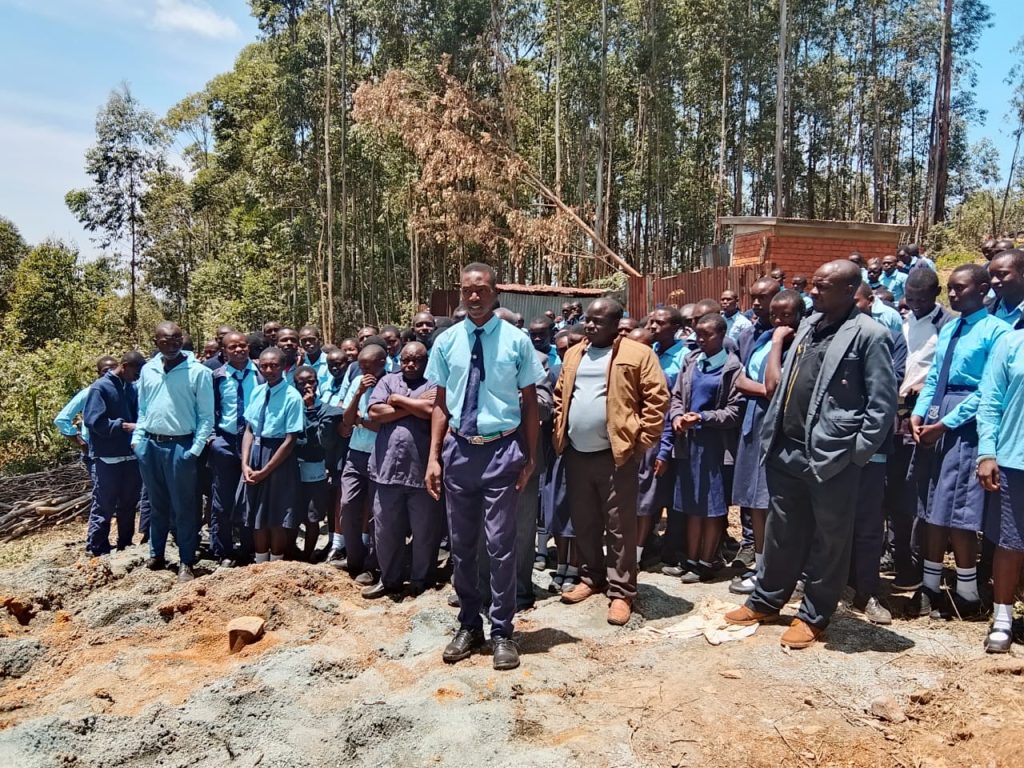
For years, dawn at Gisage Mixed Secondary School in Nyamira County signaled more than the start of classes.
Before the first bell rang, students would trek in small groups carrying yellow jerrycans, walking nearly two kilometres to fetch water from nearby springs.
At times, the school hired donkeys to help transport the precious commodity. Even that was never enough.
The daily search for water consumed valuable learning time and exposed students to health and safety risks.
Principal Thomas Bundi said the persistent shortage disrupted nearly every aspect of school life.
“We were forced to hire donkeys to transport water from the springs two kilometres away. It was not a good sight,” Bundi recalled during an interview this week.
During severe dry spells, the school occasionally turned to boda boda riders to ferry water — a costly measure that strained its limited budget.
“Classes would sometimes be disrupted because students had to fetch water instead of being in lessons,” he said.
Located on a rocky hilltop in Magwagwa, Gisage Mixed frequently experienced prolonged shortages during dry seasons. Teachers and students endured days without adequate water for drinking, cooking, or sanitation.
The feeding programme occasionally stalled, and maintaining proper hygiene standards proved difficult.
“At one point, we had to ration water strictly. Each boarding student received a small allocation per day. It was never enough,” Bundi said.
The lack of reliable water raised fears of possible outbreaks of waterborne diseases, though none were reported. Some concerned parents transferred their children to other schools, while others appealed to local leaders for help — appeals that went unanswered.
Relief finally came last Friday when a US-based philanthropist and friend of the principal stepped in to finance the drilling of a borehole within the school compound.
After weeks of surveying and drilling, clean water finally gushed from the ground — a moment Bundi described as transformational.
“It feels like a new chapter has opened for us,” said Job Nyangau, one of the school cooks. “For the first time, we will have reliable and safe water right here in our compound.”
The borehole is nearing completion, with final touches expected soon.
School administrators say the project will stabilize the feeding programme and ensure students no longer miss lessons to fetch water. Bundi also projects increased enrolment as parents gain renewed confidence in the school’s facilities.
Beyond addressing immediate needs, the school now plans to establish a kitchen garden to supplement meals and introduce environmental conservation lessons focused on sustainable water use.
“Our dream is not just to survive but to thrive,” Bundi said. “Water has given us dignity, health, and hope.”
Students expressed relief that they can now dedicate more time to their studies, while teachers noted that improved access to clean water will significantly enhance hygiene standards in dormitories and sanitation facilities.
Residents living near the school also welcomed the development, describing the borehole as life-changing, especially during dry seasons when nearby streams shrink or dry up completely.
However, some voiced frustration over what they termed years of neglect by local leaders.
“We have voted and attended meetings, but our pleas for water were ignored,” said one villager. “It is disappointing that it took a private initiative to solve a problem we have faced for decades.”
They expressed hope that the project will serve as a wake-up call for public officials to prioritize essential services such as water, education and healthcare in rural areas.

