

US Fed holds interest rates and defends independence

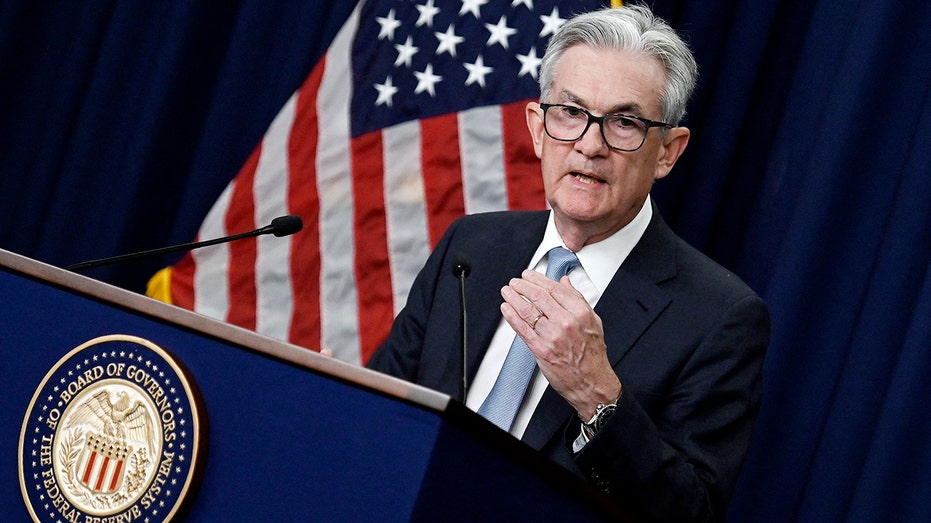
The US Federal Reserve has voted to hold interest rates as its chair, Jerome Powell, defended the importance of central bank independence.
The Fed said it will keep its key lending rate between 3.5% to 3.75%, stating that economic activity in the US “has been expanding at a solid pace”.
US President Donald Trump has frequently criticised Powell for not cutting rates quickly enough. Federal prosecutors recently opened a criminal investigation over testimony Powell gave to the Senate about renovations to Fed buildings.
On Wednesday, Powell declined to comment on the probe but he said that if a central bank lost its independence “it would be hard to restore the credibility of the institution”.
Powell previously said he believed the federal investigation stemmed from Trump’s anger at the pace of interest rate cuts.
On Wednesday, at his first press conference since condemning the Department of Justice (DoJ) probe, he stressed the importance of central bank independence to ensure monetary policy is not leveraged for political gain.
“It’s just an institutional arrangement that has served the people well – to not have direct elected official control over the setting of monetary policy,” he said.
“If you lose that, it first of all would be hard to restore the credibility of the institution,” Powell said, adding that he is “strongly committed” to retaining the Fed’s independence.
Trump is soon expected to announce a replacement for Powell who steps down as chair in May.
Former heads of the US central bank also strongly criticised the DoJ investigation, describing it as a bid to undermine the Fed’s autonomy.
Commenting on the decision to keep rates on hold, Powell said: “The economy has once again surprised us with its strength.”
There are signs the employment market is stabilising – job creation is sluggish but the unemployment rate has ticked lower. Policymakers are continuing to monitor the effect on the economy of three interest cuts last year.
Powell said: “We still have some tension between employment and inflation, but it’s less than it was.
“The outlook for economic activity has clearly improved since the last meeting.”
Concerns about a slowing job market outweighed inflation fears in the second half of 2025. Cutting interest rates is aimed at stimulating the job market by creating lower borrowing costs for businesses.
Jitters about a deteriorating jobs market have eased in recent weeks but inflation remains above the Fed’s 2% target.
The S&P 500 stock index fluctuated ahead of Powell’s remarks, briefly surpassing 7,000 points for the first time, before closing virtually unchanged.
Two Fed officials voted in favour of an interest rate cut – Stephen Miran, who is on leave from his post at the White House where he leads Trump’s Council of Economic Advisers, and Christopher Waller, a Trump appointee whose name has been floated as contender to succeed Powell.
Despite those dissents, the Fed board pointed to a strengthening in recent economic data, which gave policymakers confidence to hold rates steady
“The Fed song remains the same,” said Ellen Zentner, chief economic strategist for Morgan Stanley Wealth Management. “Lower interest rates may be coming but investors will have to remain patient.
“While the Fed’s pause may not satisfy everyone, it still leaves a path for cuts later this year,” she added.
Trump has publicly urged Powell to cut interest rates in order to reduce the US government’s hefty borrowing costs and to make it easier for Americans to get mortgages and other loans.
He has also launched personal attacks against Powell – whom the president appointed as Fed chair during his first term in the White House – calling the central banker a “major loser” and “numbskull”.
The president has also taken aim at Fed governor Lisa Cook, who he wants to remove. He has accused her of engaging in mortgage fraud, which she has denied. The Supreme Court is now weighing the case.
Justices from the left and right last week cited concerns about implications for central bank independence and the wider economy.
Powell attended the Supreme Court hearing and on Wednesday called it “perhaps the most important legal case in the Fed’s 113-year history”.
Another wild card looming over the bank is Trump’s pick to replace Powell at the end of his term.
Whoever steps into the role will inevitably face credibility concerns, as Trump’s pressure on the Fed has raised questions about whether the next chair will act independently.
BlackRock executive Rick Rieder has emerged in recent days as a front-runner.
By BBC News

