

US supports efforts to counter Weapons of Mass Destruction, enhance investigations

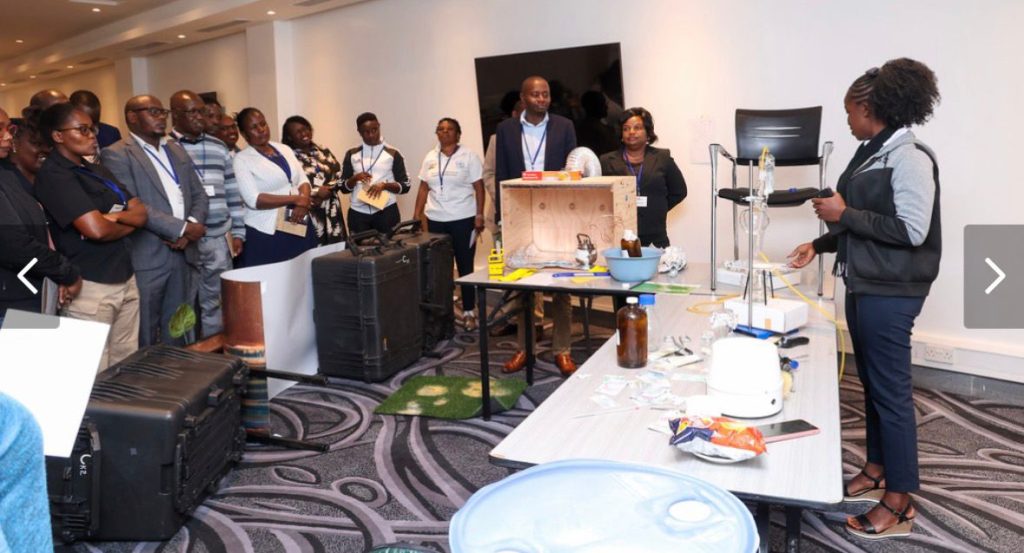
The U.S. Embassy in Kenya partnered with Kenyan scientists, police, and courts over the past four months to provide specialized training to prevent and respond to chemical, biological, radiological, nuclear, and explosive (CBRNE) threats.
Supported jointly by the Department of State’s Bureau of Arms Control and Nonproliferation, and the U.S. Embassy, these workshops underscore the shared U.S.–Kenya commitment to enhancing
national and regional security.
The training began in June with an intensive course on countering clandestine labs. U.S. experts worked with Kenyan law enforcement, forensic specialists, and CBRNE teams to identify hidden places where chemical, biological, or explosive materials might be made or weaponized.
Participants learned how to collect evidence, test hazardous materials, and use practical strategies to stop threats before they can harm the public. In September, the focus shifted from the lab to the courtroom. A follow-on workshop on CBRNE prosecutions and investigations brought together prosecutors, investigators, and judges to connect strong science with strong justice.
Participants examined how evidence from CBRNE investigations can support prosecutions and how Kenyan
investigators and prosecutors can work with international partners on cross-border cases.
High Court judge Justice Alexander Muteti told participants that “cases are only as strong as the investigative foundation supporting them,” highlighting the importance of impartiality, coordination, and public trust when handling terrorism-related cases that affect everyone.
“This two-part series shows what true partnership looks like,” said U.S. Embassy Chargé d’Affaires Susan Burns.
“By bringing together scientists, investigators, and prosecutors, we are building a system that is stronger than the sum of its parts. Kenya is not just protecting its own citizens, it’s setting a standard for the region.”
Each workshop included ‘train-the-trainers’ segments, ensuring that participants can pass their knowledge on to colleagues across the country.
This approach means the impact of the training will continue long after the workshops conclude.

