

What is a Scarier Wormhole or a Black Hole?

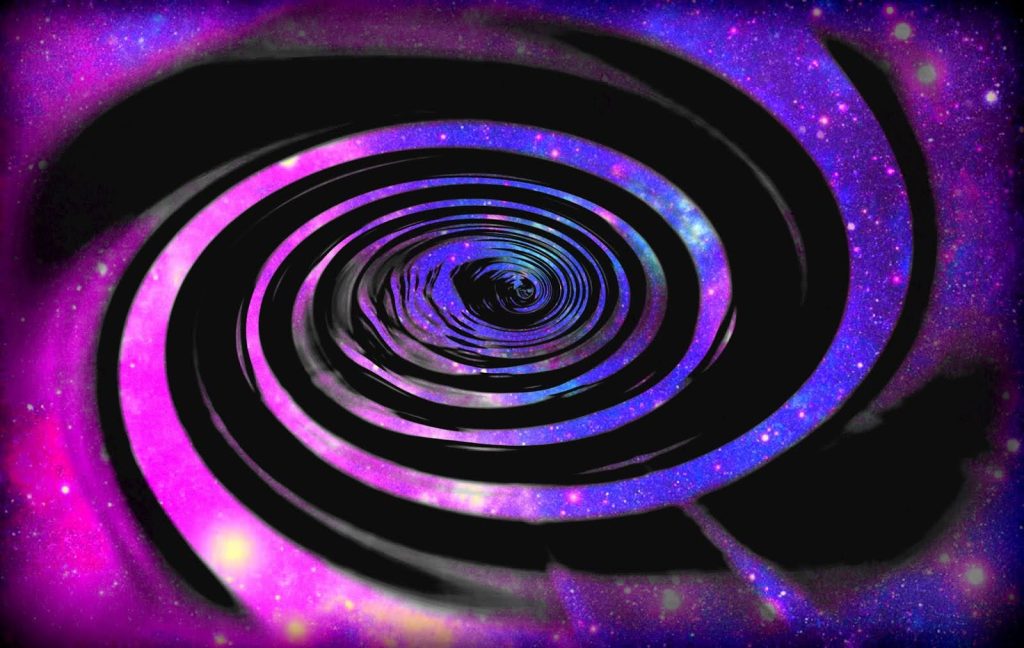
What is a Scarier Wormhole or a Black Hole
Wormhole and Black Hole Difference: Facts and Theories
Space is fascinating enough as we know it, but for lots of scientists and enthusiasts what we don’t know about it is even more attractive. Possibilities and opportunities a quite enticing to marvel at, especially when we have some examples of scientific prophecies and mathematical calculations proved to be real. For now, the wormhole vs black hole discussion is theoretical, as a wormhole is (yet) a fictional category, but so was a black hole once. So, what are they?
Black Hole: The Theory and Confirmation
Both wormhole and black hole are consistent with Einstein’s work, though only the latter is confirmed. The general relativity theory suggests that sufficient matter shrinking into a small volume would create a black hole with gravity strong enough even light can’t escape it. Einstein wasn’t the first to approach the matter though. In the 18th century, objects with gravitation so strong it’s inescapable were first mentioned by Pierre-Simon Laplace and John Michell as a possibility. In 1916, a German astronomer and physicist Karl Schwarzschild conducted an influential research now known as the Schwarzschild metric, which provided the solution to characterizing a black hole. The term ‘black hole’ was first used by the physicist John Wheeler in 1968 while he studied the possible properties of the phenomena.
As we can see, black holes were not discovered by bumping into them in the wild; they were calculated as something logically possible with enough scientific proof to form a whole picture of something we were not able to see. As black holes suck in everything including light, they are invisible to human eyes, as there is no spectre we can grasp. However, now we have a photo taken in radio wavelength, and with this final confirmation, future studies might be even more exciting. What is the closest black hole to Earth? It is called Gaia BH1.

Wormhole Theory
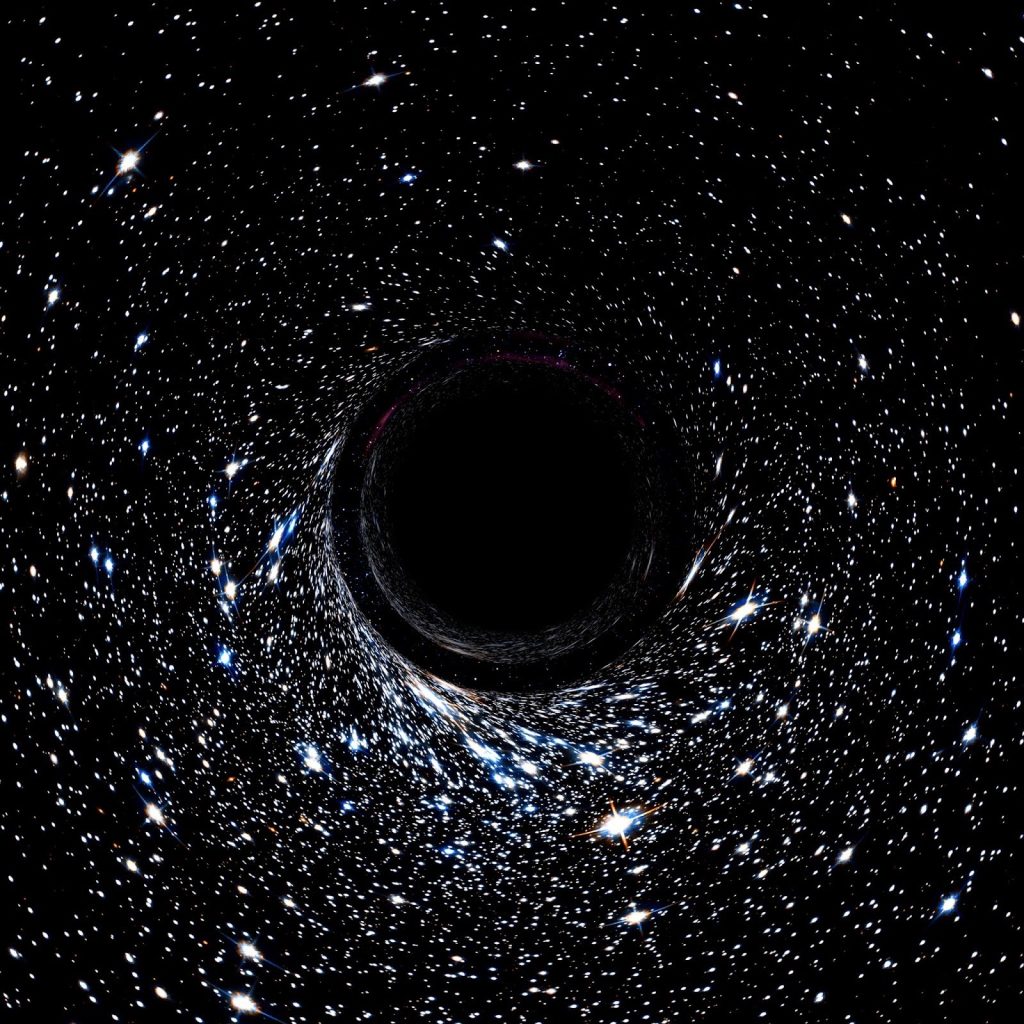
Do wormholes exist out of the theory? A wormhole is described as a structure that connects two distant points in spacetime like a tunnel. They are quite possible according to the theory of relativity, though we still don’t know if they exist.
What is the law of a wormhole? It implies that Einstein-Rosen Bridges (another name for it) can decrease the time needed to travel from one point to another significantly, creating shortcuts for space travel. However, it’s hard to predict by how much.
An interesting idea to think about is this: if black holes suck in everything that approaches them, where is this everything thrown out? Are black holes and wormholes the same? With our limited knowledge about either, we cannot tell. But the possibility is exciting, as it opens a theoretical opportunity to travel through space and time.
Science fiction has been treating the concept as real for many years now, and we know some fictional ideas have come to life in the past. With both wormholes and black holes in space, and especially if they are one, time and space leaps could be not just a dream.
So, what is the difference between a wormhole and a black hole? The main point is one of them is still not proven real. Another one is hard to describe, as we don’t know if a black hole has the other end. If it does, it could be a wormhole as well, but until proven, we separate the definitions.
To Sum Up
Many space objects are properly studied now, some of them are even visited. We have decent photographs of other planets and galaxies and samples of meteorites and asteroids to study, we orbit the Earth in spaceships and are eager to go farther into space. Wormholes and black holes are something that remains a mystery still, as it’s not possible to look closer at them. Though scary due to their suggested properties, they are a hugely attractive field of research, as they may unlock the potential for further space exploration and even bring the dream of time-travelling to life.
Written By Emma Thorpe

