


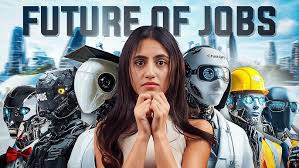
Artificial Intelligence (AI) has rapidly changed the landscape of the modern workplace. All sorts of jobs are being impacted by AI in one way or another. Whether it is customer service bots or data-crunching algorithms, AI is impacting operations across several industries. The benefit of AI in this regard cannot be understated, as it leads to greater efficiency and lower costs, but it also raises a vital question: What jobs will AI replace in the future?
That is what we are going to discuss below, as we look at various professions that can be replaced by AI in the future and how workers can prepare themselves for the AI-driven future.
Understanding How AI Impacts Jobs
Before we discuss exact job roles that can be replaced by AI in upcoming features, it is important to understand how AI impacts jobs. Since AI systems have evolved so much that they excel at tasks like pattern recognition, automation, natural language processing (NLP), and data analysis compared to humans, most employers prefer to use AI for such job roles instead of humans.
But there is a catch; in some jobs, AI is augmenting a job, while in others, AI is replacing it. In AI augmentation, AI is helping humans make better decisions or work faster, such as in data analysis. While in AI replacement, AI is taking over the entire role, such as self-checkout systems replacing cashiers. As AI continues to evolve and get better, it may not be long enough that many roles shift from augmentation to replacement.
With that said, now let’s take a look at some of the jobs that the AI will replace in the future and what workers can do. The jobs mentioned below are vulnerable because of repetition, predictability, cost-effectiveness, 24/7 availability, and scalability. These are things in which AI thrives and is superior to humans.
Repetitive Manual Jobs
At the top of the list, we have repetitive manual jobs that are most likely to be replaced by AI. Jobs that involve repetitive tasks are considered most vulnerable to AI replacement. Factory line workers, factory packagers, and agricultural laborers are already seeing automation in their roles through AI and smart machines.
For instance, in assembly lines across different factories, robotic arms have taken over and handle tasks that once required human labour. Similarly, automated harvesters in the field of agriculture have taken over the roles of picking and sorting.
Data-Driven Administrative Roles
Data-driven administrative roles are also on the verge of being replaced by AI in the future. These include roles like payroll processors, bookkeepers, and data entry clerks. Because of how much AI has evolved over the course of the past few years, AI-powered software is now capable of handling data-driven administrative tasks like processing invoices, balancing accounts, and inputting data faster and more accurately than humans, leading many companies to adopt these solutions for back-office functions.
Customer Support
If we go back in time and look at how customer support used to work, it used to require large teams of agents who had to work for long hours. However, things have now changed entirely thanks to AI chatbots and voice assistants that are handling millions of customer interactions daily. Whether it is the banking sector or e-commerce, AI-powered systems are capable enough to answer FAQs, booking appointments, and resolving common issues.
Telemarketing
Telemarketing jobs for humans are also declining because voice-based AI tools are superior to humans when it comes to making thousands of calls on a daily basis and delivering scripted pitches. Since voice-based AI tools employ machine learning as well, they have the ability to learn from their past conversations, which makes them more efficient in wide-scale telemarketing.
Retail and Cashier Positions
Retail and cashier positions are undergoing a transformation due to the rise of self-checkout kiosks, mobile payment apps, and AI-driven inventory systems. Supermarkets and large chains around the world are now increasingly relying on technology to streamline transactions and reduce the need for humans. Even in-store robots that can assist customers are being tested out, which indicates a strong shift towards AI-powered automation in retail.
Content Generation
AI tools have become so powerful that they are capable of generating basic news articles, sports reports, financial summaries, and short videos using templates and real-time data. Due to this shift, automated journalism is on the rise for content that follows a set structure. Apart from this, AI tools are capable of generating various other forms of content, including prayer time tables based on timings of different cities, such as Dublin Prayer Time.
Language Translation
The need for human translators is on a continuous decline because AI-powered translation tools like Google Translate and DeepL have become so powerful that they can translate any phrase or sentence, be it in text form or voice form, from any language almost accurately.
What Can Workers Do in the AI-Powered Era?
The key to staying relevant in an AI-powered era is adapting to evolving trends and upskilling. This involves various things, including:
- Learning to Work with AI: Rather than fearing AI, workers should learn to leverage AI tools that are relevant to their fields. For instance, digital marketers can use AI-based tools for data analysis to understand customer behaviour. Similarly, freelancers can use timetable apps and platforms like PrayerTimes.One to organize client meetings, deadlines, and personal tasks more productively.
- Focus on Human Skills: As capable as AI is, it still lacks various human skills like critical thinking, creativity, communication, and emotional intelligence, which will always be in demand. Although these are soft skills, they are harder for AI to replicate, especially in leadership and innovation roles.
- Become Tech Literate: Educating yourself about the basic concepts of AI and AI-driven digital tools is necessary to future-proof your career.
- Embrace Lifelong Learning: Everything around us is evolving quickly, and in such a dynamic era, staying stagnant is simply not an option. You need to embrace lifelong learning to stay ahead of automation trends.

Email your news TIPS to Editor@Kahawatungu.com — this is our only official communication channel
