

What Was Ted Turner Net Worth?

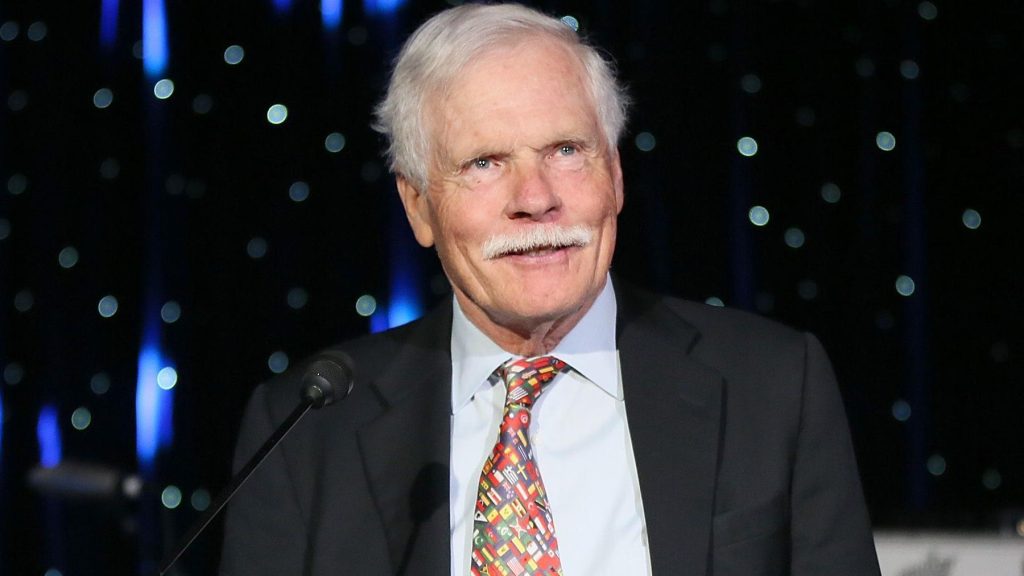
Ted Turner was an American media entrepreneur and television pioneer who had a net worth of $2.2 billion at the time of his death in 2026. Turner transformed the global media landscape by building one of the most influential cable television empires in history, founding major networks including CNN, TBS, TNT, Cartoon Network, and Turner Classic Movies.
Widely regarded as one of the most important media executives of the 20th century, Turner revolutionized television news and cable broadcasting through bold business risks that many initially dismissed as impossible. His launch of CNN in 1980 permanently changed journalism by creating the world’s first 24-hour news network, while his development of the “superstation” model helped establish cable television as a dominant force in entertainment.
| Ted Turner Net Worth | $2.2 Billion |
| Date of Birth | Nov 19, 1938 – May 6, 2026 |
| Place of Birth | Cincinnati |
Beyond media, Turner was also known for his ownership of the Atlanta Braves and Atlanta Hawks, his massive land holdings, conservation efforts, and billion-dollar philanthropic initiatives. His influence extended far beyond television, shaping sports broadcasting, film preservation, environmental conservation, and global philanthropy.
Ted Turner died on May 6, 2026, at his home near Tallahassee, Florida, at the age of 87. In 2018, he publicly revealed that he had been diagnosed with Lewy body dementia.
Early Life
Robert Edward Turner III was born on November 19, 1938, in Cincinnati, Ohio. He later moved with his family to Savannah, Georgia, where his father built a successful billboard advertising company.
Turner attended the McCallie School in Chattanooga, Tennessee, before enrolling at Brown University. While at Brown, he captained the sailing team and served as vice president of the debating union. Although he initially studied classics before switching to economics, Turner never graduated after being expelled from the university.
Following his departure from Brown, he joined his father’s advertising business. In 1963, tragedy struck when his father died by suicide amid struggles with depression and financial pressure. At just 24 years old, Turner took control of the family company and expanded it into a thriving billboard business that later financed his entry into television.
Building Turner Broadcasting
Turner entered the television business in 1970 after purchasing a struggling Atlanta UHF station known as WTCG. Lacking major financial resources, he relied heavily on inexpensive programming, including reruns, old movies, and sports broadcasts.
His breakthrough came when he began distributing the station nationally through satellite technology, effectively creating one of America’s first cable “superstations.” The station eventually became WTBS, later shortened to TBS.
Turner further strengthened the station’s appeal by purchasing the Atlanta Braves in 1976 and the Atlanta Hawks in 1977. Broadcasting Braves games nationwide helped turn the baseball franchise into “America’s Team” while simultaneously giving TBS valuable programming content.
This strategy proved revolutionary and demonstrated that cable television could successfully compete with traditional broadcast networks on a national scale.
CNN
On June 1, 1980, Turner launched Cable News Network (CNN), the world’s first 24-hour television news channel.
At the time, many media executives viewed the concept as unrealistic and financially reckless. CNN initially struggled and reportedly lost millions of dollars each month during its early years.
Despite skepticism, Turner continued investing heavily in the network’s global news operations. CNN eventually gained international prominence through its live coverage of major world events, including the Challenger disaster, the fall of the Berlin Wall, the Tiananmen Square protests, and especially the Gulf War in 1991.
The Gulf War established CNN as a dominant global news brand and forever changed how audiences consumed breaking news. Turner’s role in reshaping television journalism earned him recognition as one of the most influential media figures of his generation.
Expanding Into Entertainment
Turner expanded aggressively throughout the 1980s and 1990s by investing in entertainment properties and film libraries.
In 1986, he purchased MGM-UA Entertainment in a highly controversial $1.5 billion deal. Although financial pressures forced him to sell much of the studio back, Turner retained the company’s massive film library, including classics such as Gone With the Wind, The Wizard of Oz, and Citizen Kane.
Those assets became foundational to Turner’s growing cable empire. The movie catalog powered TNT, which launched in 1988, and later Turner Classic Movies (TCM), introduced in 1994.
Turner also acquired Hanna-Barbera Productions in 1991, giving him ownership of iconic animated franchises such as Scooby-Doo, The Flintstones, and The Jetsons. The acquisition later helped fuel the launch of Cartoon Network in 1992.
Time Warner Merger
In 1995, Turner agreed to merge Turner Broadcasting System with Time Warner in a deal valued at approximately $7.5 billion in stock.
The merger made Turner one of the largest shareholders in one of the world’s biggest entertainment companies. He became vice chairman of Time Warner and oversaw the company’s cable networks division.
However, the later AOL-Time Warner merger in 2001 proved disastrous financially, causing massive losses in shareholder value and significantly reducing Turner’s overall wealth. He eventually stepped away from the company’s leadership structure during the early 2000s.
Sports Ownership
Turner’s ownership of the Atlanta Braves and Atlanta Hawks served both business and personal interests. Broadcasting Braves games nationally through TBS dramatically expanded the team’s popularity and became a key component of his cable strategy.
Outside of business, Turner was also an accomplished competitive sailor. In 1977, he captained the yacht Courageous to victory in the America’s Cup, one of sailing’s most prestigious events.
His success in sailing led to inductions into both the America’s Cup Hall of Fame and the National Sailing Hall of Fame.
Ranches, Conservation, and Ted’s Montana Grill
Over time, Turner became one of the largest private landowners in the United States through Turner Enterprises. His vast holdings included nearly two million acres of ranch and conservation land spread across several states.
He became deeply involved in environmental conservation and bison restoration efforts, building one of the country’s largest private bison herds.
Turner also co-founded the restaurant chain Ted’s Montana Grill, which specialized in bison meat and environmentally conscious dining. The business became another extension of his conservation-focused lifestyle and brand.
Philanthropy
Turner emerged as one of America’s most significant philanthropists. In 1997, he pledged $1 billion to support United Nations-related humanitarian causes, one of the largest charitable donations ever announced at the time.
He additionally established organizations focused on environmental protection, endangered species preservation, nuclear threat reduction, and global peace initiatives.
In 2010, Turner joined Warren Buffett and Bill Gates’ Giving Pledge, committing to donate the majority of his fortune to charitable causes.
Personal Life
Turner was married three times, most notably to actress and activist Jane Fonda from 1991 to 2001. Their divorce reportedly included a settlement exceeding $100 million in cash, stock, and real estate assets.
He had five children and numerous grandchildren, many of whom became involved in conservation, philanthropy, and business initiatives connected to the Turner legacy.

