

Who is Lula? From ex-worker and prisoner to Brazil’s president again

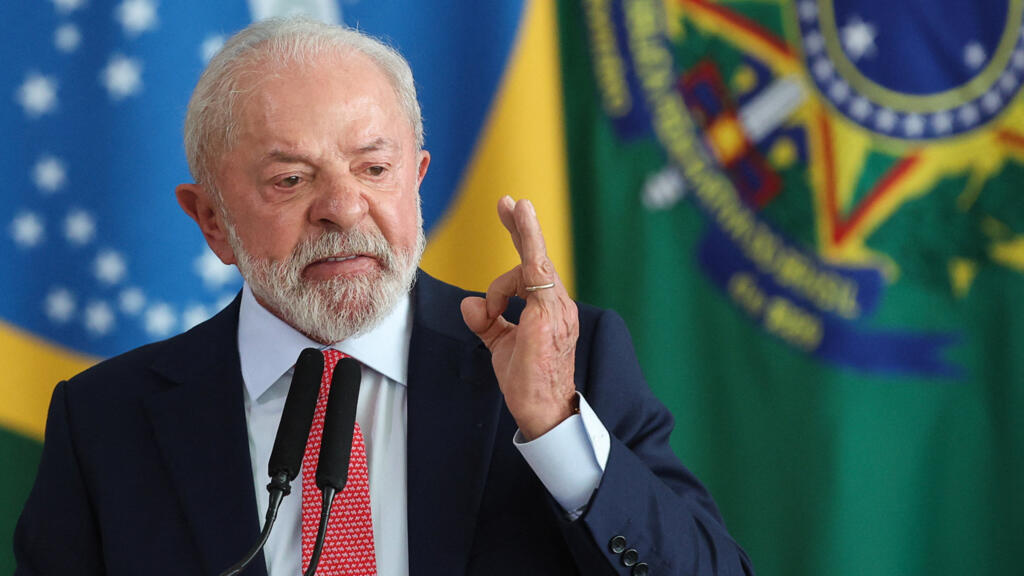
Luiz Inácio Lula da Silva PHOTO/France 24
On the face of it, Luiz Inácio Lula da Silva has done the impossible one more time – within three weeks he overturned defeat in first-round voting to gain re-election as Brazil’s president.
It was no mean achievement for a man who before his first successful run at the post in 2002 had tried three times unsuccessfully.
When he became president in 2003, he came to office as the first leftist leader of Brazil in nearly half a century.
Now aged 80 and with plenty of experience at governing as large a democracy as Brazil, he has bucked the trend of electoral victory for right-wing leaders in Latin America whose policies mirror that of US President Donald Trump.
Who is Lula and what are his policies?
Lula’s first presidential victory in 2002 marked the end of an unprecedented journey from poverty.
The son of a poor, illiterate peasant family, Lula worked as a peanut seller and shoe-shine boy as a child, only learning to read when he was 10 years old.
He went on to train as a metalworker and found work in an industrial city near São Paulo, where he lost the little finger of his left hand in an accident in the 1960s.
Lula was not initially interested in politics, but threw himself into trade union activism.
Elected leader of the 100,000-strong Metalworkers’ Union in 1975, he transformed trade union activism in Brazil by turning what had mostly been government-friendly organisations into a powerful independent movement.
In 1980, Lula brought together a combination of trade unionists, intellectuals, Trotskyites and Church activists to found the Workers’ Party (PT), the first major socialist party in the country’s history.
The PT went on to gradually replace its revolutionary commitment to changing the power structure in Brazil with a more pragmatic, social democratic platform.
Lula came to power promising major reforms to the country’s political and economic system.
He vowed to eradicate hunger and create a self-confident, caring, outward-looking nation.
In his time in office, Lula pumped billions of dollars into social programmes and can reasonably claim to have helped reverse Brazil’s historic inequalities.
By increasing the minimum wage well above the rate of inflation and broadening state help to the most impoverished with a family grant programme, the Bolsa Familia, he helped some 44 million people and cemented his support among the poor.
However, many commentators argue that the programme failed to address the structural problems that underpin poverty, such as a lack of education.
He left office eight years later, after serving two terms as president, enjoying exceptionally high popularity ratings for a retiring Latin American leader – 83% – having raised Brazil’s profile on the international scene and presided over the longest period of economic growth in three decades.
Unable to run for a third term, Lula left the presidency and, shortly afterwards, was diagnosed with throat cancer. He even shaved his trademark beard during treatment. Doctors declared him cured of the disease in 2012.
Why was Lula previously jailed?
Under his chosen successor, progress stalled. The economic boom also gave way to recession, and the country’s political scene was rocked by a huge investigation into top-level corruption, known as Operation Car Wash.
Lula was among those to get caught up in the scandal. In July 2017, he was convicted of corruption and sentenced to more than nine years in prison for accepting a beachside flat as a bribe from engineering firm OAS – a sentence increased on appeal to 12 years.
Lula was also jailed for 12 years and 11 months for corruption and money laundering for receiving bribes from two construction and engineering firms by way of funding improvements in a country house he and his family used.
He has always maintained his innocence, insisting accusations against him were politically motivated.
In 2019, he was released after having served just over 18 months, after a Supreme Court ruling that the incarceration had been illegal, having come before all appeals had been exhausted.
Those convictions were annulled in 2021, leaving Lula free to run for a third term in 2022, beating right-winger Jair Bolsonaro.
When he re-entered office in 2023, he vowed it would be his last term, and yet his party endorsed him as their candidate again this year, even though he will turn 81 on Tuesday.
Even backers of the PT will acknowledge that he achieved more in his first two terms – from January 2003 to December 2010 – than in his most recent four years in office.
And while his supporters described him ahead of the 2022 election as the “saviour of the Amazon”, praising his commitment to protecting the rainforest, some environmentalists have been critical of some of his recent actions.
His support for exploratory oil drilling in offshore waters near the mouth of the Amazonin particular has drawn criticism.
Lula insists that he remains committed to eventually phasing out fossil fuels and argues that oil revenues are key to financing Brazil’s transition to clean energy.
His government has also pointed to the reduction in deforestation in the Amazon – satellite data suggests the area deforested in the first half of 2026 was reduced to its lowest in the past decade – as proof that its policies were working.
What is Lula’s relationship with Trump?
Lula’s third term coincided with the return to office of Trump.
The two men represent different ends of the political spectrum and have found it impossible not to voice their differences in public.
The Brazilian leader told the BBC in September 2025 that he had no relationship with Trump.
Even though the US has a trade surplus with Brazil, Donald Trump imposed 50% tariffs on Brazilian goods in July that year, citing the trial on coup charges of Brazil’s right-wing former president Jair Bolsonaro as a trigger. Bolsonaro is serving a 27-year jail sentence and it was his son, Flávio, who Lula beat in Sunday’s election run-off.
Lula accused Trump of foreign interference and said “he’s not emperor of the world”. But their relationship improved after a White House in May this year, after which the two leaders exchanged public compliments – Trump called Lula “dynamic”, while the Brazilian president said he left the meeting “very satisfied”.
In July of this year, the US imposed 25% tariffs on most goods from Brazil.
The two governments still disagree on key issues such as crime, and Lula acknowledged they are especially far apart on trade.
Referring to what Trump has dubbed the “Donroe doctrine” – his administration’s national security strategy which asserts that US dominance in the Western hemisphere should not be interfered with – Lula has insisted that “Brazil does not fit into anyone’s backyard”.
Is Lula close to China and Russia?
Lula has criticised the fact that five countries – the permanent members of the UN Security Council – have the power to veto decisions and argued that this tilted the balance in favour of those who won World War Two, excluding nations representing billions of people like Brazil, Germany, India, and Japan, as well as African countries.
Brazil is an active member of the Brics – a grouping that unites Brazil with Russia, India, China and South Africa.
Lula defends his continued alliances with Russia and China and sees the Brics as an emerging counterweight to the West.
He has defended his choice to continue to purchase Russian oil while Russia wages war in Ukraine.
By BBC News

