


On May 8, 2025, white smoke billowed from the Sistine Chapel’s chimney, signaling the election of a new pope.
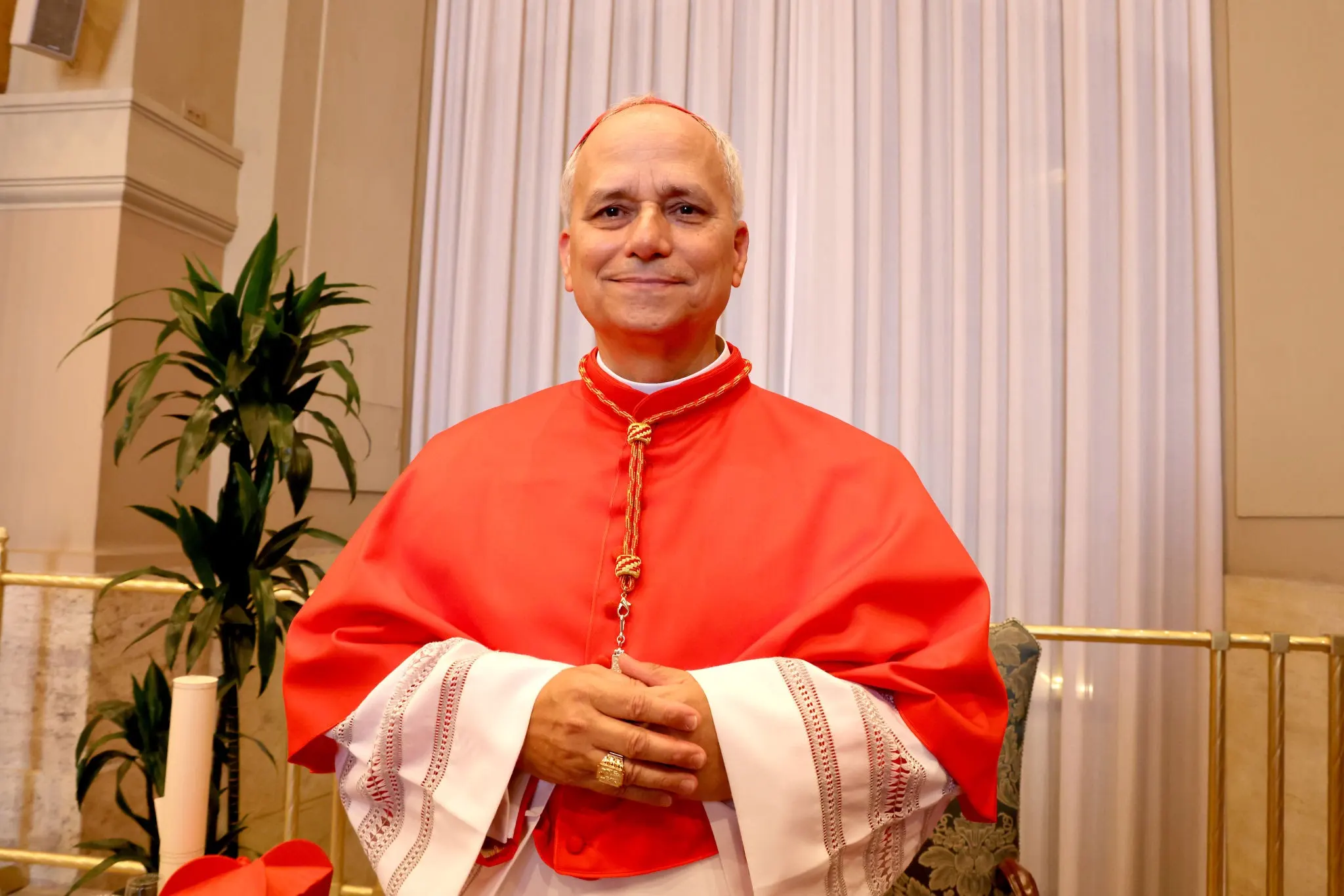
Cardinal Robert Francis Prevost, a 69-year-old Chicago-born cleric, emerged as the 267th Successor of Peter, taking the name Pope Leo XIV.
His election marks a historic moment: he is the first American to ascend to the papacy, breaking centuries of European dominance in the Roman Catholic Church.
But who is Robert Prevost, and what led this polyglot missionary to the Vatican’s highest office?
Early life
Robert Francis Prevost was born in September 1955 in Chicago, Illinois, to a family with Italian, French, and Spanish roots.
Raised in the St. Mary of the Assumption parish on Chicago’s South Side, near Dolton, Prevost’s early life was steeped in the vibrant Catholic community of the Archdiocese of Chicago, one of the largest in North America.
Those who knew him as a teenager recall a focused and determined young man.
A schoolmate from Mendel Catholic Prep noted, “Even as a young teenager, he knew what he wanted to do and where he wanted to go.”
Prevost’s calling to the priesthood led him to join the Augustinian order, a religious community emphasizing communal life, scholarship, and service.
Ordained in 1982 at the age of 27, he pursued advanced studies, earning a doctorate in canon law from the Pontifical University of St. Thomas Aquinas in Rome.
His multilingual abilities—fluent in English, Spanish, Italian, and likely others—reflected his global outlook, shaped by his diverse heritage and early exposure to Chicago’s multicultural landscape.
Early career
Prevost’s early career was defined by his missionary work in Peru, where he served for two decades.
Beginning in the 1980s, he worked in impoverished communities, immersing himself in the lives of the poor and marginalized.
This experience profoundly shaped his pastoral approach, emphasizing humility and solidarity with those on society’s fringes.
He became a naturalized Peruvian citizen, a testament to his deep connection to the country and its people.
His leadership abilities soon drew attention. Prevost rose through the ranks of the Augustinian order, eventually serving as its Superior General, overseeing the global operations of the order from Rome.
In 2014, Pope Francis appointed him Bishop of Chiclayo, Peru, recognizing his administrative acumen and pastoral zeal.
By 2023, Francis elevated him to cardinal and appointed him Prefect of the Dicastery for Bishops, a powerful Vatican office responsible for selecting and overseeing bishops worldwide.
This role gave Prevost unparalleled influence, as he advised the pope on appointments that shape the Church’s global hierarchy.
Theological and ideological profile
Often described as a centrist, Prevost shares Pope Francis’ emphasis on social justice, particularly serving the poor and marginalized.
His decades in Peru and his public statements reflect a commitment to a Church that “walks with” its people, as he has said: “A church leader is called authentically to be humble, to be close to the people he serves, to walk with them, to suffer with them.”
On social issues, Prevost is seen as progressive. Like Francis, he has championed migrants, refugees, and other marginalized groups, advocating for a Church that prioritizes inclusion.
However, on matters of doctrine, he aligns with traditional Catholic teaching.
For instance, he opposes the ordination of women as deacons, a stance that places him firmly within the Church’s conservative doctrinal framework.
This balance has made him a “dignified middle of the road” candidate, appealing to cardinals seeking continuity with Francis’ pastoral reforms while maintaining doctrinal stability.
The conclave of 2025
The conclave that elected Prevost began on May 7, 2025, following the death of Pope Francis on April 21 at age 88.
With 133 cardinal electors, the conclave was one of the most geographically diverse in history, reflecting Francis’ efforts to globalize the College of Cardinals.
Prevost’s name surfaced early as a “papabile” (papal candidate), alongside frontrunners like Italy’s Pietro Parolin and the Philippines’ Luis Antonio Tagle.
Several factors likely contributed to Prevost’s election. His extensive international experience—spanning Peru, Rome, and Vatican leadership—gave him broad name recognition among electors from diverse regions.
His reputation as a centrist made him a compromise candidate amid tensions between Francis’ progressive “Bergoglian” faction and conservatives seeking a return to traditionalism.
Additionally, his American background, while historically a long shot due to the United States’ global political dominance, may have appealed to cardinals seeking a fresh perspective from the Americas, following Francis’ Argentine papacy.
On the afternoon of May 8, after multiple rounds of voting produced black smoke, indicating no consensus, white smoke finally emerged, and Cardinal Protodeacon Dominique Mamberti announced: “Habemus Papam!”
Prevost, now Pope Leo XIV, appeared on the balcony of St. Peter’s Basilica to deliver his first Urbi et Orbi blessing, greeted by thousands gathered in St. Peter’s Square.
Why “Leo XIV”?
Prevost’s choice of the name Leo XIV invokes a storied legacy.
The last Pope Leo, Leo XIII (1878–1903), was known for his intellectual rigor, social teachings, and efforts to reconcile the Church with modernity.
His encyclical Rerum Novarum laid the foundation for Catholic social teaching, addressing workers’ rights and economic justice—issues that resonate with Prevost’s own priorities.
By choosing “Leo,” Prevost signals a commitment to engaging the modern world while grounding his papacy in the Church’s social mission.

Email your news TIPS to Editor@Kahawatungu.com — this is our only official communication channel
