

Why Low-Speed Technical Terrain Matters for High-Performance Electric Dirt Bikes

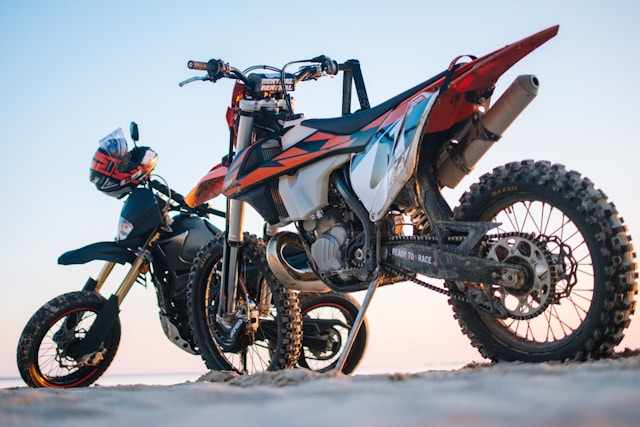
Electric Dirt Bikes
When people think of high-performance off-road motorcycles, more power and higher speeds often come to mind first.
But once the terrain turns to rocks, ruts, short climbs, tight corners or repeated changes in elevation, some of the most demanding sections are often taken at relatively low speeds. A rider may clear one rock and immediately need to change direction, or finish a short climb only to slow down for loose ground ahead.
In those situations, outright speed matters less than whether the bike responds predictably as the rider adds power, slows down or changes direction.
A bike that feels fast on open ground is not necessarily just as easy to manage through slow, technical terrain.
Low-Speed Sections Require More Frequent Adjustments
On open, relatively smooth off-road ground, riders can usually settle into a steady rhythm. Technical sections are different. Rocks, ruts, changes in gradient and tight turns can all appear within just a few metres.
Once the front wheel clears an obstacle, the rider may already need to think about where the rear wheel will track. Loose ground partway up a slope may call for an immediate change in power, while a blind corner requires the rider to manage speed before the exit comes into view.
On an electric dirt bike, these sections demand more frequent input.
The pace may be slower, but the rider has to read the line more often, shift body position, adjust power and manage braking. Each response from the bike can directly affect the next move.
More Power Demands Finer Control
Peak power indicates the motor’s maximum output, but on technical terrain, the more important question is how easy that power is to control and whether the rider can make small adjustments as the ground changes.
On loose soil, gravel or a short climb, maximum power is rarely needed for long. More often, the rider only needs a small increase in output to clear an obstacle or keep the bike moving.
Where grip is limited, adding power too quickly can make the rear tyre more likely to slip. If the bike responds differently from what the rider expects, it also becomes harder to make a smooth series of adjustments.
This is why a high-output bike cannot be judged by top speed alone. Take the Qronge X7 Spark, for example. Its 12,000W peak mid-drive motor gives this fast electric dirt bike substantial peak output, but on slow technical terrain, what matters is whether the rider can make small, controlled changes in power to suit the ground ahead.
Harder terrain does not mean more power needs to be used all the time.
Grip Limits How Much Power Can Actually Reach the Ground
Motor power ultimately has to be transferred through the tyres.
On firm surfaces, the tyres can generally maintain more consistent contact. On mud, loose gravel, soft soil or a slope, usable grip can fall significantly.
That is why a high-performance electric motorcycle cannot be judged by motor output alone.
If the rear tyre has already started to slip, adding more power will not produce the same proportional increase in forward movement. Tyre condition, the surface, suspension performance and the rider’s body position can all affect how much grip is available.
On this kind of terrain, the limiting factor is often not how much power the motor can produce, but how much of that power the tyres can actually put down.
At Low Speeds, the Rider Has to Manage the Bike Directly
In a tight turn, during a restart on a slope or when the front wheel pauses in front of an obstacle, the bike is usually moving very slowly.
If it begins to lean to one side, the rider has to stabilise it physically. If the line changes suddenly, direction and body position also need to change. More motor power cannot replace those movements.
If a rider finds it difficult to manage the bike naturally through slow turns, stops on a slope or restarts, higher output will not automatically make those situations easier.
That is why choosing a high-performance bike involves more than looking at the motor and battery. Size, weight and how manageable the bike feels at low speeds matter too.
Those factors may not appear in a top-speed figure, but they can have a direct effect on how the bike feels in difficult terrain.
Braking Is Not Only About Stopping From High Speed
In technical off-road riding, braking is often used without bringing the bike to a complete stop.
Before a short descent, tight corner, rocky section or a point where the rider needs to choose a new line, a small reduction in speed may be enough to create more time to read the terrain ahead.
If the braking response is easy to control precisely, the rider can reduce speed progressively to suit the terrain rather than relying on larger, more abrupt changes.
Surface conditions matter as well. On loose soil or gravel, available tyre grip is already limited. If braking input is too abrupt, the tyre may begin to slide, making it harder for the bike to stay on the intended line.
So on slow technical terrain, braking is not simply about having more stopping power. What matters is how precisely the rider can control the amount of speed being taken off.
When Comparing the Fastest Bikes, Look at Low-Speed Control Too
When riders search for the fastest electric dirt bike, top speed is naturally one of the easiest figures to compare.
But if the bike is going to be used off-road, top speed only tells part of the story.
Rocks, ruts, short climbs and tight corners are difficult not because they are fast, but because riders often have very little distance in which to make several adjustments. Too much power may need to be reduced immediately. A change in line may require a quick correction. If the ground suddenly becomes loose, the rider may need to slow down or shift body position straight away.
What matters is whether the bike responds clearly, smoothly and as expected to small changes in power, braking and direction.
Those responses often say more about how easy a high-performance electric dirt bike is to control on difficult terrain than top speed alone.
So when evaluating a high-performance model, instead of asking only how fast it can go, there is another practical question worth asking:
On the slowest and most technical part of the trail, can the rider still make precise adjustments to power, speed and direction?

