

Why Sifuna Is Not Yet Ripe for the Presidency

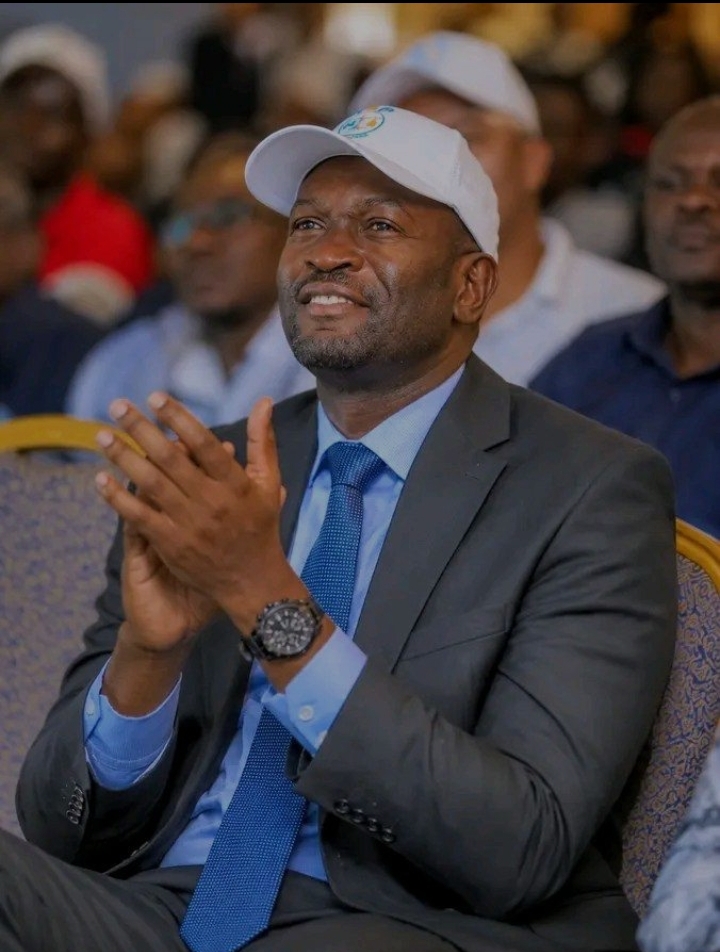
Senator Edwin Sifuna
Edwin Sifuna is the most compelling opposition figure to emerge in Kenya since the Gen Z protests of 2024. He is articulate, courageous, and refreshingly unafraid. But the presidency of Kenya is not a reward for good communication. It is the most demanding executive office in the region, requiring a fusion of intelligence apparatus, national mobilisation machinery, and cold strategic calculation that no amount of television charisma can substitute. Judged against those three benchmarks, intelligence, mobilisation, and statecraft, Sifuna is not yet ripe.
The Raila Standard
To understand why Sifuna is not yet ripe, compare him to the man whose shoes he seeks to fill. Raila Odinga ran for president five times. He lost five times. But he was never unprepared.
Raila built an intelligence network that rivalled the state’s. He knew the ground before his opponents did. He had informers in every county, every community, every party. When the government moved, Raila already knew. When a coalition shifted, Raila had already called. Intelligence, for Raila, was not a briefcase he picked up in the morning. It was a web he had spent decades weaving.
Raila built a grassroots machine that could deliver. From Kibera to Kisumu to Mombasa to Garissa, he had chairmen, coordinators, and mobilisers who could fill a stadium in a day and get voters to the polls in a week. His rallies were not media events. They were deployments.
And Raila had friends in high places. When the campaign needed money, the money came. When a repeat election was forced, the war chest was already full. Businessmen, governors, foreign envoys, and power brokers all understood that investing in Raila was investing in the future. He did not go to the markets with a bucket. He went to the boardrooms with a plan.
That is the standard. Sifuna has crowds. Raila had cadres. Sifuna has a Paybill. Raila had patrons. Sifuna has television. Raila had territory.
This is not a criticism of Sifuna. It is a measurement of the distance he must travel. Raila spent forty years building the machine that Sifuna is only now beginning to imagine. The presidency is not a sprint. It is a construction project. And Sifuna is still pouring the foundation.
I. The Intelligence Deficit
A president wakes up every morning to a threat briefing. Terrorism in the Northeast. Organised crime in the Coast. Political violence in the Rift Valley. Cyber intrusions into state infrastructure. Foreign interference in domestic affairs. The commander in chief must process all of this and make life or death decisions within hours.
Sifuna’s resume offers zero preparation for that dimension of the job. His entire political career has been in legislative and party roles: advisory roles in CORD and NASA, ODM Secretary General from 2018, Nairobi Senator from 2022. There is no record of service in any national security, intelligence, or defence oversight role. He has never sat on a committee that handles classified security briefings. He has never had to weigh the tradeoffs between civil liberties and national security in real time.
His closest encounters with intelligence have been as a consumer of warnings, not a producer of strategy. In February 2026, he revealed that a timely intelligence tipoff saved his team from a planned attack. That is valuable information to receive. It is not evidence that he can run the machinery that generates it.
Kenya’s security challenges, from Al Shabaab to banditry to urban crime to election related violence, demand a president who understands how intelligence is collected, analysed, and acted upon. Sifuna has spent his career reacting to events. The presidency requires anticipating them.
II. The Mobilisation Mirage
Sifuna’s supporters point to the crowds at Linda Mwananchi rallies. They are impressive. But in presidential politics, crowds are not the metric. The metric is whether you can get those people, and millions like them, to the polls on election day, across 47 counties, in rain and heat, in every one of Kenya’s more than 40,000 polling stations.
On that metric, Sifuna has not demonstrated the capability.
As of July 2026, Linda Mwananchi had held rallies in only 14 counties, by Sifuna’s own admission. He acknowledged that it would be “premature” to declare a presidential bid before testing support nationally. That is honest. It is also an admission that the machinery is not built.
Public Service CS Geoffrey Ruku put it bluntly: “Sifuna has not yet built the political structures or grassroots networks required to mount a credible presidential campaign”. Ruku added that “the last mile campaign is where the rubber meets the road,” meaning that reaching Rongai, Gilgil, and Naivasha matters as much as rallying in Nakuru City.
Mumias East MP Peter Salasya was even more direct: Sifuna lacks the “grassroots machinery” and regional depth to cross 300,000 votes nationally, and his networks do not extend “beyond urban intellectual circles”.
The evidence from ODM’s own electoral performance under Sifuna’s leadership is instructive. In the November 2025 Kariobangi by election, ODM failed to capture a ward that was “well within our reach”. An aspiring senatorial candidate said the defeat “raises questions about ODM’s mobilisation capability under Sifuna,” adding that the party’s messaging had been “confused and reactive”. Grassroots organisers blamed internal wrangles and “last minute campaign confusion”.
Crowds at rallies are a poor proxy for mobilisation capacity. Mobilisation means county organisers, polling agents, voter registration drives, turnout operations, and the ability to withstand state machinery. Sifuna has not demonstrated that.
III. The Statecraft Question
Here we come to the most uncomfortable truth. Kenyan presidential politics rewards ruthless, transactional, unsentimental operators. Presidents Kenyatta, Moi, Kibaki, and Ruto all demonstrated a capacity for cold, calculated power consolidation, alliance building, resource allocation, and, when necessary, strategic betrayal.
Sifuna’s brand is principled opposition. He is described as someone who “burst into the national limelight on a matter of principle; not the desire to become president in 2027”. That is admirable. It is also a liability in a system that rewards single minded ambition.
Political analyst Javas Bigambo told AFP that Sifuna “has not come out as a compelling presidential candidate who means business,” noting that he has failed to stake out ground on any major political talking point. Bigambo also said Sifuna has among the “shortest” profiles in Kenyan politics, having served only a single term as senator.
When pressed in a television interview to articulate a credible alternative economic programme, Sifuna “struggled to articulate” one, offering “neither coherent policy critiques nor practical proposals for improvement”. His responses suggested “a rather limited command of economic and fiscal policy”.
Presidential politics is not about being right. It is about being effective. It requires the ability to build coalitions with people you do not trust, to make deals you do not like, and to prioritise victory over purity. Sifuna’s political identity is built on refusing to compromise. That may make him a great opposition leader. It does not make him a president.
IV. The Money Problem
Presidential campaigns in Kenya cost billions of shillings. Sifuna’s response is that ordinary Kenyans are funding him through small contributions: Sh10, Sh50, Sh100 at a time. His Paybill raised approximately Sh2.21 million within 36 hours of launch.
That is impressive as a symbol. It is inadequate as a war chest.
COTU Secretary General Francis Atwoli ridiculed the approach: “Going to the markets with buckets, taking Sh5 from the old women. In Kenya, you cannot use money contributed from markets to become a president”. Atwoli had previously offered to raise Sh1 billion for Sifuna but was rejected.
The Star’s analysis was blunter: presidential elections require “county organisers, money, more money and even more money, voter registration, turnout operations, polling agents and the ability to stay ahead of or outright beat state machinery”.
There is also a darker question. Sifuna has been accused of being funded by Uhuru Kenyatta to destabilise ODM from within, a claim he denies. A legal petition has been filed demanding he account for the funds raised through Linda Mwananchi, with the petitioner arguing that contributors believed the money was for a presidential campaign. If Sifuna is being bankrolled by a hidden patron, his claim to independence collapses. If he is not, the arithmetic simply does not work.
V. The Urgency Deficit
Sifuna has been coy about his presidential ambitions for months. In July 2026, he said he would only decide after touring all 47 counties. As of October 2026, he had visited only 14. He has repeatedly insisted that key decisions would be made “collectively,” avoiding direct declarations about his future.
Meanwhile, the electoral clock is ticking. The Equitable Party was unveiled only in October 2026, barely a year before the August 2027 election. The party was chosen not out of strategic preference but because IEBC timelines made registering a new party from scratch impossible. Full registration of a new party can take up to 270 days, and the Linda Mwananchi name was only formally reserved on October 1, 2026, meaning the earliest possible full registration would be June 28, 2027, after the presidential nomination window closes.
Sifuna’s team framed the Equitable Party move as “a timeline driven contingency”. That is a polite way of saying he ran out of time. Presidential campaigns take years to build. Sifuna is still building his party with less than twelve months to go.
VI. The Media Mirage
Sifuna’s rise is, in significant part, a media phenomenon. The Star noted that “visibility as a party spokesman is different from commanding a following in your own right”. During 2023 and 2024, his Senate interventions and television appearances “increasingly attracted attention beyond ODM”. He became a recognisable, articulate critic of government “whose appeal was beginning to attach to the man rather than merely his office”.
But media prominence does not translate into electoral strength. Advocate Joshua Nyamori put it sharply: the wall to wall coverage of Sifuna’s ascent was “a case of confusing visibility with inevitability”. He compared Sifuna to Peter Kenneth, who was “at some point the most popular on headlines and social media” but “when it came to votes, he had nothing”. He also cited James Orengo’s 2002 presidential bid, where Orengo secured only approximately 24,000 votes against Mwai Kibaki’s more than three million.
Nyamori’s conclusion: “Elections are not determined by headlines”. Sifuna has yet to demonstrate the organisational capacity that actually delivers votes.
VII. The Temperament Question
Presidential leadership requires a certain coldness: an ability to make decisions that harm some to benefit many, to sacrifice allies for the greater good, to prioritise the mission over the person. Sifuna’s political identity is built on the opposite: loyalty to principle, refusal to compromise, and a willingness to stand alone.
That is noble. It is also not enough.
Sifuna’s critics within ODM have called him “overly controlling and self centered” and accused him of prioritising “political theatrics over constructive engagement”. But even these critics frame him as emotional, not coldly strategic. He is a commentator and a critic, not a warlord.
Kenya’s presidency is not a debating society. It is a power game. Sifuna may learn to play it. He has not yet demonstrated that he can.
Conclusion: Build, Do Not Run
Edwin Sifuna is the best thing to happen to Kenya’s opposition in years. He has courage, eloquence, and a genuine connection with young Kenyans who are tired of corruption and violence. He has built a movement, Linda Mwananchi, that has captured the national imagination.
But movements are not machines. Charisma is not structure. And 2027 is not 2032.
Sifuna should spend the next five years building what he currently lacks: a genuine grassroots network that extends beyond urban centres, a policy apparatus that can withstand scrutiny, a financial base that is transparent and sufficient, and the strategic ruthlessness that presidential politics demands. He should defend his senate seat or vie for Westlands MP seat or Nairobi Governor, or build his party into a genuine national force, or serve in a role that gives him executive and security experience.
The presidency is not a prize for being the most articulate man in the room. It is a test of whether you can build, mobilise, and wield power at scale. Sifuna has not yet passed that test. In 2027, he would fail it. In 2032, he might pass it with distinction but depends if Mt Kenya region will field a presidential candidate then, probability is 80% with Rift Valley runningmate.
The wise move is not to run. It is to build. For no one ever won a war with borrowed money, borrowed intelligence, and borrowed votes.
An opinion piece from the perspective of intelligence, mobilisation, and political statecraft

