


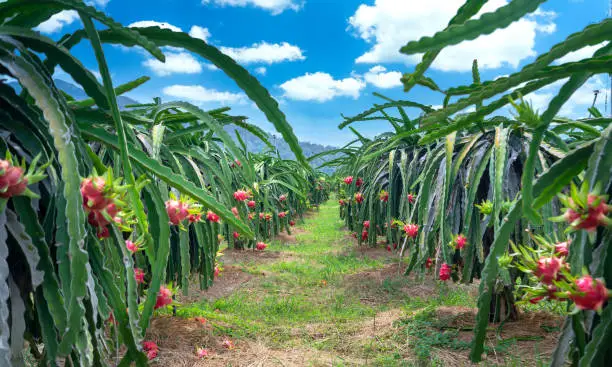
Dragon fruit, also known as pitaya, is a striking tropical fruit with a bright pink or yellow skin and speckled white or red flesh. It grows on a type of climbing cactus and can thrive in warm, sunny climates. Whether you want to grow it at home in your garden or on a small farm, cultivating dragon fruit is rewarding and can produce beautiful plants and delicious fruit. Here’s a step-by-step guide on how to cultivate dragon fruit.
- Select the Right Variety
Dragon fruit comes in several varieties — the most common are white-fleshed with pink skin, red-fleshed with pink skin, and white-fleshed with yellow skin.
Choose the variety that grows best in your climate and that you prefer for taste and appearance. You can buy cuttings or seeds, but using cuttings is generally faster and more reliable.
- Prepare the Soil and Location
Dragon fruit plants love warmth and sunlight.
- Choose a spot that gets full sun for at least six to eight hours a day.
- Ensure the soil is well-draining, as the plant is prone to root rot in waterlogged soil. Sandy or loamy soil works well, but you can also improve heavy soil by adding sand or compost.
- Use a soil pH between 6 and 7 for best results.
- Plant the Cuttings or Seeds
If you are using cuttings:
- Let the cutting dry for a day or two to allow the cut end to harden and reduce the risk of rot.
- Plant the cutting about 5–10 cm deep into the soil and secure it so it stays upright.
If using seeds: - Sprinkle the seeds over moist soil and lightly cover them. Keep the soil moist until they germinate, which may take a few weeks.
- Provide a Support Structure
Dragon fruit cacti are climbers and need something to hold onto.
- Install a strong trellis, post, or climbing frame where the plant can grow upward.
- As the plant grows, gently tie the stems to the support to guide them and keep them off the ground.
- Water and Care Properly
Dragon fruit plants like regular watering but should never sit in soggy soil.
- Water them when the top few centimeters of soil feel dry.
- Reduce watering in cooler months.
- Fertilize every month during the growing season with a balanced fertilizer or one slightly higher in potassium and phosphorus to encourage flowering and fruiting.
- Watch for Flowers and Fruits
Dragon fruit plants usually start flowering in the second or third year if grown from cuttings.
- The large, beautiful flowers bloom at night and last only one night, so you need to check them frequently.
- Some varieties are self-pollinating, while others need hand-pollination if there are no natural pollinators around.
- After pollination, the fruit develops over several weeks.
- Harvest the Fruit
Dragon fruit is ready to harvest when its skin color turns bright and vibrant.
- Gently twist or cut the fruit from the plant when ripe.
- Avoid waiting too long, as overripe fruits can split or fall off.
Also Read: How To Connect A Computer To Wi-Fi Without A Cable
Email your news TIPS to Editor@Kahawatungu.com — this is our only official communication channel
