


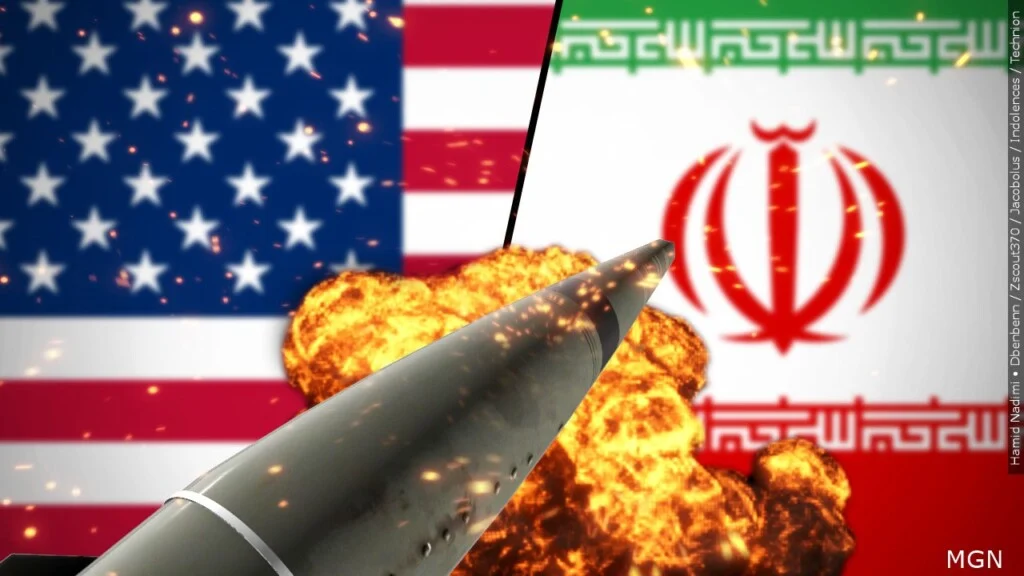
Donald Trump has warned Israel against launching further attacks on Iran, hours after he said a ceasefire between the two sides had taken effect.
The US president used an expletive as he criticised both sides, after each accused the other of breaking the US and Qatar-brokered truce.
It came after Israel said Iran had violated the deal and vowed to respond with “powerful strikes”.
Iran denied firing any missiles towards Israel and the country’s top security body has vowed to respond to any further Israeli aggression.
Here’s what we know so far.
When did the ceasefire take effect?
Just after 05:00 GMT on Tuesday, Trump announced that the ceasefire had taken effect.
“Please do not violate it!” he urged both sides in a post on his Truth Social platform.
The Israeli government said it had agreed to the US ceasefire proposal just after 06:00 GMT on Tuesday, after Iran indicated that it would stop attacking if Israel did the same.
However, hours later, Israel accused Iran of launching further attacks on its territory.
Trump first said that a truce had been “fully agreed” in a post shortly after 22:00 GMT on Monday, which he said would bring an end to what he called “the 12 day war”.
It came after Iran launched missiles at a US base in Qatar on Monday, in what it said was a retaliation for American strikes against its nuclear sites over the weekend.
What has Trump said?
In a post on Truth Social, Trump urged Israel – “do not drop those bombs” on Iran.
Speaking to reporters outside the White House shortly afterwards, Trump said he was “not happy” with Israel.
“There was one rocket that I guess was fired overboard after the time limit and now Israel is going out. These guys [have] got to calm down,” he said.
In an angry outburst he said the two countries didn’t know what they were doing.
In a later post, he said: “The ceasefire is in effect.”
How have Iran and Israel responded?
Two hours after Israel said it had agreed to the truce, the Israel Defense Forces (IDF) said it had identified missiles launched from Iran.
Katz accused Iran of a “complete violation” of the terms, adding that he had instructed the military to “continue the intense activity of attacking Tehran to thwart regime targets and terrorist infrastructures”.
The Iranian military denied it had fired missiles after the ceasefire had taken effect.
Later, Iran’s Islamic Revolutionary Guard Corps (IRGC) said that “in the final moments before the ceasefire was imposed on the enemy”, it had struck “military and logistical centres” in Israel.
The IRGC-affiliated Tasnim news agency reported Israel had launched “a three-phase” military strike on its territory after the ceasefire.
Iran’s Supreme National Security Council earlier said Israeli attacks would be “met with a decisive, firm, and timely response by Iran”.
Has the ceasefire been broken?
The Israeli military accused Iran of launching missiles toward its territory after the truce came into force on Tuesday, which Iran has denied.
Before the truce began, Iran and Israel exchanged heavy fire.
The IDF said several rounds of strikes hit the country on Monday night into Tuesday. Rescue workers said four people were killed and 22 injured in the town of Beersheba.
At the time, Iranian state media said Iran had launched “a last round of missiles” against Israel.
Overnight, Iranian state TV reported that the capital, Tehran, endured some of its most intense air defence clashes since the war broke out on 13 June, and residents told BBC Persian they heard loud explosions.
The IDF said it struck and destroyed missile launchers in western Iran that it said were “ready to be fired at Israeli territory”.
Tehran said another nuclear scientist was killed before the agreement took force.
Why did Israel attack Iran?
Israel attacked nuclear and military sites in Iran on Friday 13 June, claiming Iran was close to building a nuclear weapon.
Israel said it had no choice but to bomb Iran after diplomatic talks aimed at curbing the country’s nuclear programme stalled.
The Israeli offensive took place amid growing international concern that Iran has increased its production of enriched uranium – a key component in the making of nuclear weapons.
However, there is no international consensus on how close Iran has come to building its own nuclear weapons.
In the following days, Israel targeted Iranian infrastructure it said could be used for “nuclear weapons development”.
The US later joined the strikes, dropping its so-called bunker buster bombs on the Fordo site, a nuclear enrichment facility buried deep below a mountain outside Tehran.
In an update on Tuesday, a spokesperson for Iran’s health ministry said 610 people had been killed and 4,746 injured in Israeli strikes since the conflict began.
According to Israel’s health ministry, four people were killed on Tuesday, bringing the total death toll since 13 June to 28.
What are Iran’s nuclear capabilities?
Iran says it is operating an entirely peaceful nuclear programme for civilian purposes.
However, the UN nuclear watchdog warned last month that Iran had enriched over 400kg of uranium to 60% purity – a near weapons-grade purity that is well above the level used for civilian purposes.
US officials say that US-Israel strikes conducted against Iran’s nuclear sites have significantly set back the prospect of Tehran building a nuclear weapon.
However, Hassan Abedini, the deputy political director of Iran’s state broadcaster, claimed the three sites targeted by the US had been evacuated a “while ago”, and that Iran “didn’t suffer a major blow because the materials had already been taken out”.
By BBC News

Email your news TIPS to Editor@Kahawatungu.com — this is our only official communication channel
