


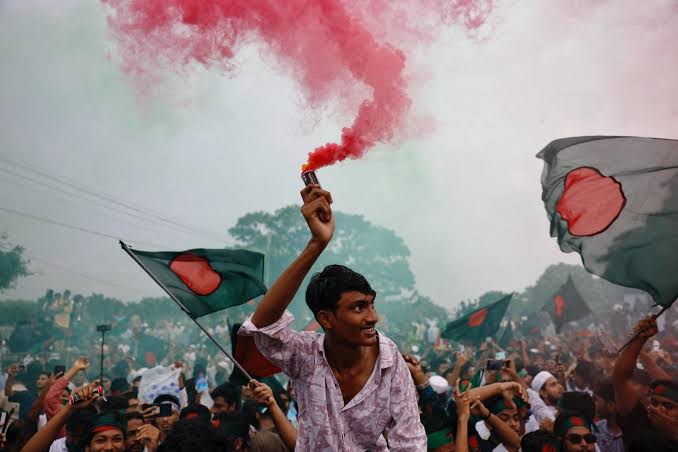
Bangladesh will hold its first elections since protests toppled its former prime minister next February, the country’s interim leader said on the anniversary of her overthrow.
Muhammad Yunus made the announcement at the end of a day of celebrations for what some have called the country’s “second liberation”.
Sheikh Hasina fled to India on 5 August last year, following weeks of student-led protests, bringing an end to 15 years of increasingly authoritarian rule.
Nobel laureate Yunus was brought in to head a caretaker government days later, promising reforms which some say he has struggled to deliver amid continuing political turmoil and a struggle to maintain law and order.
Bangladesh will hold its first elections since protests toppled its former prime minister next February, the country’s interim leader said on the anniversary of her overthrow.
Muhammad Yunus made the announcement at the end of a day of celebrations for what some have called the country’s “second liberation”.
Sheikh Hasina fled to India on 5 August last year, following weeks of student-led protests, bringing an end to 15 years of increasingly authoritarian rule.
Nobel laureate Yunus was brought in to head a caretaker government days later, promising reforms which some say he has struggled to deliver amid continuing political turmoil and a struggle to maintain law and order.
As part of the declaration read on Tuesday, those who were killed in the uprising will be recognised as “national heroes”, Yunus said.
The document – which also promises a democratic state that would uphold the rule of law and moral values, as well as a justice process for those who engaged in violence during Hasina’s rule – is seen by advocates as the basis of institutional reform, although critics say it is largely symbolic and without power.
Meanwhile, in an open letter to Bangladesh’s citizens on Monday, Hasina argued she had not actually stood aside, describing the events of 2024 as a “coup”.
“Despite claims to the contrary, I never resigned from my duties as your prime minister,” she wrote.
“I believe in you. I believe in Bangladesh. And I believe that our best days are yet to come.”
Hasina is currently on trial in absentia in Bangladesh, having refused to return to face charges which amount to crimes against humanity, related to the deadly crackdown on protesters which left hundreds dead. She denies the charges.
By BBC News
Email your news TIPS to Editor@Kahawatungu.com — this is our only official communication channel
