



Demián Bichir Nájera is a renowned Mexican actor celebrated for his versatile performances across telenovelas, theater, and Hollywood cinema.
Born on August 1, 1963, in Torreón, Coahuila, Mexico, he grew up immersed in the performing arts, as both of his parents were involved in theater—his father, Alejandro Bichir, as a director, and his mother, Maricruz Nájera, as an actress.
This artistic environment shaped his early passion for acting, leading him to begin his career at just 14 years old.
Bichir, who stands at 5 feet 10 inches tall, has become a prominent figure in both Mexican and American entertainment, residing between Los Angeles and Mexico City.
He is also a dedicated advocate for immigrants’ rights, serving as an American Civil Liberties Union Ambassador.
Siblings
Demián comes from a tight-knit family of performers, where his two brothers, Odiseo Bichir and Bruno Bichir, have also carved out successful careers in acting and directing, making the Bichir siblings a notable dynasty in Mexican cinema.
As the middle brother, Demián shares a deep bond with Odiseo, the eldest, and Bruno, the youngest, both of whom followed in their parents’ footsteps into the theater and film worlds.
Odiseo Bichir, born in 1956, is a veteran stage actor and director who has appeared in numerous Mexican productions and telenovelas, often collaborating with his family on stage.
Bruno Bichir, born in 1967, has gained recognition for roles in films like Deep Crimson and television series such as the reboot of Party of Five, where he portrayed a deported father grappling with family separation—a role that resonated personally amid Demián’s own advocacy work.
Also Read: Alexander Skarsgård Siblings: Meet the Siblings Squad Behind the Swedish Actor
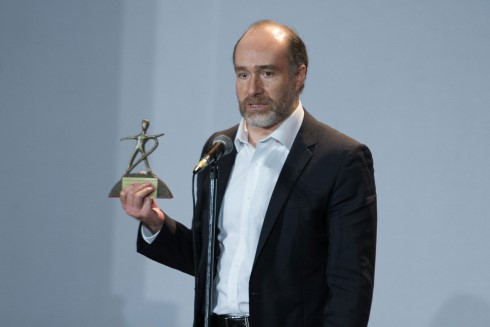
Career
Bichir launched his professional journey at age 14 with a role in the telenovela Rina alongside Ofelia Medina, quickly establishing himself in Mexico’s soap opera scene through appearances in popular series.
By the late 1980s, Bichir shifted to film, earning early praise for his intense performance in Rojo Amanecer (1989), a drama about the 1968 Tlatelolco student massacre.
His breakthrough in Mexican cinema came with Hasta Morir (1994), which won him critical recognition, followed by the blockbuster Sexo, Pudor y Lágrimas (1999), which shattered box-office records and became the highest-grossing Mexican film at the time.
Venturing into Hollywood, Bichir made his English-language debut in the TV movie In the Time of the Butterflies (2001) with Salma Hayek, but it was his portrayal of Fidel Castro in Steven Soderbergh’s epic Che (2008) that introduced him to American audiences as a commanding presence.
Subsequent roles in Weeds (2008–2010) and The Bridge (2013–2014) showcased his range in television, while films like Savages (2012), The Hateful Eight (2015), Alien: Covenant (2017), and The Nun (2018) solidified his status as a go-to character actor for complex, often villainous figures.
Beyond acting, Bichir expanded into directing with his debut feature A Circus Story & A Love Song, which premiered at the Morelia International Film Festival, and he continues to champion Latin American stories through producing and advocacy.
Accolades
Bichir’s defining moment came in 2012 with an Academy Award nomination for Best Actor for A Better Life, where he portrayed an undocumented immigrant father—a role that also earned him nods for a Screen Actors Guild Award and an Independent Spirit Award, making him only the second Mexican-born actor to receive an Oscar nod in that category.
In Mexico, Bichir has been a multiple Ariel Award recipient, Mexico’s equivalent of the Oscars, including a win for Best Actor for Hasta Morir (1994) and nominations for films like Sexo, Pudor y Lágrimas (2000) and Hidalgo: La Historia Jamás Contada (2011), the latter also securing him the Best Actor prize at Spain’s Huelva Film Festival.
Additionally, the MTV Movie Awards-México’s “Best Bichir in a Movie” category, created due to the siblings’ dominance, saw him triumph in 2003 and receive another nomination that year, underscoring his enduring legacy in Latin cinema.
Email your news TIPS to Editor@Kahawatungu.com — this is our only official communication channel
