


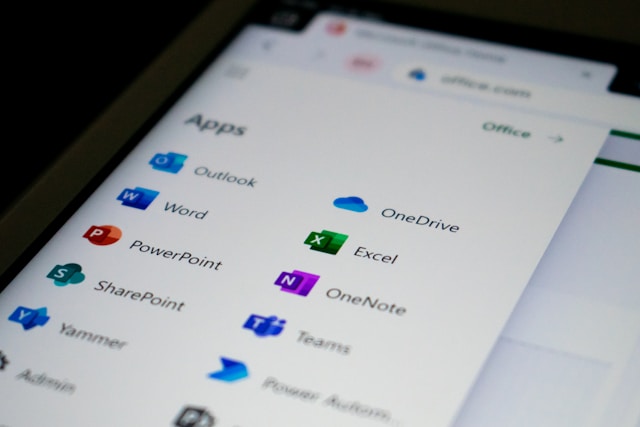
Almost anyone—from students working on essays to professionals handling multi-tiered projects—can benefit from productivity suites. For decades, Microsoft Office has reigned king in this space. Its programs — Word, Excel and PowerPoint — are used so frequently that the formats they created have become the intuitive way for most people to share documents.
But the fact that Microsoft Office is so dominant doesn’t mean it’s the only —or even the right — choice for every user. Throughout software’s evolution, many strong competitors have emerged, offering different flavours and pricing models, with fresh approaches to productivity. All of these Microsoft Office alternatives can cover your needs, whether you’re a working professional or a student, whether you need to exchange files with collaborators or just want something your operating system (OS) doesn’t provide.
Why Even Find an Alternative to Microsoft Office?
Microsoft Office is great, but it does have plenty of powerful competition. That’s not to say Microsoft Office isn’t really great. Knowing about all these potential roadblocks can help you make the right decision when switching.
- High price: For most of us, cost is the biggest obstacle. Microsoft 365 is a subscription service, and you will need to continue paying annually or monthly. And for individuals, that’s a recurring cost; for business users, it’ll soon become very expensive, as licensing multiple people will add up! It is possible not to subscribe (with the one-time purchase Office Home & Student), but you pay a relatively high initial price and miss out on updates and cloud services.
- Features Overload: Microsoft Office is an enormous suite full to the brim with various functionalities, each of which has evolved over the years. And that’s all fine and dandy for power users, but the average person uses only a small portion of those tools. This “feature-bloat” can, in the worst case, lead to an overly complex software package that makes even simple tasks arduous. There could be an easier-to-use, less bloated app that just does the stuff you need day to day.
- Platform and Compatibility Inconsistencies: Microsoft Office is available on Windows, macOS, online, and mobile; however, app performance is not always uniform across all platforms. The experience is usually best on Windows; on other operating systems, e.g. macOS or Linux, some features may be unavailable or work less well. That can be frustrating for workers who switch between devices.
- System Requirements: The desktop versions of Microsoft Office applications can consume substantial system resources. Older or less powerful computers might struggle to run them smoothly, leading to slowdowns and lower productivity. On that hardware, lighter, cloud-based alternatives can offer a significantly faster experience.
“Download now to enjoy 30 days of free WPS PRO — exclusive offer!”
Picking the Best Productivity Software: How to Choose the Right Productivity Suite
When comparing Microsoft Office free download alternatives, it’s essential to be clear about your requirements. Which one you should go for depends on your requirements, budget and workflow. Here’s what to consider:
Cost
The primary motivation for searching for an alternative is generally cost. Your options range from free open-source suites to relatively low-cost subscription services.
- Free: Many powerful suites are free. They are an ideal choice for students, people or small organisations on a tight budget.
- Paid (Subscription or One-time payment): Paid accounts have access to advanced features, customised customer service and a smoother experience. Some are one-time purchases; others, such as Microsoft 365, are subscription-based.
Features
Think about which tools you need to do your work. Are you mainly a writer of documents, a maker of elaborate spreadsheets or a creator of presentations?
- Word Processing: Check for strong text formatting capabilities, available templates, and review and editing tools.
- Guys, here are the things they need: Spreadsheets – formulas, functions, pivot tables and charting.
- Presentations: An effective presentation program should have templates that can be customised, transition effects, and support for multimedia.
Compatibility
Sharing and opening files should be as smooth as well. Make sure the suite you want supports popular file formats and operating systems.
- File Formats: Open and save files in Microsoft formats (.docx, .xlsx, .pptx) is important if you work with others who use Office.
- OS: Verify whether the tool exists for your favourite OS and if it has full functionality across that operating system, whether Windows, macOS, Linux or a cloud-based service on any browser.
Ease of Use
A suite of productivity tools should increase your work, not complicate it. A clean, easy-to-navigate interface is critical, particularly if you aren’t tech savvy. Some of the alternatives even replicate the traditional Microsoft Office design, so those who’ve been using it for years should find the migration easy.
Collaboration
When you’re working with other people on a team, the ability to collaboratively edit documents in real-time is a game-changer. Consider features such as co-authoring, version history and comment-and-reply systems. Well, most cloud-based unlocks are amazing at this.
Top Free Microsoft Office Alternatives
If you’re on a budget without sacrificing practicality, these free suites are solid alternatives.
LibreOffice
LibreOffice is the free, power-packed Open Source personal productivity suite for Windows, Macintosh and Linux, that gives you six feature-rich applications for all your document production and data processing needs:
- Features: The included applications are Writer (word processing), Calc (spreadsheets), Impress (presentations), Draw (vector graphics), Base (databases) and Math (formula editing). Its feature list is quite extensive and can rival some paid suites.
- Compatibility: Compatible with the most popular file formats used in Microsoft Office. It is compatible with Windows, macOS and Linux.
- Best for: People who need a full-featured, conventional desktop suite and don’t want to pay. It’s a great option if you use Linux or are an open-source software advocate.
Apache OpenOffice
Formerly the market leader, Apache OpenOffice is still a decent and complete alternative. Although development has lagged behind LibreOffice, it’s a stable solution for general productivity work.
- Features: As with LibreOffice, it has a full complement of applications: Writer, Calc, Impress, Draw, Base and Math. The interface is a little dated-looking but simple and practical.
- Compatibility: It performs well with Microsoft Office files and is available for Windows, macOS, and Linux.
- Best for: Users who want a steady, stripped-down desktop suite and don’t care about the latest whistles or bells — or even an up-to-date look.
Google Docs, Sheets, and Slides
The king of all cloud apps, Google, has transformed the workplace with its emphasis on sharing and mobility. It is completely free with a Google account.
- Features: Not quite as feature-laden as something like Office or LibreOffice on the desktop — but there are a few things that most users would want to do that Google’s tools can’t handle. Its best-in-class live collaboration is the standout feature at this price point.
- Cross-Platform: It works on any web browser. It easily imports and exports Microsoft Office files, but at times, more complex formatting is lost.
- Best for: Teams, students and anyone who loves collaboration and the option to work from any device with an internet connection.
Discover the Suite That Works for You
The days when Microsoft Office was your only real option are long gone. Role Alternatives: Whether your emphasis is on price, team-based work, or a neat, tidy user interface, there´s a strong alternative to meet those needs.
With free alternatives such as LibreOffice and Google Workspace (formerly G Suite), offering a wide range of features that are more than enough for the average person, if not everyone else, it comes packed with everything you need to be productive at a much lower cost. If you want a professional solution that feels thoroughly modern, paid suites such as WPS Office and Zoho Workplace give good value for a small outlay. However, for existing Apple users, iWork remains a beautifully integrated and powerful option.
Email your news TIPS to Editor@Kahawatungu.com — this is our only official communication channel
