


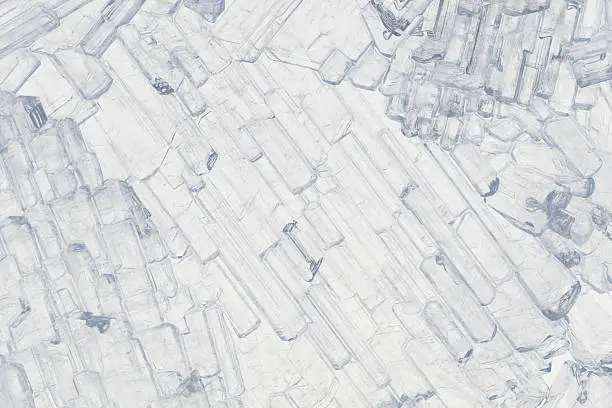
Learning how to grow salt crystals is a fun and educational activity that combines science with creativity. It is a simple experiment that can be done at home using basic materials, making it ideal for students, hobbyists, and anyone curious about how crystals form. Growing salt crystals helps demonstrate concepts such as evaporation, saturation, and crystal formation while producing beautiful, visible results.
This article explains how to grow salt crystals step by step, from preparing the solution to observing crystal growth.
-
How Salt Crystals Form
Before starting, it is important to understand the basic science behind crystal growth.
Key points include:
- Salt crystals form when salt dissolves in water
- As water evaporates, salt particles come together
- Slow evaporation creates larger crystals
- A saturated solution is essential for growth
Understanding this process helps you achieve better crystal results.
-
Gather the Required Materials
Growing salt crystals requires only a few simple materials.
Common materials include:
- Table salt or sea salt
- Clean water
- A clear glass or jar
- A spoon for stirring
- String or thread
- A pencil or stick
Having everything ready makes the process smooth and enjoyable.
-
Prepare a Saturated Salt Solution
A saturated solution contains as much dissolved salt as possible.
To prepare the solution:
- Heat water until it is warm but not boiling
- Add salt gradually while stirring
- Continue adding salt until no more dissolves
- Ensure the solution is clear and fully mixed
A saturated solution is essential for crystal formation.
-
Set Up the Crystal Growth Environment
Setting up the growth area correctly helps crystals form properly.
Setup tips include:
- Pouring the solution into a clean jar
- Tying a string to a pencil or stick
- Lowering the string into the solution without touching the bottom
- Placing the jar in a quiet, undisturbed location
The string acts as a surface for crystals to grow on.
-
Allow Time for Crystals to Grow
Crystal growth requires patience and minimal disturbance.
During this stage:
- Leave the jar undisturbed
- Avoid moving or shaking the container
- Allow water to evaporate slowly
- Check progress daily
Crystals usually begin forming within a few days.
-
Observe and Maintain Crystal Growth
As crystals grow, observing changes helps you understand the process better.
Observation tips include:
- Watching crystals form on the string and jar sides
- Not adding extra water once growth starts
- Removing unwanted crystals if necessary
- Keeping the environment stable
Maintaining consistency helps crystals grow larger and clearer.
-
Harvest the Salt Crystals
Once crystals reach your desired size, they can be removed and dried.
Harvesting tips include:
- Gently lifting the string from the solution
- Allowing crystals to air dry
- Handling crystals carefully to avoid breakage
- Storing crystals in a dry container
Dry crystals last longer and retain their shape.
-
Experiment with Crystal Growth Variations
Once you understand the basics, you can try variations to explore different results.
Experiment ideas include:
- Using different types of salt
- Changing container sizes
- Adjusting evaporation speed
- Growing crystals without string
Experimenting helps deepen understanding and creativity.
Also Read: How to Grow Nectarine from a Pit Successfully at Home
Email your news TIPS to Editor@Kahawatungu.com — this is our only official communication channel
