


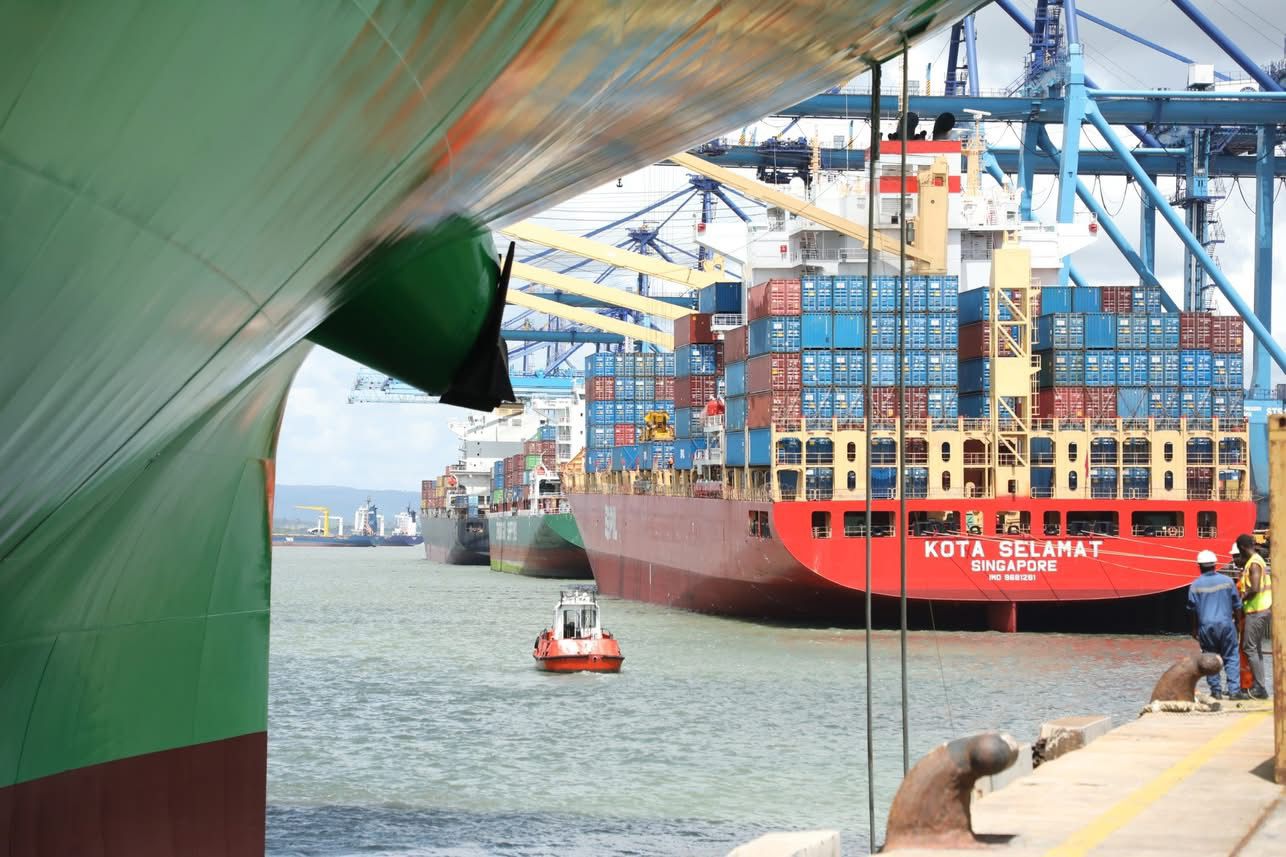
For decades, the Kenya Ports Authority (KPA) has remained one of Kenya’s most strategic yet understated institutions—quietly anchoring the country’s economy while serving as the principal maritime gateway for East and Central Africa.
Since independence, KPA has been the lifeline of regional trade, handling millions of tonnes of cargo annually and linking Kenya and its hinterland neighbours to global markets.
From bulk cargo and containers to oil imports, the Port of Mombasa has long been the backbone of commerce across the Northern Corridor.
Today, however, KPA’s role is evolving beyond its traditional mandate.
The introduction of cruise vessel operations has opened a new frontier for maritime tourism, positioning Mombasa not just as a logistics hub but as an emerging destination for international leisure shipping—signalling a broader vision for port-led economic diversification.
In recent years, KPA has accelerated an ambitious modernisation agenda aimed at aligning the Port of Mombasa with global standards.
The Authority has invested heavily in state-of-the-art port handling equipment, including modern ship-to-shore cranes and advanced yard machinery.
These upgrades are expected to significantly improve berth productivity, ease congestion, and reduce vessel turnaround time—key indicators of competitiveness in an increasingly efficiency-driven global shipping industry.
KPA’s transformation has also gained international recognition.
In 2025, the Authority clinched the prestigious International Association of Ports and Harbours (IAPH) Sustainability Award for its Mangrove Restoration for Ocean Protection and Increased Forest Cover Project.
The accolade, won against more than 500 global submissions, underscored KPA’s growing reputation as a port authority capable of balancing commercial expansion with environmental stewardship and community engagement.
A Turning point under Captain William Kipkemboi Ruto
Much of the recent momentum has been driven under the leadership of Captain William Kipkemboi Ruto, whose tenure has ushered in a renewed focus on efficiency, long-term planning, and operational discipline.
Under his stewardship, KPA rolled out a comprehensive five-year strategic plan (2023/24–2027/28), anchored on competitiveness, customer-centric service delivery, sustainability, and financial resilience.
The plan has already yielded tangible results.
Among the flagship achievements is the completion and operationalisation of the Second Container Terminal (Phase Two), a major infrastructure milestone that has significantly expanded cargo handling capacity and relieved pressure on existing berths.
Another landmark project is the commissioning of the Kipevu Oil Terminal, a critical national energy asset that enables multiple large petroleum vessels to berth simultaneously.
The terminal has enhanced fuel security while reducing demurrage costs, a longstanding burden on importers and the wider economy.
Operational reforms have further included the introduction of night pilotage services, streamlined cargo handling procedures, and expanded deployment of digital systems. Collectively, these measures have translated into higher cargo throughput, increased container traffic, and a stronger competitive position for Mombasa as a regional maritime hub.
Captain Ruto’s performance has earned him leadership award nominations, largely attributed to improved turnaround times, port digitisation, and a governance record that has remained largely unblemished in an institution historically vulnerable to political interference.
A Historical Perspective
Established in 1978 through an Act of Parliament, KPA has been shaped by a succession of managing directors and acting executives who have steered the Authority through shifting economic and political landscapes.
Notable figures include James Mulewa, one of the early managing directors during KPA’s formative years Abdalla Mwaruwa, who served prior to the late 2000s, Major (Rtd) Marsden Madoka, a former MD and chairman known for institutional engagement; and Gichiri Ndua, who led the Authority in the mid-2010s.
The list also features Catherine Mturi-Wairi, the first woman to serve as Managing Director between 2016 and 2018, Dr Daniel Manduku, who held acting and substantive roles from 2018 to 2020 and Eng. Rashid Salim and Ambassador John Mwangemi, both of whom served in acting capacities.
In March 2023, Captain William Kipkemboi Ruto was appointed the 15th substantive Managing Director since KPA’s establishment.
Experience Over Politics
As debate continues over leadership appointments in state corporations, Centre for Litigation Trust (CLT) Chief Executive Officer Julias Ogogo argues that institutions as strategic as KPA require administrators—not political technocrats.
According to Ogogo, effective leadership at the port demands deep institutional memory, technical understanding of port operations, and strong personal integrity, rather than political pedigree. He cites Captain Ruto, who rose through the ranks within KPA, as an example of leadership forged through experience and commitment to the Authority’s mandate.
Ogogo urged the state to exercise greater caution and vigilance when appointing leaders to strategic national institutions, warning that political experimentation at critical gateways of trade carries significant economic risks.
As Kenya positions itself as a regional logistics powerhouse, the future of the KPA may ultimately hinge on a simple but enduring principle: experience, integrity, and continuity matter—especially at the nation’s most critical gateway of trade.
Email your news TIPS to Editor@Kahawatungu.com — this is our only official communication channel
