


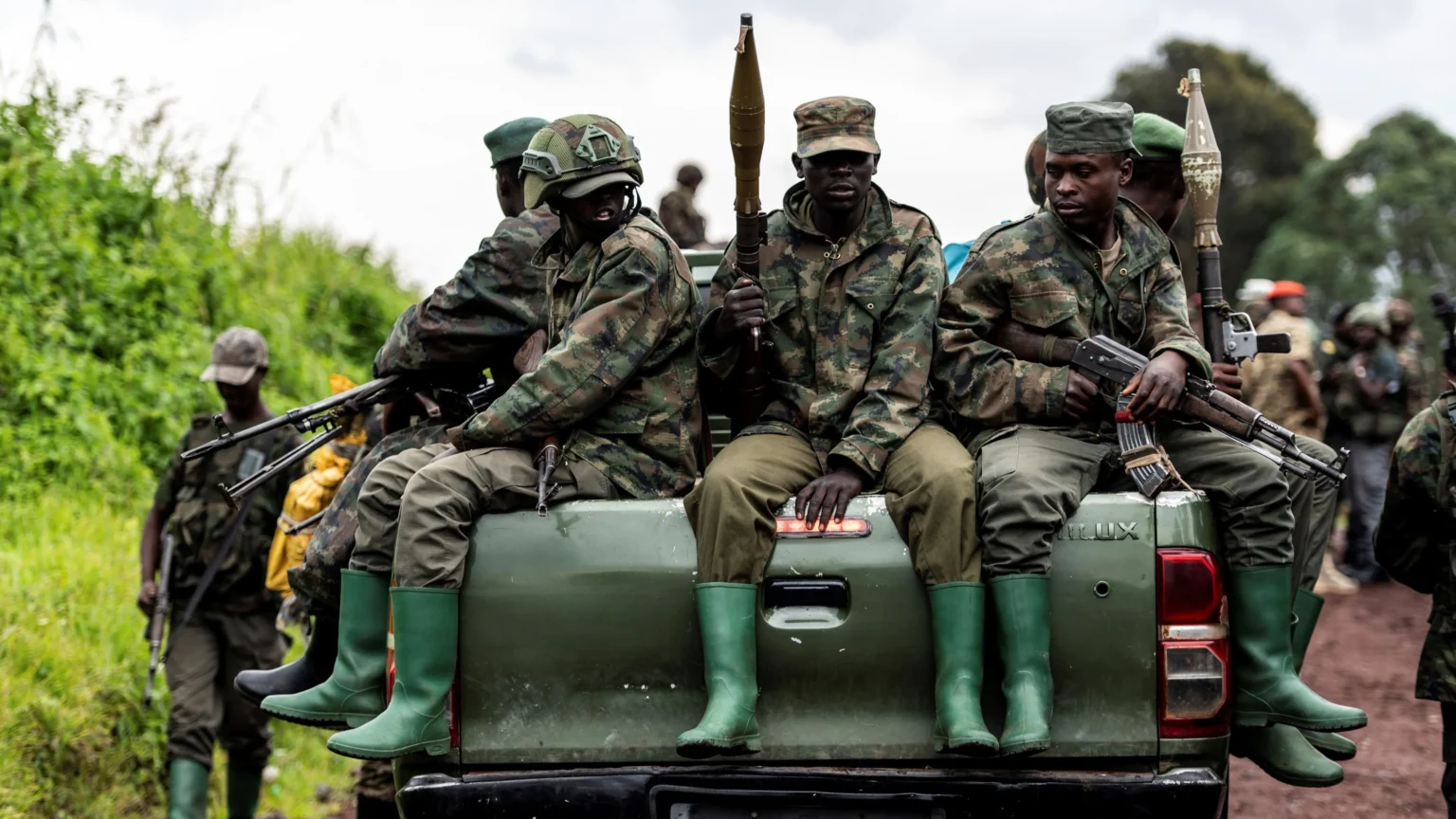
The U.S. Department of the Treasury Monday imposed sweeping sanctions on the Rwanda Defence Force (RDF) and four of its most senior commanders, accusing them of directly supporting the rebel group March 23 Movement (M23) in eastern Democratic Republic of Congo (DRC).
In a statement issued by its Office of Foreign Assets Control (OFAC), the Treasury said the RDF has been actively training, equipping and fighting alongside M23 — a group already sanctioned by both the United States and the United Nations for human rights abuses and fueling a mass displacement crisis in the mineral-rich eastern DRC.
Accusations of Direct Combat Role
Washington alleges that thousands of RDF troops are currently deployed across eastern DRC, where they have engaged in combat operations and facilitated M23’s territorial expansion.
The U.S. says Rwanda has supplied M23 with advanced military capabilities, including drones, GPS jamming systems, air defense equipment and other materiel. The support, according to the Treasury, enabled M23 to seize key urban centers, including the provincial capitals of Goma and Bukavu, as well as strategic mining areas believed to be crucial to financing the rebellion.
The Treasury further accused the RDF of recruiting and training M23 fighters at Rwandan military facilities and supporting recruitment efforts, including among refugee populations.
“With support from the RDF, M23 has engaged in extrajudicial killings, arbitrary arrests and torture,” the statement said.
Escalation Despite Washington Accords
The sanctions come days after U.S. President Donald Trump hosted DRC President Felix Tshisekedi and Rwanda’s President Paul Kagame for the signing of the Joint Declaration on the Washington Accords for Peace and Prosperity.
Despite that diplomatic effort, M23 reportedly captured Uvira, a strategic town along the DRC–Burundi border, triggering civilian casualties and forcing thousands to flee. Although the group later withdrew from the town, U.S. officials warned that its continued presence near Burundi — and Rwanda’s alleged backing — risks expanding the conflict into a broader regional war.
In a joint statement, the International Contact Group for the Great Lakes condemned ongoing military operations by M23 and the RDF and called for the immediate withdrawal of Rwandan forces from eastern DRC.
Senior Officials Targeted
Four high-ranking RDF commanders were individually designated under Executive Order 13413, as amended:
• Vincent Nyakarundi, Army Chief of Staff
• Ruki Karusisi, Commander of the 5th Infantry Division
• Mubarakh Muganga, Chief of Defence Staff
• Stanislas Gashugi, Special Operations Force Commander
The Treasury said the officials are being sanctioned for leading an entity whose actions threaten the peace, security and stability of the DRC.
What the Sanctions Mean
As a result of the designation:
• All property and interests in property of the RDF and the named officials within U.S. jurisdiction are blocked.
• U.S. persons are prohibited from engaging in transactions involving the sanctioned individuals or entity unless authorized.
• Entities owned 50 percent or more by the designated parties are also blocked.
• Foreign financial institutions risk secondary sanctions exposure for facilitating prohibited transactions.
Treasury Secretary Scott Bessent said the sanctions are intended to compel compliance with commitments made under the Washington Accords.
“The ultimate goal of sanctions is not to punish, but to bring about a positive change in behavior,” he said, calling for the immediate withdrawal of RDF troops, weapons and equipment from eastern DRC.
Regional and Diplomatic Implications
Eastern DRC has endured decades of armed conflict involving local militias, foreign-backed armed groups and regional armies competing over influence and access to vast mineral wealth, including coltan, gold and cobalt.
Kinshasa has long accused Kigali of backing M23 — allegations Rwanda has repeatedly denied in the past. The new U.S. measures significantly raise diplomatic stakes, potentially straining relations between Washington and Kigali and reshaping regional security dynamics in the Great Lakes region.
Analysts warn that failure to de-escalate could destabilize neighbouring states, including Burundi and Uganda, and undermine ongoing peace initiatives.
Neither the Rwandan government nor the RDF had immediately responded publicly to the U.S. sanctions at the time of publication.
The sanctions mark one of the strongest U.S. actions to date against Rwanda over the eastern Congo conflict, signaling a shift from diplomatic pressure to direct economic penalties in an effort to halt the escalating crisis.

Email your news TIPS to Editor@Kahawatungu.com — this is our only official communication channel
