


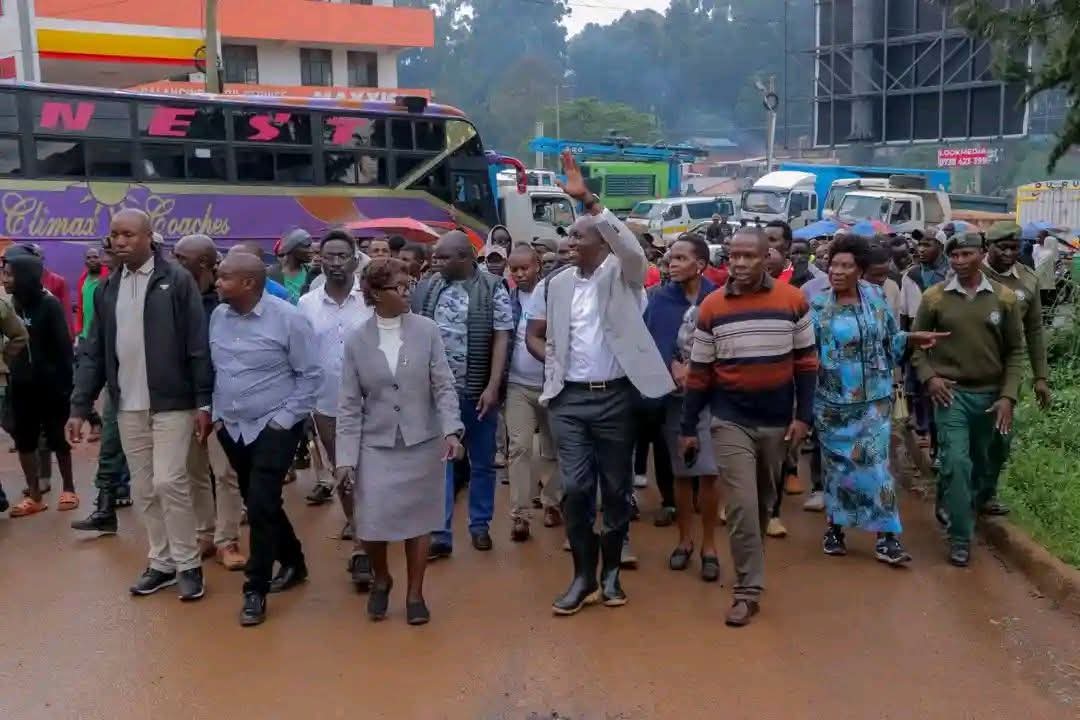
At dawn, Kisii wakes with promise—shops open, matatus rev, and boda bodas line up for the day’s hustle.
But by mid-morning, that promise collapses into chaos. Traffic grinds to a halt, pedestrians squeeze through shrinking walkways, and the town’s rapid growth begins to feel like a burden rather than a blessing.
Over the past decade, Kisii has transformed from a quiet trading post into a bustling commercial hub. Modern buildings, banks, and businesses now dominate spaces that were once simple paths.
But the infrastructure beneath this growth tells a different story. Roads designed for a smaller population now carry an overwhelming mix of vehicles—matatus, private cars, motorcycles, and handcarts—all competing with pedestrians for space.
The result is daily gridlock, where short trips stretch into hours and productivity is lost in traffic.
The visible congestion is only part of the problem. Beneath the surface lies a failing drainage system.
Drainage tunnels meant to channel stormwater are now clogged with plastic waste, silt, and debris. Some have even been encroached upon by new developments.
Worse still, residents report that some businesses discharge untreated waste into these systems—often during rainfall to conceal the act.
When it rains, the consequences are immediate flooded roads, stagnant, contaminated water, traffic paralysis and increased public health risks.
What should be routine rainfall quickly escalates into a crisis.
Kisii’s public spaces are steadily disappearing.
Sidewalks meant for pedestrians have been overtaken by informal traders. At key points like Umoja and near the central business district, stalls spill into walkways, forcing people onto already congested roads.
In narrow alleys such as those near St Jude and Daraja Mbili, movement has become a daily struggle. Boda bodas weave through crowds, often narrowly avoiding collisions.
Even shop owners feel the strain, as traders set up directly outside their premises, blocking access and visibility.
The bus park—meant to be an organized transit hub—has turned into a pressure point of congestion and insecurity.
Here, commuters, vehicles, and traders compete for limited space. Amid the chaos, petty crime and illicit trade thrive in plain sight.
While authorities insist on ongoing crackdowns, many residents feel enforcement remains inconsistent.
Kisii’s growth has created opportunities—but also disorder.
From roadside food vendors to makeshift kitchens set up along drainage lines, informal businesses are thriving. They provide affordable services and livelihoods, yet their unregulated spread contributes to poor waste management, blocked drainage systems and increased congestion.
This reflects a deeper issue: the absence of designated, well-planned spaces for small-scale traders.
Urban experts point to a clear pattern—development without coordination.
In Kisii zoning laws are weakly enforced, public transport lacks structured termini, market spaces are insufficient and construction often ignores infrastructure limits.
The outcome is a town where movement is constantly disrupted, and basic systems—transport, sanitation, and safety—are under strain.
Kisii’s story is not unique, but it is urgent.
Every blocked alley, every flooded street, and every congested road reflects a deeper planning failure. Without decisive action—better zoning, infrastructure investment, and enforcement—the town risks choking on its own growth.
Yet with proper planning, Kisii can still reclaim its promise.
Because right now, the cost of poor planning is being paid daily—one crowded street at a time.

Email your news TIPS to Editor@Kahawatungu.com — this is our only official communication channel
