


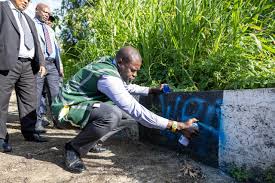
A section of the State House perimeter wall built on riparian land was marked for demolition in a bold move aimed at reclaiming Nairobi’s waterways, in what leaders are describing as a powerful signal of commitment from the highest office in the land.
Nairobi Governor, Johsnon Sakaja alongside the Secretary of Administration at State House, officials from the Nairobi River Commission, and the Nairobi West County Commissioner, announced the decision as part of the ongoing Nairobi River Regeneration Programme.
He hailed the move as a demonstration of leadership and accountability, noting that the President, as the “primary tenant” of State House, had agreed to comply with environmental regulations.
“I want to thank the President. He is the primary tenant here and has led by example. If this wall at State House can come down, then every other structure along the riparian land must also be removed,” he said.
The demolition is part of a wider government initiative to restore riparian reserves, improve environmental conditions, and create modern urban infrastructure along Nairobi’s rivers.
Authorities revealed that over Sh50 billion has been allocated to the project, which includes river restoration, construction of pedestrian and cycling corridors, and development of public spaces.
“We are restoring the Nairobi River, creating walkways, reclaiming riparian land, and transforming the city. The walkways will serve as transport corridors where people can walk or cycle safely, with lighting and security,” the Governor added.
He noted that the project will eventually connect key parts of the city, allowing residents to move from areas such as Eastleigh to Westlands through scenic river corridors.
The initiative also includes major developments such as the construction of a modern Gikomba Market and the transformation of areas like Globe Roundabout. In Westlands and other affected regions, public participation forums are ongoing to ensure residents understand and support the changes.
Officials cited previous successes, including the reclamation of land along the Kibagare River near Westgate, where a park is currently under development.
While urging residents to comply with demolition directives, the Governor warned against political interference and called on the public to support the initiative.
“It is unfortunate that some politicians are misleading people against what is beneficial for all of us. This programme is for the good of Nairobi,” he said.
He also issued a safety warning to youth and residents, cautioning them against scavenging materials from partially demolished buildings.
“We will not allow people to risk their lives by scavenging from unsafe structures. Demolitions will be supervised to ensure safety,” he emphasized.
Sakaja further highlighted ongoing rehabilitation efforts at Nairobi Dam and broader infrastructure improvements across the city, including enhanced lighting and road upgrades.
With the State House demolition setting the tone, authorities say the Nairobi River Regeneration Programme marks the beginning of a major transformation aimed at restoring the capital’s environmental integrity and reshaping its urban future.

Email your news TIPS to Editor@Kahawatungu.com — this is our only official communication channel
