


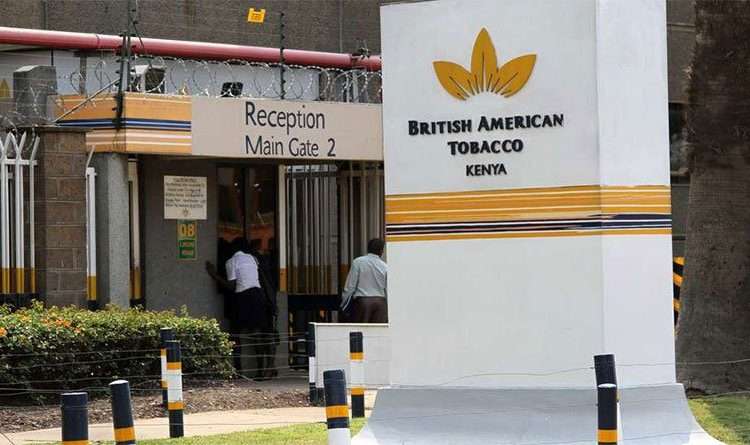
British American Tobacco Kenya PLC has raised alarm over the proposed Tobacco Control (Amendment) Bill, 2024, warning that the legislation could trigger an annual loss of Sh12 billion in government revenue while threatening more than 100,000 livelihoods across the tobacco value chain.
In a memorandum submitted to the National Assembly, BAT Kenya Managing Director Crispin Achola argued that several provisions in the Bill could unintentionally strengthen the illicit tobacco market, which the company says already accounts for nearly 45 percent of cigarette sales in Kenya.
At the centre of BAT Kenya’s concerns is the proposed blanket ban on flavours for all tobacco and nicotine products under Section 14J(1)(f). The company described the proposal as excessive and warned that prohibiting flavours would drive consumers toward unregulated and illegal products supplied by criminal networks.
BAT Kenya cited international examples from countries such as the United Kingdom, New Zealand and Sweden, where regulated adult-oriented flavours are used as part of harm-reduction strategies to encourage smokers to transition to lower-risk alternatives.
Read: KNCCI Warns Tobacco Bill Could Increase Costs, Fuel Illicit Trade
The company also criticized the Bill’s classification of smokeless nicotine products such as electronic cigarettes and nicotine pouches as tobacco products. According to BAT Kenya, the move ignores scientific distinctions between combustible tobacco and non-combustible nicotine alternatives, many of which use synthetic or plant-based nicotine rather than tobacco leaf.
BAT Kenya referenced findings by the Royal College of Physicians, which has previously stated that encouraging smokers to switch to smoke-free nicotine alternatives could significantly reduce smoking-related health risks.
The memorandum further objected to proposed dual licensing and registration requirements under Sections 20A and 21A, arguing that traders would be forced to comply with overlapping regulatory systems administered by the Ministry of Health in addition to existing licensing frameworks. BAT Kenya warned that the added bureaucracy and costs would particularly hurt small-scale retailers and distributors.
The company also questioned the practicality of the proposed 100-metre restriction on tobacco sales near certain areas, saying the measure would be difficult to enforce and could create confusion among traders.
Read Also: RETRAK Opposes Sections of Proposed Tobacco Control Bill
Environmental provisions within the Bill also came under criticism. BAT Kenya argued that the proposed ban on single-use plastics fails to acknowledge existing Extended Producer Responsibility (EPR) frameworks already guiding waste management and sustainability efforts within the industry.
Additionally, the company described proposed expansions to Graphic Health Warnings and ministerial powers on plain packaging as burdensome, especially after recent regulatory changes introduced in June 2025 that the industry is still implementing.
BAT Kenya further accused lawmakers of failing to conduct sufficient stakeholder consultations before advancing the Bill through the Senate, arguing that the process did not meet constitutional thresholds for meaningful public participation.
“We remain committed to supporting the government’s public health objectives,” said Crispin Achola. “However, regulation must be balanced and based on the best available science. The current proposals risk destroying a legitimate value chain and creating a fertile ground for the black market to thrive, ultimately undermining the very public health goals they seek to achieve.”
The Tobacco Control (Amendment) Bill, 2024 is currently before the National Assembly, where lawmakers are expected to review submissions from industry players, health advocates and other stakeholders before determining the next course of action.

Email your news TIPS to Editor@Kahawatungu.com — this is our only official communication channel
