


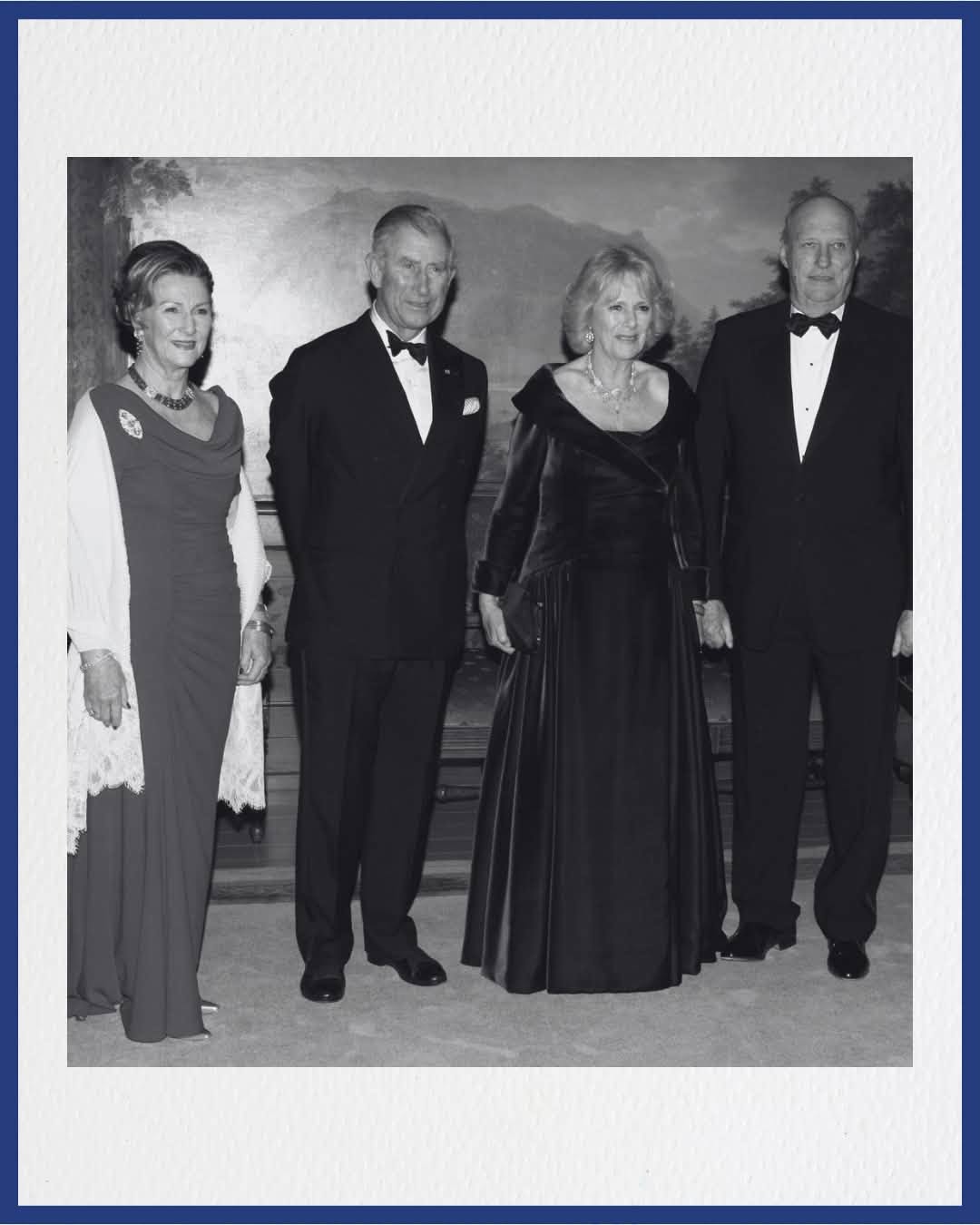
King Charles III has expressed his “profound sadness” following the death of his cousin, King Harald V of Norway, who died aged 89 on Friday.
Charles said he and Queen Camilla were deeply saddened by the death of Harald, who served as Norway’s king for 35 years.
In a statement on Friday, Charles described Harald as a monarch who served his people with unwavering dedication and guided Norway through periods of great change with warmth and humility.
“As Norway mourns the loss of so towering a figure, my whole family join in remembering a much-loved kinsman and friend whose kindness, compassion and deep sense of duty echoed from across the sea and across the decades,” Charles said.
The British monarch noted the close historical ties between the United Kingdom and Norway, saying Britain was among the first countries to recognise Norwegian independence and establish diplomatic relations with the country in 1905.
He said the relationship between the two countries was further strengthened during the Second World War.
“These bonds were even further strengthened during the dreadful trials of the Second World War and helped bind two countries together,” Charles said.
The King extended his condolences to Queen Sonja and the wider Norwegian royal family.
“The Queen and I extend our deepest and most heartfelt condolences to Queen Sonja and all her family, as Britain shares in Norway’s grief at this time of such heartbreaking loss,” the statement read.
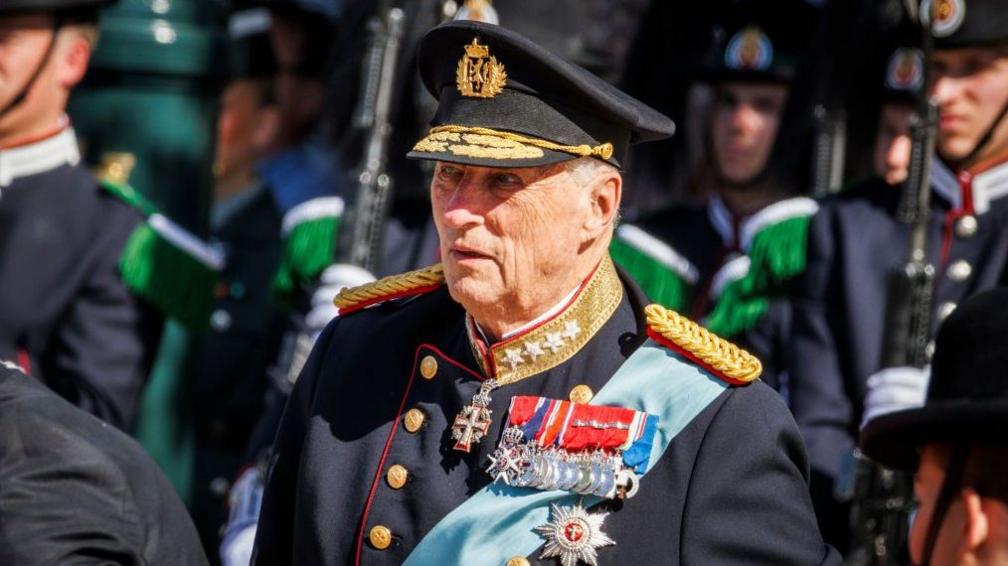
King Harald died peacefully at 6:35 a.m. local time on Friday at the national hospital in Oslo after being admitted for treatment for a rare blood condition.
The Norwegian royal palace lowered its flag to half-mast following his death.
In the hours leading up to his death, members of the royal family visited the king, while members of the public gathered outside the palace to lay flowers in his memory.
Harald was Norway’s first king born in the country since the 14th Century.
He has been succeeded by his son, Crown Prince Haakon.
After 35 years on the throne, Harald will be remembered as a popular monarch who helped modernise the Norwegian royal family and became a unifying figure during some of the country’s most difficult moments.
Royal observers described him as down-to-earth and widely respected, with some referring to him as the “People’s king”, a title also associated with his father, King Olav V.
One of the defining moments of Harald’s reign came after the 2011 terrorist attacks in Oslo and on the island of Utøya.
Neo-Nazi Anders Breivik killed eight people in a car bomb attack in Oslo before travelling to Utøya, where he shot dead 69 people, most of them teenagers.
Harald responded by urging Norwegians to stand together and reject fear.
“I can only imagine the depth of your pain. As King of this nation, I feel for each and every one of you,” he said in an emotional address.
His response was later remembered as an important moment in his reign and reflected his reputation for showing empathy and compassion.
Harald also attracted international attention in 2016 after delivering a speech in which he strongly defended diversity in Norwegian society.
He spoke about Norwegians from different countries, religions and backgrounds and said the country included people with different sexual orientations.
His comments reinforced his reputation as a monarch willing to break with traditional royal conventions.
Historian Ole-Jørgen Schulsrud-Hansen said Harald helped make the Norwegian monarchy more egalitarian and transparent, particularly on issues involving finances and health.
Royal correspondent Tove Taalesen described Harald as “one of us”, while royal expert Caroline Vagle said he had always maintained a close relationship with ordinary Norwegians.
Harald was born on February 21, 1937, at the Skaugum estate near Oslo.
He was three years old when Nazi Germany invaded Norway during the Second World War.
His mother fled with her children across the border into Sweden before they travelled to the United States at the invitation of President Franklin D. Roosevelt.
Harald returned to Norway with his family after the war and completed his education and compulsory military service.
He became Crown Prince in 1957 and later studied social science, history and economics at Balliol College, Oxford, between 1960 and 1962.
Harald met Sonja Haraldsen, the daughter of a businessman, at a party.
The Crown Prince had to wait nine years before he was allowed to marry her because his father, King Olav, had hoped he would marry a European princess.
Harald eventually told his father that if he could not marry Sonja, he would remain single.
King Olav eventually gave his consent and the couple married at Oslo Cathedral on August 29, 1968.
Their marriage broke with royal tradition and later paved the way for other members of the Norwegian royal family to marry commoners.
Harald and Sonja remained married for almost 58 years and had two children, Princess Märtha Louise and Crown Prince Haakon.
When King Olav became ill in 1990, Crown Prince Harald became regent.
He ascended to the throne after his father’s death on January 17, 1991.
According to historian Trond Norén Isaksen, Harald became more open and empathetic around the turn of the millennium after initially being viewed as reserved, serious and shy.
He went on to develop a reputation for showing emotion, humour and vulnerability in public.
Harald was also a keen sportsman and accomplished sailor.
He represented Norway in sailing at three Olympic Games and remained involved in competitive sailing for decades.
He ended his competitive sailing career in 2022.
He was also an environmentalist and helped establish the Norwegian branch of the World Wide Fund for Nature, serving as its president for 20 years.
In his later years, Harald’s family faced several controversies and health challenges.
His daughter-in-law, Crown Princess Mette-Marit, came under scrutiny over her association with the late convicted sex offender Jeffrey Epstein.
Her son, Marius Borg Høiby, also faced a criminal case and was convicted of rape and other offences.
Princess Märtha Louise also attracted controversy after marrying American self-styled shaman Durek Verrett in 2024.
The royal family’s difficulties contributed to increased public scrutiny of the monarchy.
Despite the controversies, royal observers said criticism was rarely directed at Harald personally.
Caroline Vagle said the late monarch remained widely loved by Norwegians.
“When things go wrong in the royal family, people tend to blame anyone but the king,” historian Trond Norén Isaksen said.
As Harald’s health deteriorated, he reduced his public engagements.
His death now marks the beginning of a new era for Norway under his son, King Haakon.
Haakon faces the challenge of leading the monarchy while dealing with continuing scrutiny surrounding his family.
Harald is survived by Queen Sonja, their daughter Princess Märtha Louise, their son King Haakon and six grandchildren.
Email your news TIPS to Editor@Kahawatungu.com — this is our only official communication channel
