


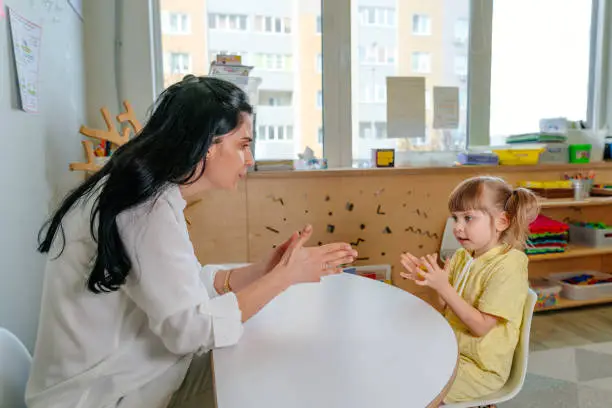
Learning how to improve speech delay starts with understanding that children develop language at different rates. Some children may begin talking later than others, while speech or language delays can sometimes be associated with hearing problems, developmental differences or other communication difficulties. Parents can support language development through everyday talking, reading, play and interaction. However, if you are concerned about your child’s speech, it is important not to simply wait for the child to catch up without seeking professional advice. Early evaluation and support can be beneficial.
-
Talk to Your Child Frequently
Talk to your child throughout the day, even when they are not yet speaking. Describe what you are doing, what you see and what is happening around you.
For example, while preparing food, you can say, “We are washing the vegetables.” While getting dressed, name the clothes and describe their colours.
Frequent interaction gives children opportunities to hear words repeatedly and understand how language is used in everyday situations.
-
Encourage Your Child to Respond
Give your child opportunities to communicate rather than always anticipating what they want.
If your child points at a cup, for example, you can say, “Do you want water?” Then give the child time to respond with a sound, gesture, word or other form of communication.
Do not pressure the child to speak immediately. The goal is to encourage communication and gradually build confidence.
-
Read Books Together Every Day
Reading with your child is a simple way to introduce new words and encourage communication.
Choose colourful, age-appropriate books and talk about the pictures. Ask questions such as “Where is the dog?” or “What is the boy doing?”
If your child cannot answer verbally, allow them to point, gesture or make sounds. You can then provide the correct word and continue the conversation.
-
Sing Songs and Nursery Rhymes
Songs and nursery rhymes can make language practice enjoyable. Repeated sounds, words and phrases give children opportunities to listen and eventually participate.
Pause before the final word of a familiar phrase and give your child an opportunity to complete it if they are able.
Clapping, gestures and movements can also make the activity more interactive.
-
Use Play to Encourage Speech
Play provides natural opportunities for children to practise communication. Use toys, dolls, cars, building blocks, puzzles and household objects to create simple conversations.
For example, while playing with a toy car, use words such as “car,” “go,” “stop,” “fast” and “red.”
Follow your child’s interests and add simple language to whatever they are already doing.
-
Expand What Your Child Says
When your child uses a word or short phrase, respond by adding one or two words.
If your child says “ball,” you could say, “red ball” or “big ball.” If they say “drink,” you could respond, “want a drink?”
This provides a natural model of slightly more advanced language without forcing the child to repeat everything.
-
Give Your Child Time to Speak
Some children need additional time to process a question and prepare a response.
After asking a question, wait patiently rather than answering immediately for the child.
Avoid repeatedly saying, “Say this” or “Repeat after me” throughout the day. Instead, create relaxed opportunities where communication happens naturally.
-
Reduce Background Distractions
When talking or playing with your child, try to reduce distractions such as television or loud background noise.
Sit near the child, make eye contact when appropriate and focus on the activity together.
A quieter environment can make it easier for the child to pay attention to speech and participate in the interaction.
-
Encourage Gestures and Other Forms of Communication
Communication is not limited to spoken words. Pointing, waving, nodding, facial expressions and other gestures can help children communicate while their spoken language is developing.
Respond positively to these attempts and attach words to them. If your child points toward a banana, you might say, “Banana. You want a banana.”
Encouraging communication in different forms can help reduce frustration while supporting language development.
-
Check Your Child’s Hearing
Hearing problems can affect a child’s ability to learn and use spoken language. If you have concerns about speech development, ask your child’s healthcare professional whether a hearing assessment is appropriate.
A doctor may recommend a hearing test as part of an evaluation of a language delay.
-
Consider Speech and Language Therapy
If your child has a significant or persistent speech or language delay, a speech and language therapist can assess their communication skills and recommend appropriate support.
Therapy may focus on areas such as understanding language, using words, producing speech sounds or communicating socially, depending on the child’s individual needs.
The appropriate intervention depends on the reason for the delay, so professional assessment is important.
-
Track Your Child’s Development
Keep notes about the words, sounds, gestures and communication behaviours your child uses.
You can also monitor developmental milestones appropriate for your child’s age. Developmental monitoring can help parents and healthcare professionals identify areas that may need additional attention.
Bring your notes to medical or developmental appointments because they can help explain what you have observed at home.
-
Do Not Compare Your Child Too Closely With Other Children
Children do not all develop language at exactly the same pace. Comparing your child constantly with siblings, classmates or other children can create unnecessary anxiety.
At the same time, differences in development should not be ignored when they are persistent or concerning.
Focus on your child’s progress and discuss any concerns with a healthcare professional rather than relying solely on comparisons with other children.
-
Seek Professional Help When You Have Concerns
If your child is not meeting expected communication milestones, speak with a doctor or other qualified child-development professional.
Do not feel that you have to wait until the child becomes much older before asking for help. Current developmental guidance encourages parents to discuss concerns early and request developmental screening when appropriate.
Professional assessment can help determine whether the child simply needs additional language support or whether there is an underlying issue that needs attention.
-
Act Early When Speech Delay Persists
Early support can give children more opportunities to develop communication skills. Depending on the child’s needs, support may include speech therapy, hearing assessment, developmental evaluation or other services.
While waiting for an appointment, continue talking, reading, singing and playing with your child. The CDC recommends making everyday playtime interactive by talking to children, naming objects, telling stories and explaining what is happening around them.
Also Read: How to Improve Communication Skills

Email your news TIPS to Editor@Kahawatungu.com — this is our only official communication channel
