


On September 10, 2026, Saudi Arabia’s East-West pipeline was struck by multiple drones, forcing a precautionary shutdown of the critical oil artery. Saudi Arabia’s Ministry of Energy confirmed the pipeline “was shut down as a precautionary measure” following the attacks, which occurred in the Riyadh and Madinah regions.
The Saudi Foreign Ministry stated the pipeline was targeted “by several drones coming from Iraq, which resulted in injuries and some damage that is currently being addressed”. Saudi Arabia blamed the attack on Iranian-backed militias operating in Iraq.
Iraq’s government confirmed the drones were launched from its territory. Iraqi Prime Minister Ali al-Zaidi ordered an investigation into the operations command of Maysan province, along the border with Iran, and dismissed the province’s commander along with the provincial police chief.
An umbrella group of Iran-backed militias in Iraq denied responsibility for the attack.
What Is the East-West Pipeline?
The East-West pipeline, also known as Petroline, is one of Saudi Arabia’s most important crude oil transportation systems. It stretches approximately 1,200 kilometers (745 miles) from Abqaiq in the kingdom’s Eastern Province to Yanbu on the Red Sea coast.
Built in the 1980s during the Iran-Iraq war, the pipeline was designed to provide an alternative outlet for Saudi oil exports through the Red Sea instead of the Persian Gulf.
The pipeline is operated by Saudi Aramco, the state energy company. It lies entirely within Saudi territory and does not cross any other country’s borders.
The pipeline’s full pumping capacity stands at approximately 7 million barrels per day, a figure confirmed by the Saudi Energy Ministry in April 2026. According to Aramco’s first-quarter 2026 results, the pipeline had been ramped up to its maximum capacity of 7 million barrels per day to support supplies and exports through Saudi Arabia’s western coast.
Of that 7 million barrels per day capacity, around 2 million barrels per day is directed toward refineries on the western coast, leaving up to 5 million barrels per day of capacity available for exports and other destinations.
The East-West pipeline serves as Saudi Arabia’s primary alternative export route when shipping through the Strait of Hormuz is disrupted. The US Energy Information Administration has identified the pipeline as one of the principal routes capable of bypassing the Strait of Hormuz during a supply disruption.
Before the shutdown, the pipeline was carrying approximately 4 million barrels of oil per day across the Arabian Peninsula to Yanbu, equivalent to roughly 4% of global oil supply.
The pipeline’s strategic function extends beyond domestic transportation. It allows Saudi Arabia to move large quantities of crude to the Red Sea without shipping through the Strait of Hormuz amid the current military conflict between the US and Iran.
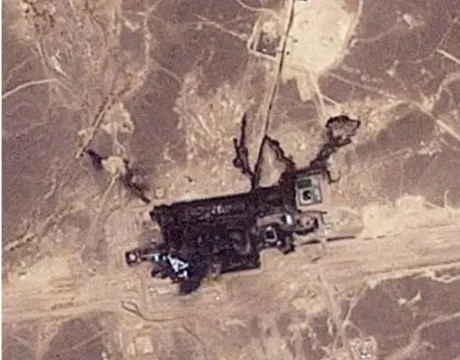
The drone strikes damaged pumping stations located alongside the pipeline. An early analysis by US officials found that pump stations were hit, and satellite imagery showed extensive fire damage at one station. Pump Station Number 11 was specifically identified as damaged in the attack.
Two regional officials briefed on the matter told the Associated Press that repairing the damage could take three to five weeks, including at a major pumping facility. One of the officials said the pipeline may work partially while teams carry out the repairs.
Industry sources who spoke to Reuters gave varying estimates. One source said repairs could take as long as five to six weeks, while another said the pipeline could be fixed sooner and could resume pumping partially while repair work is ongoing.
Experts noted that repairing pumping stations could take less time than fixing serious ruptures directly on the main pipeline.
With the pipeline out of service, Saudi Arabia’s Red Sea export terminal at Yanbu has limited storage capacity. According to three industry sources familiar with Saudi exports, Yanbu has stocks to maintain exports for just five to seven days.
Saudi Arabia could buy additional time by drawing on crude inventories stored in Egypt, which could cushion export losses for approximately one week. Kpler estimated that Yanbu held approximately nine million barrels of crude on Monday, more than seven million barrels below its level two months earlier.
Brent crude, the international benchmark, was trading up three percent on Monday at nearly $108 per barrel following the attack. Physical crude sold from Oman was fetching $121 per barrel, and Murban crude shipped from the UAE port of Fujairah was $131 per barrel.
The attack on the East-West pipeline came as Iran-backed Houthi rebels in Yemen intensified pressure on the Bab el-Mandeb Strait at the southern end of the Red Sea, through which about 12% of global trade passes. The Houthis seized a strategic Red Sea port city in Yemen days before the pipeline attack.
Regional officials told the Associated Press that the Houthis and Iraqi militias had recently coordinated attacks on Saudi Arabia.
US President Donald Trump said Iran was “probably” responsible for the pipeline attack but tried to calm concerns about broader escalation. Iranian President Masoud Pezeshkian stated, “We are not in war with Saudi Arabia”.
Several Arab countries including Kuwait, the United Arab Emirates, Oman, and Egypt condemned the attack.
Saudi Arabia said it would not retaliate for now, after a request from Iraqi Prime Minister Ali Al Zaidi to give the Iraqi government “an opportunity to take the necessary measures to prevent attacks launched from Iraqi territory against the Kingdom and neighboring countries”.
The Saudi Ministry of Foreign Affairs stated the Kingdom “reserves the right to take all necessary measures to protect its sovereignty”.
Saudi Aramco, which operates the pipeline, did not respond to requests for comment.
Iraq’s government condemned the attacks and stated it “will not allow its territory or airspace to be used for attacks”.

Email your news TIPS to Editor@Kahawatungu.com — this is our only official communication channel
