


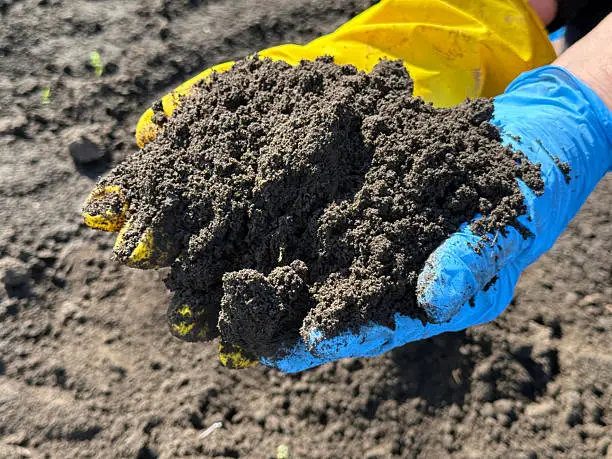
Learning how to improve black cotton soil for farming can help farmers increase crop productivity and make better use of land that is often difficult to cultivate. Black cotton soil, also known as Vertisol, contains a high amount of clay. It can hold considerable amounts of water and nutrients, but it also expands when wet, shrinks and cracks when dry, and can drain poorly when saturated. With proper drainage, organic matter, soil preparation and crop management, black cotton soil can become productive farmland.
-
Improve Drainage
Poor drainage is one of the biggest challenges when farming on black cotton soil. Because the soil has high clay content, water may remain near the surface after heavy rainfall.
Create suitable drainage channels or furrows to direct excess water away from the crop area.
- Create surface drains where necessary
- Maintain furrows between planting rows
- Prevent water from remaining around plant roots
- Ensure drainage water has a safe outlet
-
Add Well-Decomposed Organic Matter
Adding organic matter such as well-rotted farmyard manure, compost or suitable crop residues can improve soil structure over time.
Organic matter can help improve aggregation and make heavy clay soil easier to manage.
Apply well-decomposed material rather than fresh manure, which may damage plants or introduce unwanted organisms.
-
Use Raised Beds or Ridges
Raised beds can be useful where water tends to collect. They lift the crop’s root zone above the surrounding soil surface and can help excess water move into furrows.
The height and spacing of beds should depend on the crop, rainfall and field conditions.
- Raise the planting area
- Keep drainage furrows between beds
- Avoid allowing furrows to become blocked
- Adjust bed design to the crop being grown
-
Avoid Cultivating When the Soil Is Too Wet
Working black cotton soil when it is saturated can cause severe compaction and smearing. This can make the soil even harder for roots and water to penetrate.
Wait until the soil reaches a suitable moisture condition before ploughing or using heavy machinery.
This is particularly important because black cotton soil has a relatively narrow window when it is easy to cultivate.
-
Break Compacted Layers When Necessary
Where a compacted layer is restricting root growth and water movement, appropriate deep cultivation or chiselling may help.
However, deep tillage should not be done automatically. First determine whether compaction is actually present and whether the soil moisture is suitable for the operation.
- Check for compacted layers
- Use appropriate tillage equipment
- Avoid working saturated soil
- Do not repeatedly disturb the soil unnecessarily
-
Consider Gypsum Where Appropriate
Gypsum can be useful in certain problem soils, particularly where sodicity or poor soil structure associated with sodium is present. It supplies calcium and can help improve soil structure in suitable situations.
However, gypsum is not a universal treatment for every black cotton soil. Test the soil first and apply it according to the identified soil problem rather than adding large quantities without assessment.
-
Maintain Soil Cover
Leaving black cotton soil completely exposed can increase runoff and erosion during heavy rainfall.
Use crop residues, mulch, cover crops or suitable vegetation to protect the soil surface. Maintaining cover can also contribute organic matter as plant material decomposes.
- Leave suitable crop residues on the field
- Use mulch around appropriate crops
- Grow cover crops where practical
- Avoid unnecessary removal of plant material
-
Practise Crop Rotation
Growing the same crop continuously can contribute to nutrient depletion and increase pest and disease problems.
Rotate crops with suitable alternatives to improve nutrient management and make better use of the soil.
Legumes can be particularly useful in rotations because they can contribute nitrogen to the farming system when properly managed.
-
Use Green Manure Crops
Green manure involves growing suitable plants and incorporating or leaving their biomass in the field to improve soil organic matter.
Select green manure crops according to the local climate, soil conditions and main crop.
This practice can gradually improve soil quality while also helping protect the soil surface.
-
Apply Fertilizer Based on Soil Testing
Black cotton soil may have good nutrient-holding capacity, but this does not mean every nutrient is available to crops in sufficient amounts.
Conduct a soil test before making major fertilizer decisions. The results can help determine which nutrients are deficient and what amendments may be appropriate.
Avoid applying fertilizer simply because the soil looks dark or fertile.
-
Manage Irrigation Carefully
Black cotton soil can retain substantial amounts of water, so excessive irrigation can quickly create waterlogging.
Use irrigation according to crop requirements, rainfall and soil moisture. Avoid frequent heavy watering when the soil is already wet.
Drip irrigation or other controlled irrigation methods may be useful for suitable crops.
-
Choose Crops Suitable for the Conditions
Some crops tolerate heavy clay soils better than others. Crop selection should consider drainage, rainfall, temperature, soil fertility and the length of the growing season.
Consult local agricultural extension officers or agronomists when selecting crops for a particular black cotton soil farm.
-
Control Erosion and Runoff
Heavy rainfall can cause runoff across black cotton soil, particularly on sloping land.
Use practices such as contour farming, grass strips, appropriate drainage channels, mulching and crop cover where suitable.
Good field layout can reduce the amount of soil carried away by water.
-
Maintain Soil Organic Matter Over Time
Improving black cotton soil is not usually a one-time activity. Organic matter needs to be maintained through regular additions of compost, manure, crop residues and suitable green manure practices.
Avoid burning crop residues unnecessarily because returning suitable organic material to the soil can contribute to long-term soil health.
-
Monitor the Soil and Adjust Your Practices
Different black cotton soils can behave differently depending on their location, drainage, chemistry and management history.
Monitor crop growth, waterlogging, cracking, compaction, nutrient deficiencies and soil structure throughout the farming season.
Also Read: How to Improve Fertility in Women

Email your news TIPS to Editor@Kahawatungu.com — this is our only official communication channel
