


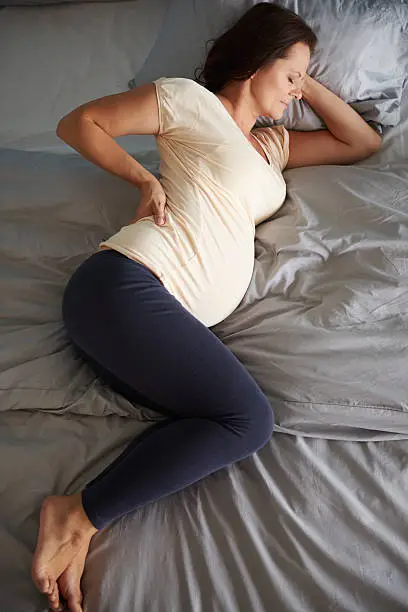
Hip pain can make it difficult to sleep comfortably during pregnancy, especially when you spend long periods lying on your side. As the pregnancy progresses, pressure on the hips, pelvis, and surrounding muscles can contribute to discomfort. Learning how to avoid hip pain while sleeping on your side during pregnancy can help you find a more comfortable sleeping position. Simple pillow support, regular position changes, and good body alignment may help reduce pressure on sore areas.
-
Use a Pillow Between Your Knees
Placing a pillow between your knees can help keep your hips, knees, and ankles better aligned while you sleep.
This can reduce twisting through your pelvis and may make side sleeping more comfortable.
- Place a pillow between your knees
- Keep your legs comfortably bent
- Choose a pillow that provides enough support
-
Support Your Bump
As your pregnancy progresses, supporting the weight of your abdomen can reduce strain on your hips and pelvis.
Try placing a small pillow underneath your bump while lying on your side.
- Use a small supportive pillow
- Position it under your bump
- Adjust it until your abdomen feels supported
-
Consider a Pregnancy Pillow
A long pregnancy pillow can support several parts of your body at once.
It may help support your bump, knees, and legs while keeping your body in a more comfortable side-lying position.
- Choose a pillow that suits your body
- Support your bump and legs
- Adjust the pillow as your pregnancy progresses
-
Keep Your Hips Aligned
Try to keep your upper leg from falling forward because this can rotate your pelvis and place additional strain on your hip.
A pillow between your legs can help prevent this movement.
- Keep your knees comfortably aligned
- Support your upper leg
- Avoid allowing one leg to fall far forward
-
Change Sides During the Night
If one hip becomes painful, changing sides can reduce pressure on that area.
If one hip is particularly painful, guidance from an NHS physiotherapy service recommends spending part of the night on the opposite side when possible.
- Change positions when discomfort develops
- Avoid staying on one painful hip for long periods
- Use pillows to make changing sides easier
-
Support Your Top Leg With Extra Pillows
If a single pillow between your knees does not provide enough support, you can place additional pillows under your upper leg.
This can help distribute the weight and reduce pressure on the lower hip.
- Support the knee and lower leg
- Keep the upper leg comfortably elevated
- Make sure the pillows do not force your hips into an awkward position
-
Check Your Mattress
A mattress that is too hard can place pressure on the bony areas of your hips, while one that is too soft may provide inadequate support.
Choose a mattress or mattress topper that provides comfortable support without creating excessive pressure.
- Check whether your mattress is contributing to pain
- Consider a supportive mattress topper
- Avoid sleeping on a surface that causes pressure points
-
Avoid Staying in One Position for Too Long
Even a comfortable position can become painful when you remain in it for many hours.
Changing position during the night can help distribute pressure across different areas.
- Move gently when needed
- Change sides when comfortable
- Avoid remaining on a painful hip
-
Turn in Bed Carefully
If turning over causes pelvic or hip pain, keep your knees together and move your body as a unit rather than twisting your pelvis.
This may make changing sides more comfortable, particularly if you have pregnancy-related pelvic girdle pain.
- Bend your knees
- Keep your legs together
- Turn your body gradually
- Avoid sudden twisting
-
Try Gentle Activity During the Day
Staying reasonably active during pregnancy can help maintain strength and mobility, provided the activity is appropriate for your pregnancy and does not worsen your pain.
Gentle walking and pregnancy-appropriate exercises may help support the muscles around your back, pelvis, and hips.
- Take gentle walks
- Follow pregnancy-appropriate exercises
- Stop activities that significantly increase pain
-
Avoid Leaning on One Hip
How you stand and sit during the day can affect how your hips feel at night.
Try to distribute your weight evenly rather than constantly standing with your weight on one hip.
- Stand with your weight balanced
- Avoid leaning on one side
- Change position regularly
-
Use Gentle Cold or Warmth Carefully
Some women find that a wrapped cold pack helps reduce soreness around the hip. Others may find gentle warmth more comfortable.
Avoid placing very hot heat directly against your abdomen, and ask your healthcare professional if you are unsure what is appropriate for you.
- Use a wrapped cold pack for short periods
- Keep heat comfortably warm rather than very hot
- Stop if an approach makes the pain worse
-
Speak to Your Midwife or Doctor About Persistent Pain
Hip pain that is severe, persistent, or interfering with sleep and daily activities deserves medical attention.
Pregnancy-related pelvic girdle pain can cause pain around the hips, lower back, pelvis, and thighs, and early assessment can help with appropriate treatment.
- Discuss persistent pain with your healthcare professional
- Ask whether you may have pelvic girdle pain
- Consider referral to a pregnancy physiotherapist if recommended
-
Know When Pain Needs Urgent Assessment
Do not assume every pain during pregnancy is ordinary hip discomfort.
Seek urgent medical advice if hip or back pain is accompanied by symptoms such as vaginal bleeding, fever, pain when urinating, severe pain, or other concerning pregnancy symptoms.
- Pay attention to new or severe symptoms
- Contact your maternity care provider when concerned
- Seek urgent help for serious or unusual symptoms
-
Prioritize Comfort and Safe Side Sleeping
Side sleeping is recommended later in pregnancy, particularly after 28 weeks. Both the left and right sides are acceptable. If you wake up on your back, do not panic. Simply turn back onto your side and go back to sleep.
The goal is to create a comfortable side-sleeping position with good support rather than forcing yourself to remain on one particular side all night.
Also Read: How to Improve Speech Delay in a 4-Year-Old

Email your news TIPS to Editor@Kahawatungu.com — this is our only official communication channel
