

Aldo Moro Siblings: Meet the Siblings Squad Behind the Former Italy Prime Minister

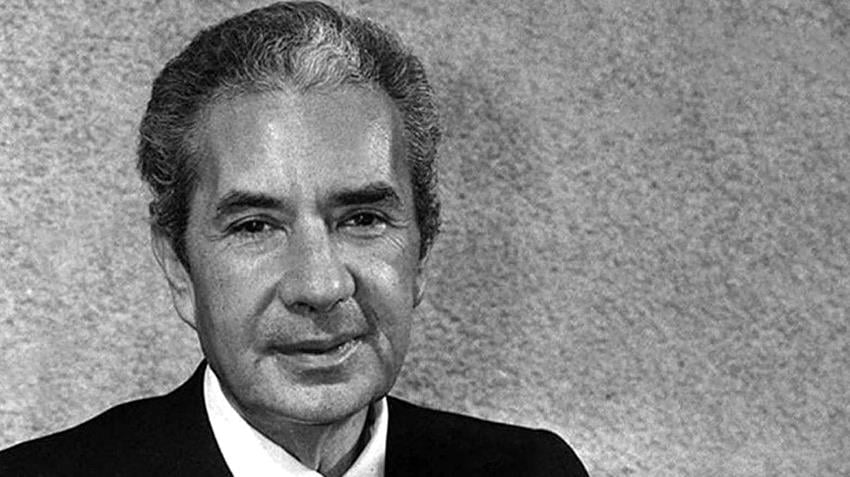
Aldo Moro PHOTO/Presidency
Aldo Romeo Luigi Moro was an Italian statesman, jurist, and leading figure in the Christian Democracy party.
Born on 23 September 1916 in Maglie, in the province of Lecce in Apulia, he came from a modest but culturally engaged southern Italian family.
His father, Renato Moro, worked as a school inspector, and his mother, Fida Sticchi (sometimes spelled Stinchi), was a teacher of Calabrian origin.
Moro studied law at the University of Bari, graduating with distinction, and went on to become a university professor of philosophy of law and later criminal law.
He served as prime minister of Italy on five occasions, helped shape the country’s constitutional framework, and pursued policies of dialogue and reform.
On 16 March 1978 he was kidnapped by the Red Brigades; after 55 days in captivity he was murdered on 9 May 1978.
His body was found in the trunk of a car in central Rome.
Siblings
Aldo was the second of five children born to Renato and Fida. His older brother Alberto, born in Maglie on 2 February 1914, pursued a career as a magistrate.
The younger siblings were Salvatore, born in Maglie on 12 May 1919, who worked as a civil servant or functionary; Maria Rosaria, born in Potenza on 27 August 1920, who became a teacher or professor; and Alfredo Carlo, born in Taranto in 1925, who also became a magistrate.
Alfredo Carlo served as president of the Juvenile Court of Rome and later as a section president of the Court of Cassation.
He wrote about his brother’s kidnapping and death in the book Storia di un delitto annunciato and died in 2005.
The siblings grew up in a household that combined a secular, state-oriented outlook from the father’s side with a deep, personal religious sensibility inherited especially from their mother.
Also Read: Paolo Gentiloni Siblings: Meet Chiara and Filippo Gentiloni Silveri

Career
Moro’s public life began in Catholic student and graduate organizations.
He served as national president of the Federazione Universitaria Cattolica Italiana (FUCI) from 1939 to 1942 or 1943 and later headed the Movimento Laureati Cattolici.
After the fall of fascism he helped found Christian Democracy and was elected to the Constituent Assembly in 1946, contributing to the drafting of the Italian Constitution.
He entered Parliament and held a succession of important posts: undersecretary for foreign affairs, minister of justice (1955–1957), and minister of public education (1957–1959).
From 1959 to 1964 he was political secretary of the Christian Democrats.
As prime minister he led three consecutive centre-left governments between December 1963 and June 1968, consolidating the “organic centre-left” formula that brought the Socialists into governing coalitions.
He later served multiple terms as foreign minister (1969–1972 and 1973–1974), pursuing a policy attentive to Mediterranean and Arab affairs as well as European integration.
He returned as prime minister in 1974–1976.
In his final years he became president of the Christian Democrats and advocated a cautious opening toward the Italian Communist Party, often described as the “historic compromise” or strategy of attention.
Throughout his career he balanced academic work with politics, remaining a professor while holding high office.
Accolades
Moro’s stature rests less on formal prizes than on the breadth and durability of his political achievements and intellectual reputation.
He is widely regarded as one of the principal architects of Italy’s postwar democratic system and of the centre-left experiment that broadened the country’s governing coalitions in the 1960s.
His long service as prime minister – more than six years in total across five terms – places him among the most enduring leaders of the First Republic.
As foreign minister he helped shape Italy’s international posture during a period of détente and regional realignment.
Within Christian Democracy he was respected as a thoughtful strategist capable of holding competing currents together.
After his death he became a symbol of democratic resilience and of the human cost of political violence; his memory is preserved in official commemorations, historical studies, and the continuing work of his family and scholars.

