

Angela Merkel Siblings: All About Marcus and Irene Kasner

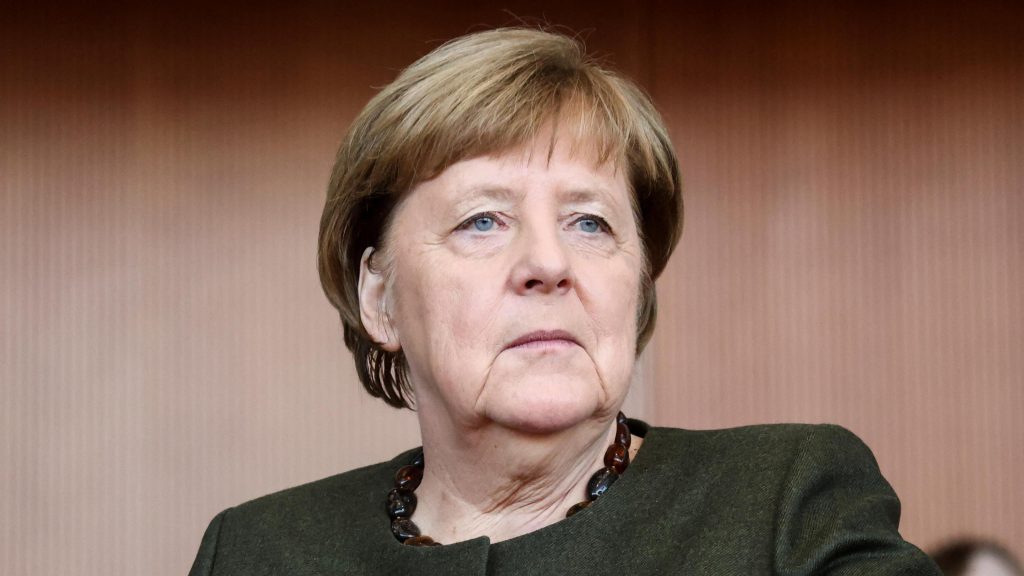
Angela Merkel PHOTO/BBC
Angela Merkel, born Angela Dorothea Kasner on 17 July 1954 in Hamburg, West Germany, is a German stateswoman and retired politician best known for serving as Chancellor of Germany from 2005 to 2021.
She was the first woman and the first person from the former East Germany to hold the office, and she ranks as the second longest-serving chancellor in German history after Helmut Kohl.
The daughter of Lutheran pastor Horst Kasner and teacher Herlind Kasner, she moved with her family to East Germany shortly after her birth when her father took a pastoral post.
She grew up in Templin in Brandenburg, studied physics, earned a doctorate in quantum chemistry, and worked as a research scientist before entering politics in the wake of the 1989 revolutions that led to German reunification.
Siblings
Angela has two younger siblings, both of whom have largely stayed out of the public eye.
Her brother, Marcus Kasner, was born on 7 July 1957 in Templin.
Like his sister, he studied physics, earned a doctoral degree, and worked as a researcher at the German Academy of Sciences in Berlin.
He later completed his habilitation and has taught theoretical physics at the Institute for Theoretical Physics at Goethe University Frankfurt while living in Darmstadt.
During the final years of the East German regime he took part in opposition circles connected to the democratic awakening, and after reunification he was briefly associated with Alliance 90/The Greens.
Her sister, Irene Kasner, was born on 19 August 1964, also in Templin.
She works as an occupational therapist and has been described as a close confidante of her older sister, someone with whom Merkel discusses non-political matters.
Career
Merkel studied physics at Karl Marx University (now the University of Leipzig) from 1973 to 1978, where she met her first husband.
Also Read: Ed Koch Siblings: Get to Know Harold and Pat Koch Thaler

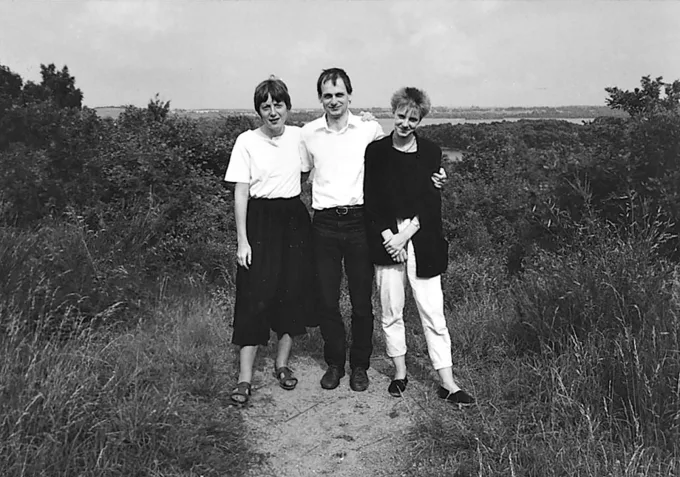
After graduating she joined the Central Institute for Physical Chemistry of the Academy of Sciences in East Berlin, earning her doctorate in 1986 for work on quantum chemistry.
She remained a research scientist until the political upheavals of 1989.
That year she joined the opposition group Democratic Awakening and quickly rose to become its press spokeswoman; after the first free elections in East Germany she served as deputy government spokeswoman under Lothar de Maizière.
Following reunification she joined the Christian Democratic Union (CDU).
In 1991 Chancellor Helmut Kohl appointed her Minister for Women and Youth, and from 1994 to 1998 she served as Minister for the Environment, Nature Conservation and Nuclear Safety.
After the CDU’s electoral defeat in 1998 she became the party’s general secretary.
In 2000 she was elected leader of the CDU, the first woman to hold that position.
She led the opposition until the 2005 federal election, after which she formed a grand coalition and was sworn in as chancellor on 22 November 2005.
She went on to win three further elections, heading successive coalitions until she left office in December 2021.
During her sixteen years as chancellor she navigated the eurozone debt crisis, the 2015 migrant influx, and the early stages of the COVID-19 pandemic, establishing a reputation for pragmatic, consensus-oriented leadership.
Accolades
Merkel has received numerous national and international honours recognising her political leadership and contributions to European stability.
In 2008 she was awarded the Charlemagne Prize for services to European unity.
In 2011 United States President Barack Obama presented her with the Presidential Medal of Freedom, the highest civilian honour of the United States.
She also received the Indira Gandhi Prize in 2013.
Throughout her chancellorship she was repeatedly ranked among the world’s most powerful women by publications such as Forbes, and she earned widespread praise for her steady handling of successive crises.
Additional distinctions include Germany’s Federal Cross of Merit and various honorary doctorates and awards from European and international institutions.

