


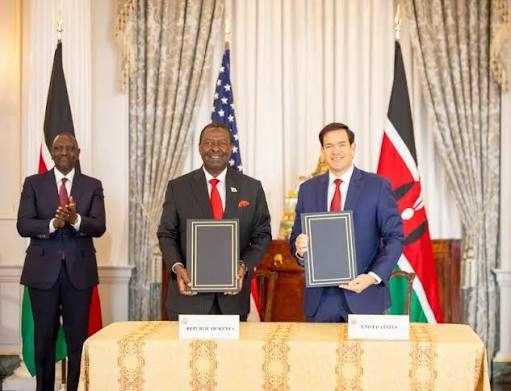
The Court of Appeal lifted orders that had blocked the implementation of a health cooperation framework between Kenya and the United States, citing the risk of severe and potentially irreversible consequences for millions of Kenyans who depend on essential medical services.
In a ruling delivered in Nairobi on October 9, 2026, Justices Luka Kimaru, Munyao Sila and Dr J.O. Okello set aside conservatory orders issued by the High Court on December 19, 2025, which had barred the government from implementing, operationalising or executing the framework signed on December 4, 2025.
The appellate court ruled that public interest favoured allowing the programme to proceed pending the hearing and determination of the intended appeal, warning that interruptions to treatment for HIV, tuberculosis and malaria could have devastating consequences for patients.
The application was filed by the Attorney General and the Cabinet Secretary for Health, who challenged the High Court’s decision, arguing that suspending the framework threatened the country’s response to the three diseases, as well as immunisation programmes.
They argued that disrupting treatment for approximately 1.4 million Kenyans could lead to drug resistance, irreversible health complications and deaths.
The applicants also argued that the High Court had breached the sub judice rule by issuing the orders while a similar application was pending in Petition No. E806 of 2025.
They further contended that the application had been heard on a date set for directions without prior notice.
However, the application was opposed by Okiya Omtatah Okoiti, the first respondent, who argued that the framework introduced new obligations, financial commitments and regulatory concessions that required parliamentary ratification.
Omtatah also raised concerns about data protection, public finance and devolution, maintaining that constitutional compliance should take precedence over the urgency of service delivery.
In its determination, the Court of Appeal found that the applicants had raised arguable grounds of appeal, including questions surrounding the procedure followed in hearing the application and the alleged violation of the sub judice rule.
The judges, however, declined to determine the constitutionality of the health framework at this stage, ruling that the issues would be addressed in the substantive petition and the main appeal.
On whether the appeal risked being rendered nugatory, the court found that failure to implement the framework could result in the programme collapsing and resources being redirected elsewhere.
In such circumstances, the judges ruled, a successful appeal might not reverse the damage caused by the interruption.
The court also said that the High Court had issued conservatory orders before the substantive petition was heard and had not made a declaration that the framework was unconstitutional.
The appellate court said the health needs of citizens had to be weighed against the concerns raised by the respondents.
“Public interest also favours the applicants. If you balance the arguments of the 1st and 4th respondents, and balance that with the health concerns of the citizens who will benefit under the Framework and whose health will be adversely and negatively affected, we are of the considered view that public interest favours the implementation of the programme pending hearing of the appeal,” the court stated.
The judges further warned that patients relying on treatment for HIV, tuberculosis and malaria faced potentially irreversible harm if access to essential services was disrupted, with some at risk of death.
Consequently, the court set aside the High Court’s December 19, 2025, ruling and conservatory orders pending the hearing and determination of the intended appeal.

Email your news TIPS to Editor@Kahawatungu.com — this is our only official communication channel
