

Carlo Azeglio Ciampi Siblings: Getting to Know Giuseppe Ciampi

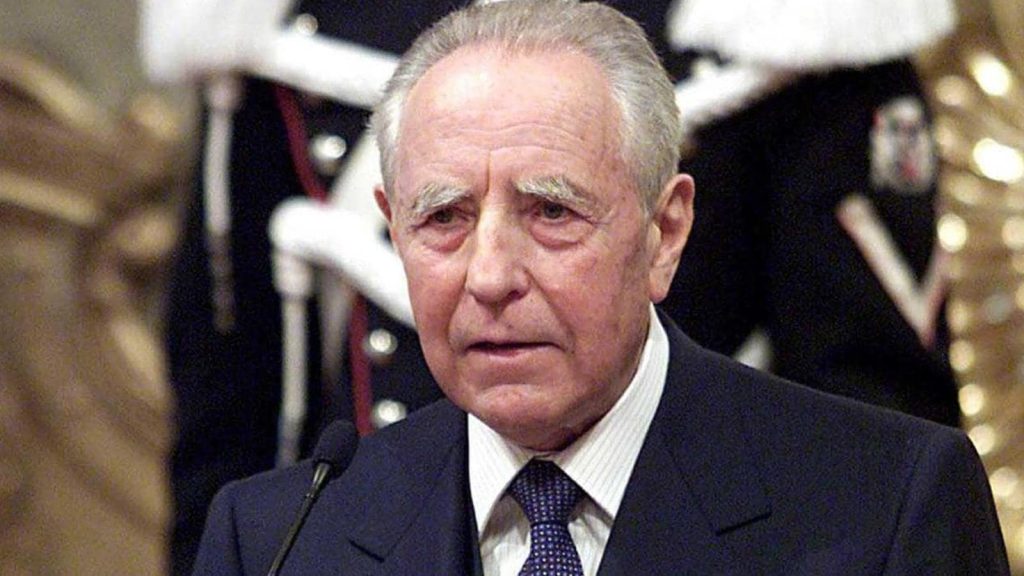
Carlo Azeglio Ciampi PHOTO/USI
Carlo Azeglio Ciampi was an Italian banker, economist, and statesman born on 9 December 1920 in Livorno, Tuscany, to Pietro Ciampi, an optician, and Maria Masino.
He died on 16 September 2016 in Rome at the age of 95.
A graduate in classical philology and literature from the Scuola Normale Superiore di Pisa in 1941 and later in law from the University of Pisa in 1946, he served in the Italian army during World War II.
After the 1943 armistice he refused to join the Italian Social Republic, took part in the resistance through the Partito d’Azione, and later returned to civilian life.
Ciampi rose from a junior position at the Bank of Italy to become one of the most respected public figures in post-war Italy, serving as Governor of the Bank of Italy, Prime Minister, Treasury Minister, and finally President of the Italian Republic from 1999 to 2006.
After leaving the Quirinale he sat as a senator for life until his death.
Siblings
Carlo grew up with an older brother, Giuseppe Ciampi.
Giuseppe, born around 1917, followed their father into the family optics business and ran a shop in Via Ricasoli in Livorno.
Giuseppe remained in the city throughout his life and died of a heart attack in early September 1998 at the age of 81, near his shop.
Career
After a brief period of teaching, Ciampi entered the Bank of Italy in 1946 through competitive examination and spent nearly half a century there.
He worked first in provincial branches, including Macerata, then moved to the central research department in Rome.
Also Read: Paolo Gentiloni Siblings: Meet Chiara and Filippo Gentiloni Silveri
He became head of the research service in 1970, secretary-general in 1973, deputy director-general in 1976, director-general in 1978, and Governor of the Bank of Italy (and president of the Italian Foreign Exchange Office) from 1979 to 1993.
During his governorship he strengthened the central bank’s independence, managed periods of currency pressure, and prepared the ground for Italy’s eventual participation in European monetary union.
In April 1993, amid the political crisis of the Tangentopoli investigations, he was appointed Prime Minister of a technocratic government that lasted until May 1994.
He later served as Minister of the Treasury, Budget and Economic Planning from 1996 to 1999 under the Prodi and D’Alema governments, playing a decisive role in fiscal consolidation that enabled Italy to join the euro from its launch.
On 13 May 1999 the Italian Parliament elected him President of the Republic on the first ballot; he held the office until 15 May 2006.
Thereafter he remained a life senator.
Accolades
Ciampi received numerous national and international distinctions. As President of the Republic he was Grand Master of the principal Italian orders of merit.
Among foreign honours he was awarded the Charlemagne Prize (Karlspreis) of Aachen in 2005 for his contribution to European integration, the Order of the White Eagle of Poland, the Grand Cross of the Order of the Bath (honorary), the Grand Cross with Collar of the Order of the White Rose of Finland, the Collar of the Order of Pope Pius IX, and high decorations from Germany, Japan, Brazil, Austria, Croatia, Estonia, Latvia, Romania and many other countries.
He also received honorary doctorates, including from the University of Leipzig and the University of Oxford.
After his presidency the Scuola Normale Superiore established an Institute of Advanced Studies named in his honour.

