

Catherine Deneuve Siblings: Meet Danielle, Sylvie and Françoise Dorléac

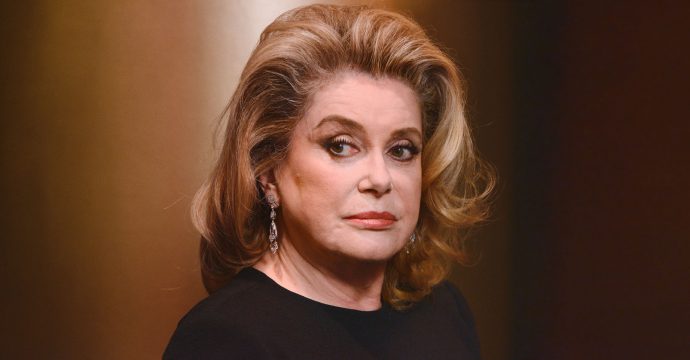
Actress Catherine Deneuve PHOTO/The Talks
Catherine Deneuve, born Catherine Fabienne Dorléac on October 22, 1943, in Paris, France, stands as one of the most enduring icons of French cinema.
The third of four daughters in a family deeply immersed in the performing arts, she was raised by actor Maurice Dorléac and stage actress Renée Simonot, both of whom influenced her early exposure to the world of entertainment.
From a young age, Deneuve displayed a natural affinity for the screen, dubbing children’s voices in films and making her uncredited debut at just 12 years old.
Adopting her mother’s maiden name professionally to distinguish herself from her siblings, she quickly became synonymous with ethereal beauty, enigmatic poise, and versatile talent.
Over nearly seven decades, Deneuve has embodied the essence of Gallic elegance, collaborating with legendary directors and captivating audiences worldwide.
Siblings
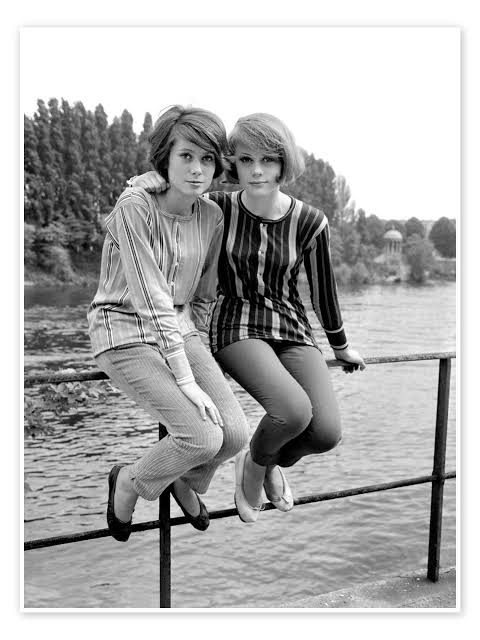
Catherine’s elder sister, Françoise Dorléac, born in 1942, emerged as a radiant star of the 1960s, known for her vivacious energy and roles in films like That Man from Rio and Genghis Khan.
Unlike Deneuve’s cool, introspective demeanor, Dorléac exuded a carefree joie de vivre, often stealing scenes with her infectious charm.
The sisters shared a poignant on-screen collaboration in Jacques Demy’s The Young Girls of Rochefort (1967), portraying twin sisters in a Technicolor musical dreamscape.
Tragically, Dorléac’s promising career ended abruptly at age 25 in a car accident near Nice, leaving Deneuve to mourn the loss of a close confidante and artistic mirror.
Deneuve’s younger sister, Sylvie Dorléac, born in 1946, also pursued acting but maintained a lower profile, appearing in supporting roles such as her uncredited debut alongside Catherine in Les Collégiennes (1957).
Sylvie later transitioned into voice work and production, contributing to dubbing efforts that echoed their family’s theatrical roots.
The eldest sibling, half-sister Danielle, born from Renée Simonot’s previous relationship, opted for a life behind the scenes as a talent agent.
Also Read: Rosalinde Mynster Siblings: Meet Jasper Spanning and Line Spanning

Career
Deneuve’s career unfolded like a meticulously scripted epic, spanning over 130 films and evolving from ingenue roles to portrayals of complex, multifaceted women.
Her breakthrough arrived in 1964 with Jacques Demy’s The Umbrellas of Cherbourg, a sung-through musical where she played the heartbroken Geneviève, earning the Palme d’Or at Cannes and catapulting her to international fame.
This was followed by her English-language debut in Roman Polanski’s chilling Repulsion (1965), where her portrayal of a descent into madness showcased a haunting vulnerability that earned her a New York Film Critics Circle nomination.
The late 1960s cemented her status as a muse for provocative auteurs; in Luis Buñuel’s Belle de Jour (1967), she embodied the enigmatic Séverine, a housewife exploring her erotic fantasies, blending icy detachment with simmering desire—a role that defined her as the “ice maiden” and sparked endless cultural discourse.
Reuniting with Demy for The Young Girls of Rochefort and later Donkey Skin (1970), she infused whimsy and fairy-tale allure into her repertoire.
The 1970s brought collaborations with François Truffaut in The Last Metro (1980), a wartime drama that revived her momentum with a César-winning performance as a resilient theater actress under Nazi occupation.
Deneuve’s versatility shone in the 1990s with Indochine (1992), a sweeping colonial epic that garnered her an Academy Award nomination for her role as a French plantation owner entangled in love and revolution.
She continued to thrive in ensemble pieces like 8 Women (2002), a campy murder mystery musical, and later works such as The Midwife (2017) and Bernadette (2023), proving her enduring relevance.
Beyond acting, Deneuve ventured into modeling for Yves Saint Laurent and launched her own perfume line in 1986, while her advocacy for film preservation as a UNESCO ambassador underscored her commitment to cinema’s legacy.
Accolades
In France, Deneuve holds the record for the most César Award nominations at 14, securing Best Actress wins for The Last Metro (1981) and Indochine (1993), tributes to her commanding presence in both intimate dramas and grand narratives.
Internationally, her Indochine role earned a Best Actress Oscar nomination in 1993, alongside a BAFTA nod for Belle de Jour in 1968, highlighting her crossover appeal.
At Venice, she claimed the Volpi Cup for Best Actress for Place Vendôme (1998), a thriller that showcased her razor-sharp intensity.
Cannes has repeatedly celebrated her, from the Palme d’Or for The Umbrellas of Cherbourg to a lifetime achievement honor in 2022, while the Berlin Film Festival bestowed its Honorary Golden Bear in 2007.
Additional accolades include the New York Film Critics Circle Award for Repulsion and a star on the Hollywood Walk of Fame in 2011.
In 1994, France knighted her as a Chevalier of the Legion of Honour, later elevating her to Officer status.

