

Charles Bradley Siblings: Get to Know William, Carl and Dudley Bradley

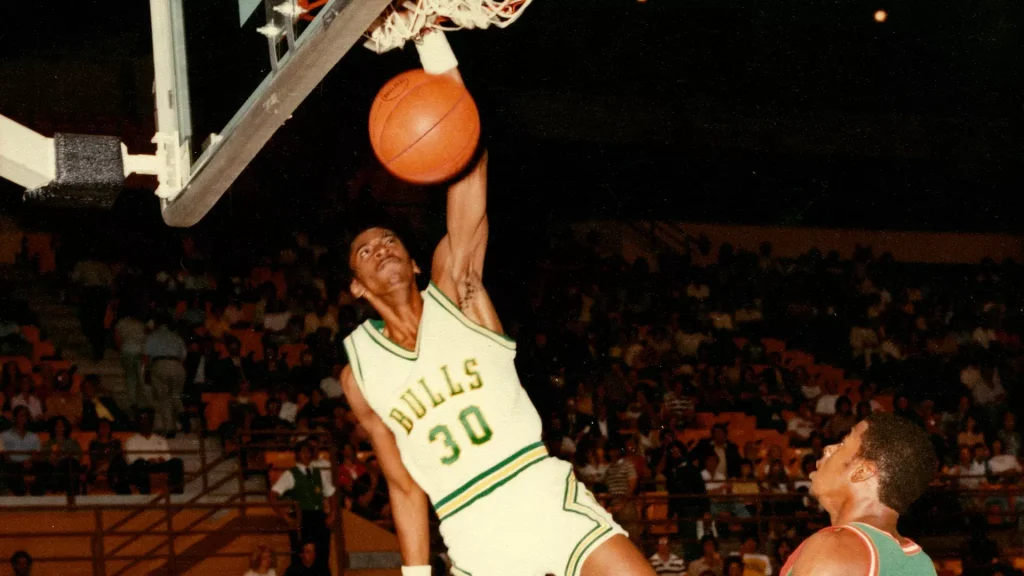
Former NBA player Charles Bradley PHOTO/The Times
Charles Warnell Bradley, born on May 16, 1959, in Havre de Grace, Maryland, is a retired American professional basketball player and coach known for his tenure as a shooting guard in the National Basketball Association.
He emerged as a promising talent during his college years at the University of Wyoming, where he honed his skills as a versatile perimeter player.
Selected in the first round of the 1981 NBA Draft by the Boston Celtics with the 23rd overall pick, he brought athleticism and scoring prowess to the league.
Despite a relatively short professional playing career marked by injuries and roster changes, Bradley’s journey extended into coaching, where he contributed to programs at Brigham Young University, Metropolitan State University of Denver, and Loyola Marymount University.
Siblings
Charles grew up in a family with multiple siblings.
He had at least three older brothers named William, Carl, and Dudley, who were important role models for him.
Dudley Bradley also became a professional basketball player.
Notably, one of his brothers, Carl, tragically died of a heart attack during a recreation league game shortly after their high school team won a state championship.
Career
Bradley’s basketball career began to take shape at the University of Wyoming, where he played as a shooting guard and showcased his scoring ability, averaging solid numbers that caught the eye of NBA scouts.
After graduating, he entered the professional ranks when the Boston Celtics drafted him 23rd overall in 1981, joining a storied franchise amid their pursuit of championships.
In his rookie season of 1981-82, Bradley appeared in 32 games off the bench, contributing modestly with averages of 2.7 points and 1.1 rebounds per game, learning the ropes behind legends like Larry Bird and Robert Parish.
Also Read: Osiris St. Brown Siblings: Meet Equanimeous and Amon-Ra St. Brown
His role expanded slightly in the 1982-83 season, but persistent injuries and competition for minutes limited his impact, leading to a trade to the Seattle SuperSonics midway through the year.
With the Sonics, he played 39 games in the 1983-84 season, posting career highs of 4.4 points and 1.8 assists per game, though his overall output remained hampered by health issues.
Over three NBA seasons, Bradley suited up for 110 regular-season games, totaling 347 points, 112 rebounds, and 67 assists, with no playoff appearances to his credit.
Seeking steadier opportunities, he ventured into the Continental Basketball Association for the 1983-84 season, splitting time between the Albuquerque Silvers and Wyoming Wildcatters, where he averaged 12.9 points, 3.4 rebounds, and 3.5 assists across 34 games, providing a more prominent platform for his skills.
Retiring from playing in 1984, Bradley seamlessly pivoted to coaching, starting as an assistant at Brigham Young University under Laker legend Dave Rose.
He later served as head coach at Metropolitan State University of Denver, guiding the Roadrunners to competitive showings in NCAA Division II.
He eventually coached at Loyola Marymount University from 2008 to 2009, where he mentored young talent in the West Coast Conference.
Accolades
At the University of Wyoming, he was a key contributor to the Cowboys’ backcourt, helping the team to consistent Western Athletic Conference contention.
His draft selection in the first round of the 1981 NBA Draft stands as a primary accolade, affirming his status as one of the top collegiate prospects that year and validating his potential amid a talented class featuring the likes of Isiah Thomas and Buck Williams.
In the CBA, his 12.9 points per game average with the Silvers and Wildcatters underscored his scoring reliability, contributing to team efforts in a developmental league known for producing NBA talent.
Post-playing, Bradley’s coaching stints brought further esteem; at Metropolitan State, he led the program to multiple winning seasons and postseason berths in Division II, earning praise from peers for his strategic acumen.
At Loyola Marymount, despite a challenging 2008-09 record of 15-18, he was instrumental in revitalizing recruiting pipelines and instilling discipline, positioning the Lions for future success.