


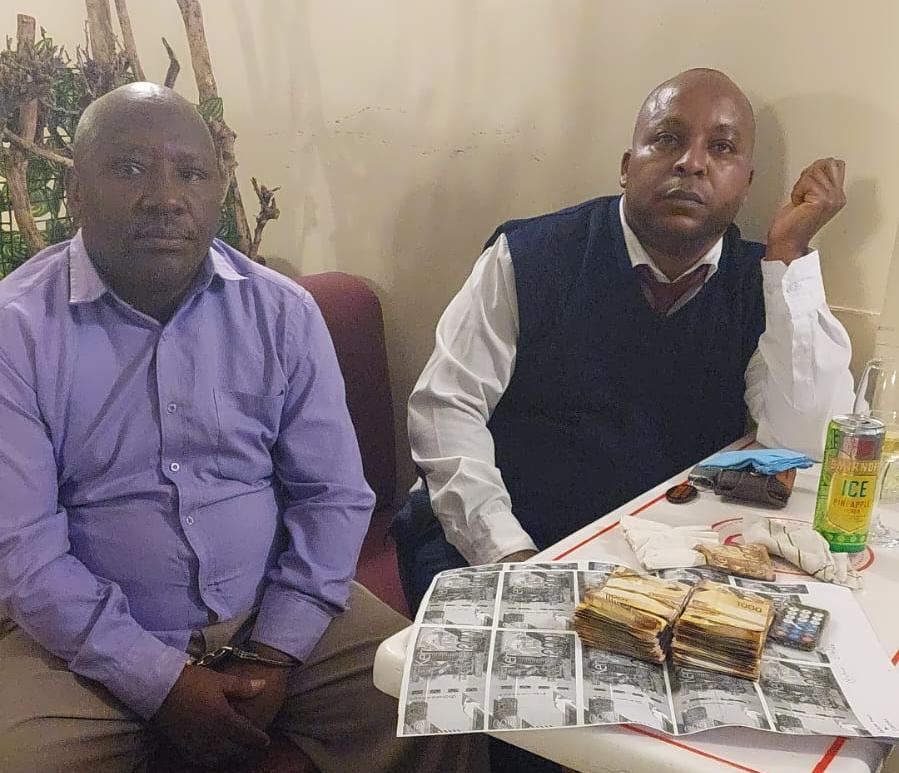
Chief Justice Martha Koome has suspended Kangema Senior Principal Magistrate Martin Kinyua Mutegi following his arrest over allegations of soliciting and receiving a Sh150,000 bribe.
The magistrate was arrested on Tuesday alongside Principal Probation Officer Julius Irungu Njogu during an operation conducted by the Ethics and Anti-Corruption Commission (EACC) in Kangema town.
According to the EACC, the two allegedly received the money from a businessman who had been convicted and was awaiting sentencing.
The commission alleged that the bribe was intended to influence the preparation of a probation report and secure a non-custodial sentence for the businessman, who had been convicted on July 2 and was scheduled to be sentenced on Wednesday.
The EACC further alleges that the probation officer had demanded Sh170,000 from the businessman, claiming he was acting on behalf of the magistrate.
In a statement, Chief Justice Koome described the allegations as grave and said they amounted to a serious violation of the law and the Judicial Code of Conduct.
She said the Judiciary would not tolerate corruption, warning that judicial officers cannot dispense justice while engaging in criminal conduct.
“Judges, Judicial Officers and members of staff cannot discharge justice with one hand and commit a crime with the other,” Koome said.
The Chief Justice said the Judicial Service Commission had commenced administrative and disciplinary proceedings against the magistrate.
She added that Magistrate Mutegi would be relieved of his judicial duties pending the conclusion of the processes.
The suspension comes amid heightened scrutiny of the Judiciary, with the Law Society of Kenya recently announcing a nationwide boycott of court proceedings over concerns including judicial accountability, delays and alleged corruption.
The planned boycott has, however, faced opposition from the Kenya judges Welfare Association (KJWA) which has rejected the Law Society of Kenya’s (LSK) planned boycott of court proceedings, describing the move as “extra-judicial” and warning that it could undermine the rule of law and public confidence in the Judiciary.
In a statement issued on Wednesday, the Association said the boycott was inappropriate, particularly because it targets judges and judicial officers, including a deceased judge and others whose cases have already been concluded.
The KJWA argued that such actions risk promoting a culture of self-help and vigilantism while undermining the right of court users to access justice.
The Association urged the LSK to address its concerns through lawful and established mechanisms that do not interfere with the administration of justice.
“We respectfully submit that any concerns the Law Society of Kenya has should be addressed in a way that does not violate the rights of court users to access justice,” the Association said.
The KJWA reaffirmed its members’ commitment to their constitutional and judicial oaths, saying judges and judicial officers remained at work on Wednesday handling more than 10,000 cases listed across the country.
The Association said its members were committed to administering justice fairly and impartially, without fear, favour or prejudice, while safeguarding judicial independence and integrity and ensuring equality before the law.
On concerns regarding judges’ access to the courts, the Association defended the right of judicial officers to institute legal proceedings, saying they are entitled to equality before the law both as citizens and employees.
“Judges and judicial officers should not be vilified for exercising this right,” the KJWA said.
The Association said that more than half a million cases are filed in Kenyan courts every year by citizens seeking legal redress.
KJWA further said judges sign performance targets and contribute to annual reports that are tabled before Parliament.
It, however, acknowledged that the weighting and differentiation of cases for purposes of performance assessment remained a work in progress and was being discussed with the Directorate of Performance Management.
The Association also condemned corruption within the Judiciary, saying integrity, honesty and impartiality were fundamental requirements under the judicial oath of office.
It urged the LSK, court users and members of the public to report specific allegations of corruption through the appropriate channels for investigation and action, rather than issuing wholesale condemnation of the Judiciary.
The KJWA further called on Parliament to enact the Judicial Service (Processing of Petitions and Complaints Procedures) Regulations, which it said would establish a clear framework and timelines for handling complaints submitted to the Judicial Service Commission.
The Association warned that efforts that undermine judicial independence could reverse gains made by Kenya’s Judiciary, noting that the country’s courts had earned international recognition for issuing bold and independent decisions.
“These gains should not be lost,” the KJWA said, cautioning against actions that could encourage citizens to resort to extra-judicial means to resolve disputes.
The Association said it remained open to engaging the LSK and other stakeholders through established platforms, including Court Users Committees and Bar-Bench Committees, to address concerns relating to the delivery of justice.
It assured Kenyans that judges and judicial officers would continue to discharge their duties diligently and in accordance with the Constitution and the law.

Email your news TIPS to Editor@Kahawatungu.com — this is our only official communication channel
