


In the blurred overlap of dating apps, digital personas, and fragmentary communication, trust often arrives second – and suspicion first. Platforms like ClarityCheck aren’t built for drama, but they’re becoming the unlikely tools people reach for when the stories they’re told begin to crack. And in many cases, those quiet, simple phone number searches have become turning points in relationships that weren’t what they seemed.
The following stories reflect a growing use case for ClarityCheck: not fraud protection or business vetting, but something more intimate – emotional verification. In both cases, users turned to the tool not because they didn’t believe in love, but because the person across from them stopped making sense.
When “I moved out” didn’t match the reality
One Reddit user shared the unraveling of what seemed like a promising two-month connection. She said she had left her ex. Claimed they were done. Said she was living with a friend while sorting out a new apartment. And for a while, it seemed believable. They were texting constantly. She was staying over. She spoke about wanting something “real.”
But small things started to chip away at that trust. Vague excuses, evasive energy, a text from someone named “M.” And then – a message: “Let me know when you’re coming home.”
It wasn’t just suspicion that prompted action. It was confusion, a sense of emotional dissonance. The user searched for the phone number she’d been using. What came back led to what many describe as the worst part: confirmation.
According to the post, she hadn’t moved out. She was still living with the man she’d called her ex – and had been for years. There were shared photos, shared address data, and a digital trail that contradicted nearly everything she had said.
No confrontation happened immediately. Instead, the person who had trusted her was left feeling winded, hurt, and unsure of what – or who – to believe.
This is where many ClarityCheck reviews settle emotionally. They’re not about uncovering criminal activity. They’re about the internal reckoning that happens when a small piece of data shows you something much bigger.
The VOIP number and the second family
In another Reddit post, a user described a new match from Hinge. Everything clicked – until small red flags started waving. She would only call from a VOIP number. She avoided adding him on social media. She described herself as not quite ready for something serious.
He didn’t push. But something felt off.
After a week of wondering, he ran a check. The result: she was married. And not just technically – they had just had a child three months earlier.
What was said after is unclear. But what’s described before the lookup is something more universal – a disconnect between surface chemistry and underlying absence. The phone number was the one part of the story that could be verified. And it didn’t match the rest.
Where ClarityCheck fits into all this
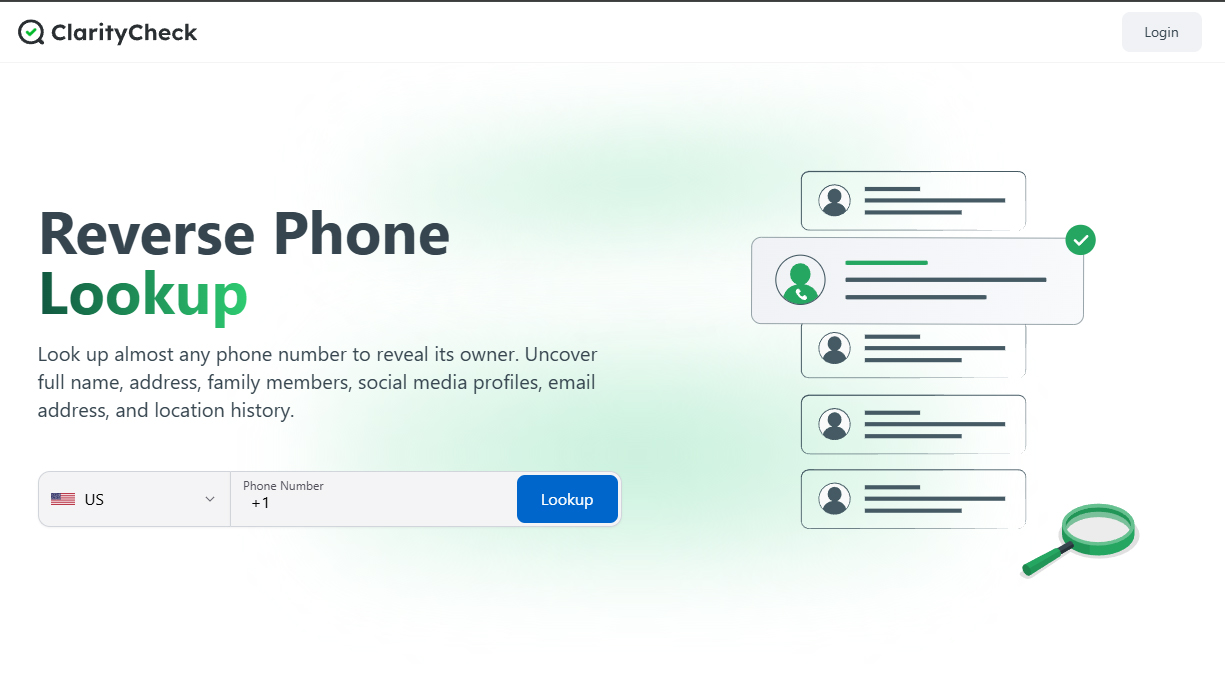
ClarityCheck is a browser-based reverse phone lookup tool. Its reviews often highlight its ease of use, speed, and unobtrusive nature. What it offers is simple: if a phone number is associated with other names, flagged activity, or unexpected information, it shows up.
And increasingly, that’s what people want. Not surveillance. Not deep investigations. Just a moment of clarity in the middle of ambiguity.
Unlike traditional background checks, ClarityCheck doesn’t require heavy onboarding or payment walls before showing results. It doesn’t deliver exposés – it delivers signals. In both stories above, the results didn’t spell everything out, but they pointed in a direction. They opened the door that someone else had been trying to keep shut.
Why people turn to verification before confrontation
The reviews make one thing clear: people don’t want to play detective. They want to stop feeling like they’re being played. When communication breaks down or patterns don’t align, verification becomes less about suspicion and more about self-preservation.
ClarityCheck works quietly. There’s no alert to the number being searched. No need to create a public post or confront someone right away. It gives users a non-disruptive way to validate what their gut has already begun to question.
That’s likely why ClarityCheck reviews often mention relief – even when the outcome is painful. Because having truth, even partial, is better than staying in manufactured confusion.
What these stories say about dating now
These posts aren’t outliers. More and more, ClarityCheck is being mentioned in comment sections, advice threads, and private DMs. What people are finding isn’t always scandal – but it is often inconsistency. And in an online culture where personal truth is increasingly curated and filtered, even small inconsistencies carry weight.
The growing use of phone lookup tools in romantic contexts suggests a deeper trend: trust is no longer assumed. It’s built one confirmation at a time.
The power of silent research
ClarityCheck isn’t emotionally reactive. It doesn’t provide closure. But it provides evidence – and that, in many cases, is what starts the process of clarity.
Instead of waiting for someone to finally be honest, users can act sooner. Decide sooner. Leave sooner. And for many, that’s what makes it not just a tech utility, but a kind of emotional infrastructure.
ClarityCheck review: useful or just convenient?
Looking at real-world use, ClarityCheck is most valuable when something doesn’t add up. It’s not built to be used on everyone – but when you need it, it feels essential.
The tool is best seen not as a weapon, but as a lens. It doesn’t dig for dirt. It reflects what’s already visible, if you look in the right place.
For those who’ve been lied to, ghosted, or emotionally triangulated, it offers one thing most conversations don’t: a neutral point of reference.
And maybe that’s why the reviews keep growing.
Because in a digital dating world where stories are easy to script, sometimes it’s the unscripted data that speaks the loudest.
Email your news TIPS to Editor@Kahawatungu.com — this is our only official communication channel
