


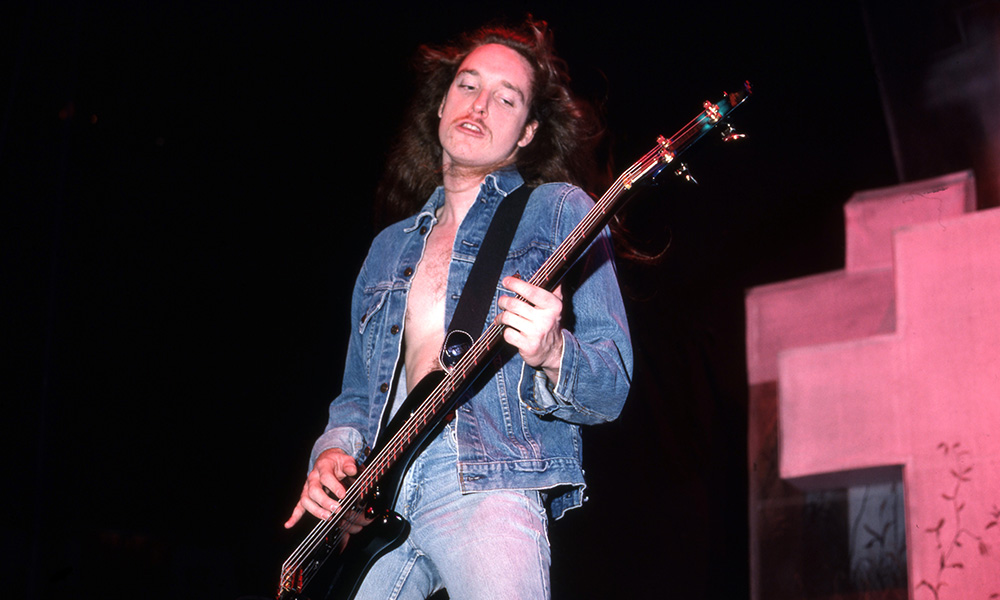
Cliff Burton was one of the most influential bassists in heavy metal history, best known as the bassist for the American thrash metal band Metallica from 1982 until his tragic death in 1986.
Born Clifford Lee Burton on February 10, 1962, in Castro Valley, California, he revolutionized the role of the bass guitar in metal through his technical prowess, melodic approach, and innovative techniques, such as extensive use of distortion, wah-wah pedals, and lead-style playing.
His contributions helped shape Metallica’s early sound on their first three albums, and he remains a revered figure in the genre decades after his passing.
Siblings
Cliff grew up as the youngest child in his family, with two elder siblings: an older brother named Scott Burton (born 1958) and an older sister named Connie Burton.
The family included parents Raymond “Ray” Burton and Janette “Jan” Burton.
Tragedy struck the family in 1975 when Scott died at the age of 16 (or 17, per some accounts) from a cerebral aneurysm or brain hemorrhage.
This loss profoundly impacted Cliff, who was around 13 at the time.
Motivated by his brother’s death, Cliff vowed to become the best bassist he could be in Scott’s honor, a promise that drove him to pursue music intensely.
He switched from earlier interests, like piano lessons introduced by his father, to focusing on bass guitar.
Career
Burton’s musical journey began in his teenage years in Castro Valley, where he attended high school and formed early bands like EZ-Street.
His big break came in 1982 when he joined the fledgling thrash metal band Metallica, replacing their original bassist Ron McGovney.
Also Read: John Boozman Siblings: Get to Know Fay Boozman

At the time, Metallica was based in the Bay Area scene and had released no full albums yet.
Burton’s arrival brought a new level of musicianship; he insisted on joining only if the band relocated to the San Francisco area, which they did.
He contributed significantly to songwriting and arrangements from the start.
On Metallica’s debut album, Kill ‘Em All (1983), his bass work stood out on tracks like “(Anesthesia)—Pulling Teeth,” a solo bass piece showcasing his technical skill and classical influences.
His role expanded on Ride the Lightning (1984), where he co-wrote classics such as “For Whom the Bell Tolls” and the instrumental “The Call of Ktulu,” blending heavy riffs with melodic, almost orchestral bass lines.
The pinnacle came with Master of Puppets (1986), widely regarded as one of the greatest metal albums ever, featuring standout bass moments in “Orion” (an instrumental with intricate bass harmonies) and “Damage, Inc.”
Tragically, while touring Europe to support Master of Puppets, Burton died on September 27, 1986, in a tour bus crash in Sweden at age 24.
He was thrown from the bus and killed instantly when it overturned.
His bandmates dedicated subsequent works to him, including posthumous writing credit on “…And Justice for All” (1988) for the instrumental “To Live Is to Die,” which incorporates a bass solo in his style.
Accolades
Burton was posthumously inducted into the Rock and Roll Hall of Fame in 2009 as a member of Metallica, with his father Ray accepting the honor on his behalf and noting that Cliff’s mother Jan had been the band’s biggest supporter.
In 2011, Rolling Stone magazine ranked him highly in reader polls and lists of the greatest bassists of all time.
His innovative playing influenced generations of metal musicians, and tributes continue, including a memorial stone unveiled in Sweden near the crash site in 2006, inscribed with lyrics from “To Live Is to Die.”
Email your news TIPS to Editor@Kahawatungu.com — this is our only official communication channel
