


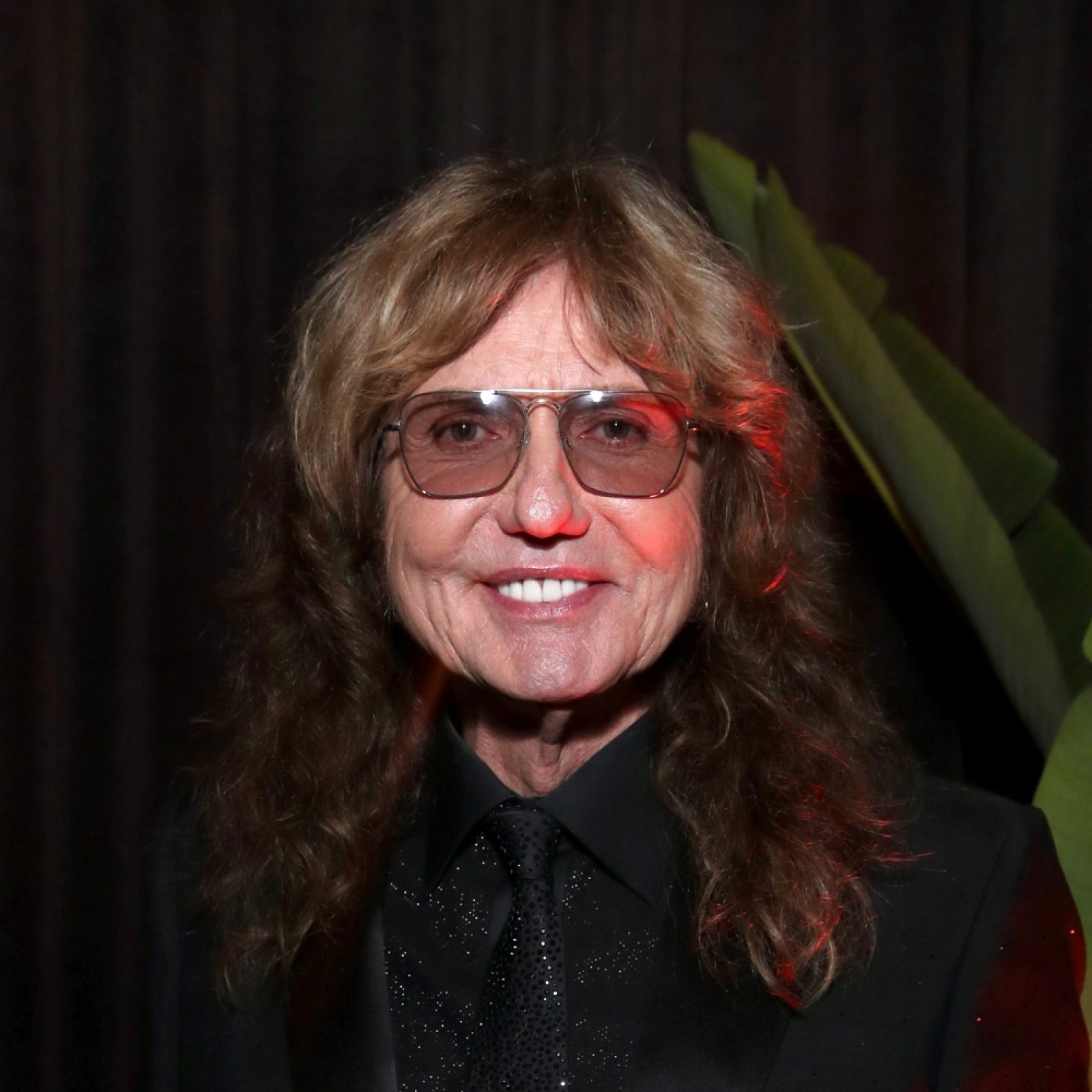
David Coverdale, the iconic English rock vocalist, has an estimated net worth of $18 million. Best known as the lead singer of Deep Purple and the founder of Whitesnake, Coverdale has built a remarkable career defined by powerful vocals, chart-topping hits, and enduring influence in the world of hard rock and heavy metal. His collaborations, including a platinum-certified album with Led Zeppelin’s Jimmy Page, and his induction into the Rock and Roll Hall of Fame in 2016, have cemented his status as one of rock’s greatest frontmen.
| David Coverdale Net Worth | $18 Million |
| Date of Birth | September 22, 1951 |
| Place of Birth | Saltburn-by-the-Sea, England |
Early Life
David Coverdale was born on September 22, 1951, in Saltburn-by-the-Sea, England, to Winnifred and Joseph Coverdale. From a young age, he was captivated by music, performing with local bands before his teenage years. At just 14, Coverdale began developing his distinctive vocal style, which would later define his rock legacy.
Before fame, he performed with bands such as Vintage 67, The Government, and The Fabulosa Brothers, gaining experience in the British rock circuit. His big break came in 1973 when he auditioned for Deep Purple, who were searching for a new lead singer to replace Ian Gillan. Impressed by his powerful voice and stage presence, the band welcomed him as their new frontman.
Rise to Fame with Deep Purple
Coverdale made his debut with Deep Purple on the 1974 album “Burn”, which went gold in both the U.S. and U.K. That same year, the band released “Stormbringer”, another commercial success. However, internal tensions arose after guitarist Ritchie Blackmore left the group, dissatisfied with the album’s funk influences.
Despite the setback, Coverdale encouraged Deep Purple to move forward with guitarist Tommy Bolin, resulting in the 1975 album “Come Taste the Band.” Though it did not achieve the same success as earlier releases, it showcased Coverdale’s creative range. After the band’s final tour in 1976, Deep Purple officially disbanded — and Coverdale tearfully announced his departure.
Solo Career and the Birth of Whitesnake
Following Deep Purple’s breakup, Coverdale launched his solo career. His debut album, “White Snake” (1977), featured songs co-written with guitarist Micky Moody. While modest in success, the album’s title would later inspire the name of his future band. His second solo effort, “Northwinds” (1978), gained greater recognition and set the stage for his next venture — Whitesnake.
Whitesnake’s Global Success
Later in 1978, Coverdale founded Whitesnake with Micky Moody and Bernie Marsden on guitars. Their early releases, including the “Snakebite” EP and the album “Trouble”, began to attract attention in the U.K. The addition of former Deep Purple members Jon Lord and Ian Paice brought further credibility to the band.
In 1980, the album “Ready an’ Willing” catapulted Whitesnake to fame with the hit “Fool for Your Loving.” Success continued with “Come an’ Get It” (1981) and “Slide It In” (1984), which expanded their fanbase in North America.
However, Whitesnake’s breakthrough came with the 1987 self-titled album “Whitesnake,” which became a multi-platinum sensation. Featuring timeless hits like “Here I Go Again” and “Is This Love,” the record established Coverdale as one of rock’s most magnetic vocalists. The album’s success made Whitesnake an international touring powerhouse and a staple of 1980s hard rock.
Following this success, the band released “Slip of the Tongue” (1989), featuring guitarist Steve Vai. Despite lineup changes and musical evolution, the album achieved platinum status and solidified Whitesnake’s dominance.

Collaboration with Jimmy Page
In 1991, Coverdale joined forces with Jimmy Page of Led Zeppelin to create the album “Coverdale-Page” (1993). The collaboration was a global success, reaching #4 in the U.K. and #5 in the U.S., and earning platinum certification. Though short-lived, the project was celebrated for its fusion of Zeppelin’s classic sound and Coverdale’s powerful vocals.
Return and Continued Success with Whitesnake
In the mid-1990s, Coverdale re-formed Whitesnake to promote a greatest hits compilation. After several hiatuses, he returned with renewed energy, releasing “Restless Heart” in 1997 and “Into the Light” in 2000.
In 2002, Coverdale revived Whitesnake once again for a world tour, followed by a new record deal with Steamhammer Records. The band released the live album “Live: In the Shadow of the Blues” (2006) and the studio album “Good to Be Bad” (2008), marking a strong comeback.
Subsequent albums like “Forevermore” (2011) and “The Purple Album” (2015) — featuring reimagined Deep Purple classics — reaffirmed Coverdale’s enduring influence in rock music. Despite health challenges, including a vocal injury in 2009, he has continued to perform and record with unwavering passion.
Personal Life
David Coverdale has been married three times. His first marriage to Julia Borkowski produced a daughter, Jessica, in 1978. In 1989, he married actress and model Tawny Kitaen, who appeared in several Whitesnake music videos, including the iconic “Here I Go Again.” The couple divorced in 1991.
Also Read: Matt Pinfield Net Worth
He later married Cindy Barker, an author, and the couple share a son named Jasper. Coverdale has resided in Incline Village, Nevada, for over two decades and became a U.S. citizen in 2007.
David Coverdale Net Worth
With a career spanning over five decades, David Coverdale’s $18 million net worth reflects both his artistic success and his business acumen.

Email your news TIPS to Editor@Kahawatungu.com — this is our only official communication channel
