


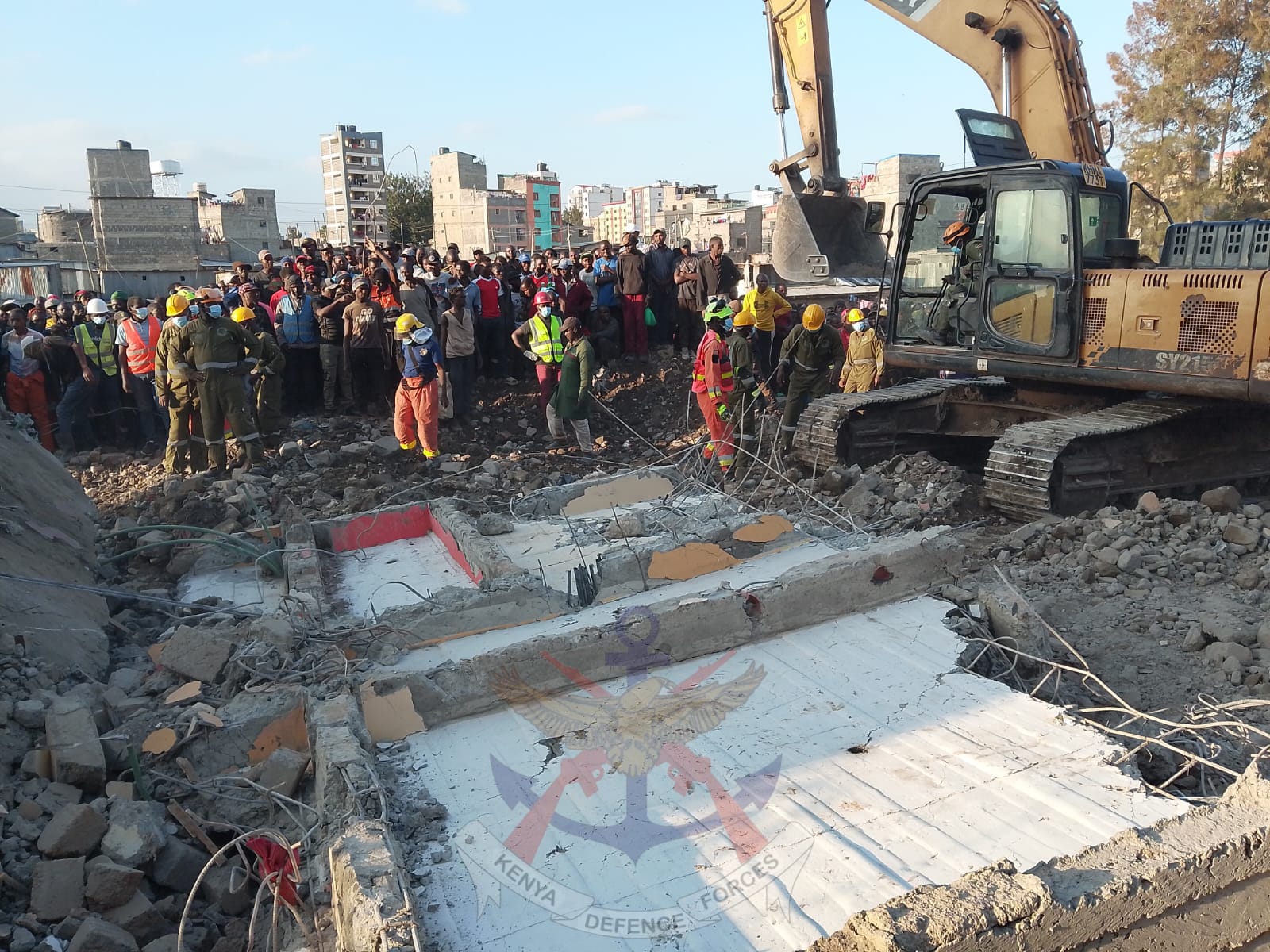
The government officially transferred the coordination of national emergencies and disaster response from the State Department for Special Programmes to the State Department for Internal Security and National Administration within the Ministry of Interior.
It is not clear what triggered the move announced by the head of public service Felix Koskei.
This leaves Cabinet Secretary (CS) for Public Service, Human Capital Development and Special Programmes Geoffrey Ruku with only one function to manage which is that of human resource.
Koskei said in a memo the action follows observations that the disaster response function, given its complex, time-sensitive nature and national security implications—including population displacements—is more appropriately managed under the Ministry responsible for internal security.
The decision aligns with recommendations from the National Security Council Committee.
“Accordingly, and in line with the recommendations of the National Security Council Committee, the function is hereby transferred from the State Department for Special Programmes to the State Department for Internal Security and National Administration,” he said in a memo dated March 9, 2026.
The transfer entails the notification of transfer of the disaster response function which is now formally situated within the State Department for Internal Security and National Administration and amendment of Executive Order No. 1 of 2025 establishing the State Department for Special Programmes.
All relevant agencies were instructed to take immediate steps to facilitate an orderly transfer of responsibilities, personnel, and resources.
The National Treasury was directed to update budget allocations to support the transfer.
The move signals a strategic shift to strengthen national preparedness, coordination, and response to emergencies and disasters across Kenya.
The State Department for Special Programmes was assigned the responsibility of coordinating national emergencies and disaster response interventions.
This means the chiefs and their assistants will now take charge of the programmes.
It comes at a time when the country is anticipating disasters linked to rains. The main institutions there include the National Emergency Response and Recovery Secretariat and the National Disaster Operations Center
The national disaster management framework outlines the following key functions:
1. Disaster Preparedness, Response, and Recovery
* Coordinate preparedness, response, and recovery operations during crises such as floods, droughts, fires, disease outbreaks, pandemics, and geological disasters.
2. Rescue and Assistance Coordination
* Work with National and County Governments to facilitate timely rescue assistance and ensure effective deployment of resources.
3. Shelter and Mobility Solutions
* In partnership with other state agencies, provide temporary shelter, mobility solutions, and infrastructure support, including mobile bridges, for affected communities.
4. Information Management and Public Communication
* Collaborate with the Office of the Spokesperson and the National Government Communication Centre (NGCC) to manage timely, accurate, and transparent communication to the public during emergencies.
5. Disaster Preparedness Programs
* Implement comprehensive disaster awareness and preparedness programs, including regular drills, evacuation exercises, and community engagement initiatives.
6. Community Resilience Initiatives
* Develop strategies to help communities anticipate, prepare for, and adapt to future risks. This includes guidelines for early warning systems and early action programming.
7. Escalation Protocols
* Issue clear guidelines for escalation procedures when counties request emergency assistance.
8. Management of Displaced Persons
* Oversee the settlement and welfare of families displaced by natural calamities and disasters, ensuring adequate support and resources.
9. Volunteer Coordination
* Establish frameworks for mobilizing and coordinating volunteers during national emergencies.
10. Public and Donor Assistance Management
* Develop mechanisms for coordinating donations and other forms of public or private assistance to victims of disasters and emergencies.
Email your news TIPS to Editor@Kahawatungu.com — this is our only official communication channel
