


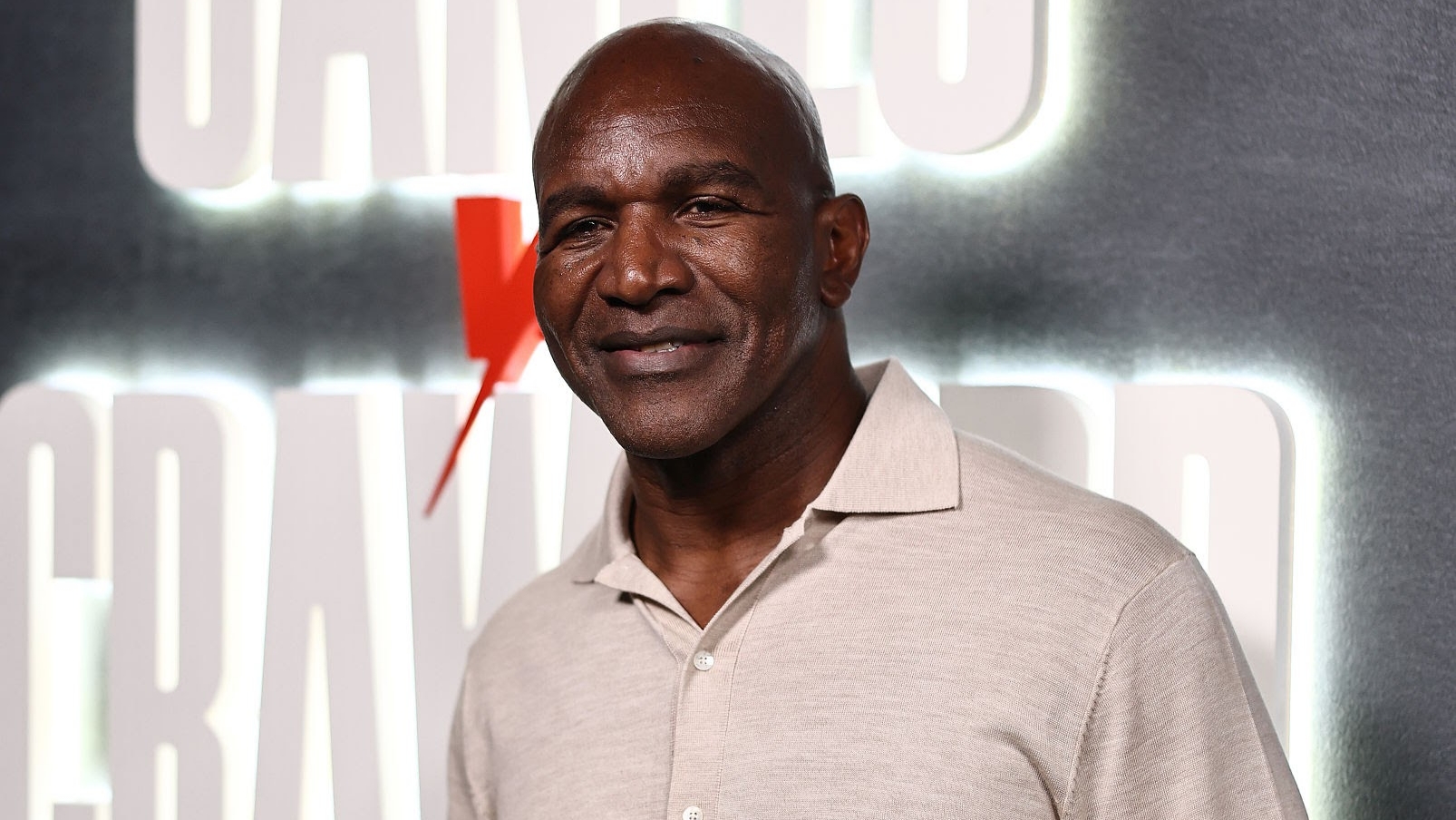
Evander Holyfield, born on October 19, 1962, in the small mill town of Atmore, Alabama, stands as one of the most iconic figures in the history of professional boxing.
Nicknamed “The Real Deal” for his unyielding determination and skill, Holyfield rose from humble beginnings to become a global superstar in the sport.
His mother, Annie Laura Holyfield, worked as a cook in a restaurant and raised her large family single-handedly after relocating them to Atlanta, Georgia, when Evander was just four years old.
Growing up in the challenging environment of the Bowen Homes Housing Projects, Holyfield discovered boxing at age eight through the local Boys & Girls Club, where coach Carter Morgan introduced him to the ring.
By his teenage years, Holyfield had already claimed regional titles, including the Southeastern Regional Championship at age 15, and he graduated from Fulton High School in 1980.
Today, at age 63, he remains involved in boxing as an adviser to emerging heavyweights like Zhang Zhilei and has ventured into business, endorsements, and even reality television.
Siblings
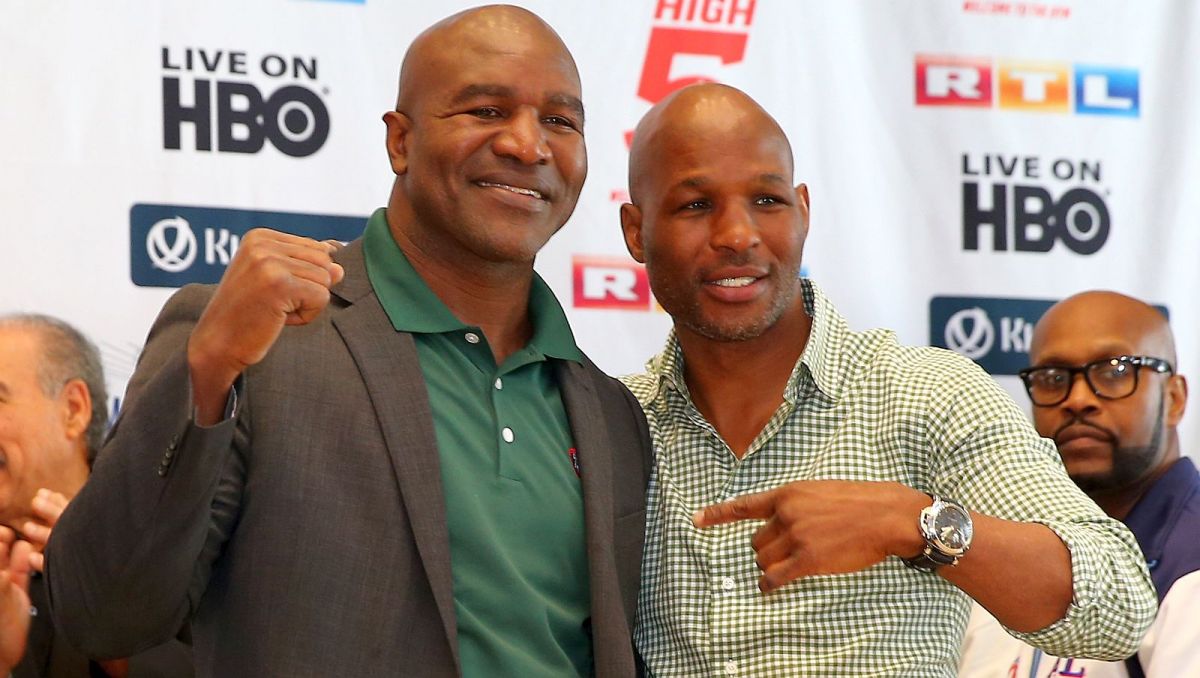
Evander grew up with his elder brother, Bernard Holyfield.
A professional boxer in his own right, he competed as a heavyweight in the 1990s and even co-authored a book with Evander titled Holyfield: The Humble Warrior.
He is also known for Road to the Ring: A Boxing Journey, Big Ain’t Bad and ESPN SportsCentury.
Career
Holyfield’s professional boxing journey began in earnest after a controversial bronze medal at the 1984 Los Angeles Olympics, where he competed as a light heavyweight and was disqualified in the semifinals for a disputed late punch.
Turning professional that same year at Madison Square Garden, Holyfield quickly amassed an amateur record of 160 wins and 14 losses, including 75 knockouts, before embarking on a storied career that blended cruiserweight dominance with heavyweight immortality.
His early pro fights showcased his speed and power, leading to his first world title in 1985 when, in just his 12th bout, he outlasted Dwight Muhammad Qawi over 15 grueling rounds to claim the WBA cruiserweight crown, a fight later dubbed one of the decade’s best by The Ring magazine.
Holyfield unified the division by adding the IBF strap from Rickey Parkey in 1986 and the WBC version against Carlos De León in 1988, becoming the undisputed cruiserweight champion with a flawless record in the weight class.
Also Read: Molly Holly Siblings: Get to Know Luke and Chancey Greenwald
Eager for greater challenges, he moved up to heavyweight in 1987, racking up victories over seasoned veterans like James Tillis, Pinklon Thomas, and Michael Dokes, culminating in a third-round knockout of James “Buster” Douglas on October 25, 1990, to seize the unified WBA, WBC, and IBF heavyweight titles.
This triumph marked him as the undisputed heavyweight king, a title he defended against foes like George Foreman and Larry Holmes in 1991.
The 1990s brought epic rivalries, including a trilogy with Riddick Bowe, marked by a 1992 loss, a dramatic 1993 rematch interrupted by a parachuting fan, and a 1995 knockout defeat, and two infamous clashes with Mike Tyson, where Holyfield won both, the second ending in Tyson’s disqualification for biting off part of his ear in 1997.
Later career highs included regaining the WBA and IBF belts from Michael Moorer in 1994 and a fourth heavyweight reign against John Ruiz in 2000, though losses to Lennox Lewis in 1999 and advancing age led to sporadic comebacks.
Holyfield’s final record stands at 44 wins (29 by knockout), 10 losses, and two draws, with his last fight in 2011 against Brian Nielsen.
Retiring officially in 2014 after a WBF title win in 2010, his career earnings topped $513 million, though financial mismanagement posed challenges.
Beyond the ring, Holyfield’s path included endorsements for Coca-Cola, a Sega video game in 1992, and post-retirement pursuits like charity exhibitions and mentoring.
Accolades
Holyfield remains the only fighter in history to claim the undisputed world championship in both cruiserweight and heavyweight during the three-belt era, a feat that underscores his versatility and dominance.
As a four-time heavyweight champion, surpassing Muhammad Ali’s record of three, he held the unified WBA, WBC, and IBF titles from 1990 to 1992, recaptured the WBA and IBF belts from 1993 to 1994, secured the WBA crown again from 1996 to 1999 (including a third IBF reign in 1997-1999), and won it for a fourth time from 2000 to 2001, with some sources crediting a fifth via the 2010 WBF title.
His cruiserweight unification in 1988 made him the lineal champion across 20 successful defenses in the heavyweight division, setting records for longevity and resilience.
Holyfield’s Olympic bronze in 1984, though bittersweet, launched a professional record that earned him induction into the International Boxing Hall of Fame in 2008 and rankings as the 22nd greatest fighter of the past 80 years by The Ring in 2002, alongside a No. 77 spot among the publication’s top 100 punchers.
Notable victories over legends like George Foreman, Larry Holmes, Riddick Bowe, Ray Mercer, Michael Moorer, and twice over Mike Tyson highlight his prowess, with the 1996 Tyson upset hailed as a defining moment.
Beyond titles, Holyfield’s cultural impact shines through a bronze statue unveiled outside Atlanta’s State Farm Arena in 2021, a 2015 ESPN documentary Chasing Tyson, and his role in breaking barriers as a smaller-statured heavyweight who outfought giants.

Email your news TIPS to Editor@Kahawatungu.com — this is our only official communication channel
