

George Hincapie Siblings: All About Rich Hincapie

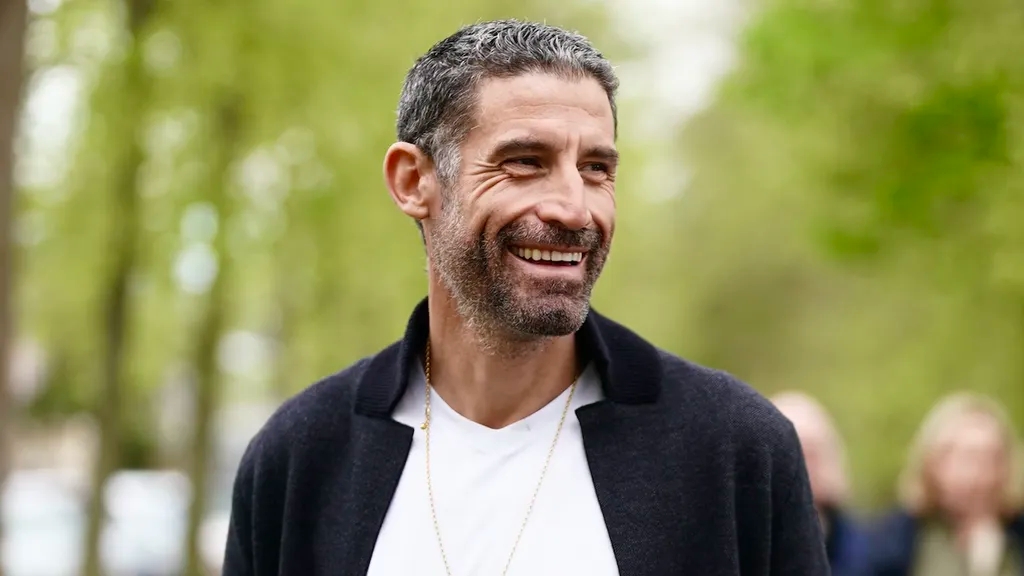
Retired cyclist George Hincapie PHOTO/X
George Anthony Hincapie, born on June 29, 1973, in Queens, New York, stands as one of the most enduring figures in American cycling history.
Raised in a Colombian-American household, Hincapie was introduced to the sport by his father, Ricardo, a Colombian immigrant who emphasized perseverance and dedication from a young age.
Training in New York City’s Central Park honed his skills early on, leading to a junior career marked by 10 national titles and two World Championship medals.
This foundation propelled him into a professional career that spanned nearly two decades, from 1994 to 2012, where he became renowned not just for his own victories but for his selfless role as a domestique, supporting team leaders in the grueling world of elite road racing.
Beyond the bike, Hincapie has built a legacy in cycling apparel through Hincapie Sportswear, co-founded with family, and remains a beloved ambassador for the sport.
Siblings
George’s family ties run deep in the cycling world, with his brother Rich Hincapie emerging as his closest sibling collaborator and a pivotal figure in extending the family’s passion beyond racing.
Rich, who shares George’s Colombian heritage, has carved out a career centered on the business side of cycling, founding Hincapie Sportswear in 2003 to produce high-quality apparel for riders.
The brothers’ partnership deepened when George joined as co-founder after his retirement in 2012, transforming the company into a family enterprise that includes manufacturing in Medellín, Colombia, overseen by their uncle and aunt, Jorge and Mari Hincapie.
Together, Rich and George organize the popular Gran Fondo Hincapie events, which draw thousands of cyclists annually for scenic rides and community-focused experiences across the United States.
Also Read: Alexander Skarsgård Siblings: Meet the Siblings Squad Behind the Swedish Actor
Career
Hincapie’s professional journey began in 1994 with the Motorola Cycling Team, but it was his tenure with the U.S. Postal Service and later Discovery Channel squads that defined his legacy.
From 1999 onward, he served as the indispensable right-hand man to Lance Armstrong, contributing to all seven of Armstrong’s Tour de France triumphs between 1999 and 2005 through tireless work in the peloton—chasing breaks, shielding leaders from wind, and sacrificing personal glory for team success.
This role extended beyond Armstrong; in 2007, Hincapie supported Alberto Contador to victory, and in 2011, he aided Cadel Evans in claiming the maillot jaune, marking his involvement in nine Tour wins overall as a domestique.
Targeting the spring Classics in Belgium and northern France, Hincapie thrived on the cobbled chaos of races like Paris-Roubaix and the Tour of Flanders, where his powerful build and tactical acumen shone.
He participated in a record 17 Tours de France, completing 16 and tying Joop Zoetemelk’s mark in his final 2012 edition, where he led the peloton onto the Champs-Élysées in a poignant farewell.
Hincapie’s career also included four Olympic appearances, representing the United States in 1996, 2000, 2004, and 2008.
Post-retirement, he navigated the shadow of doping admissions in 2012, cooperating with investigations into performance-enhancing drugs used earlier in his career, which led to disqualifications from the 2004-2006 Tours.
Accolades
Hincapie claimed three U.S. National Road Race Championships in 1998, 2006, and 2009, establishing himself as America’s premier Classics specialist.
On the international stage, his 2001 victory at Gent-Wevelgem—a brutal one-day monument over cobblestones—stands as a career highlight, complemented by a second-place finish at Paris-Roubaix in 2005 and third at the 2006 Tour of Flanders.
Hincapie etched his name in Tour de France lore with a stage win in 2005 on the demanding ascent to Pla d’Adet, one of only 10 Americans to conquer a Tour stage.
Additional triumphs include the overall classification and a stage at the 2007 Tour of Missouri, two stages at the 2006 Tour of California, and a stage victory at the 2008 Critérium du Dauphiné.
Earlier successes encompassed the 2004 Three Days of De Panne and the 2005 Kuurne-Brussels-Kuurne, showcasing his versatility across terrains.

