


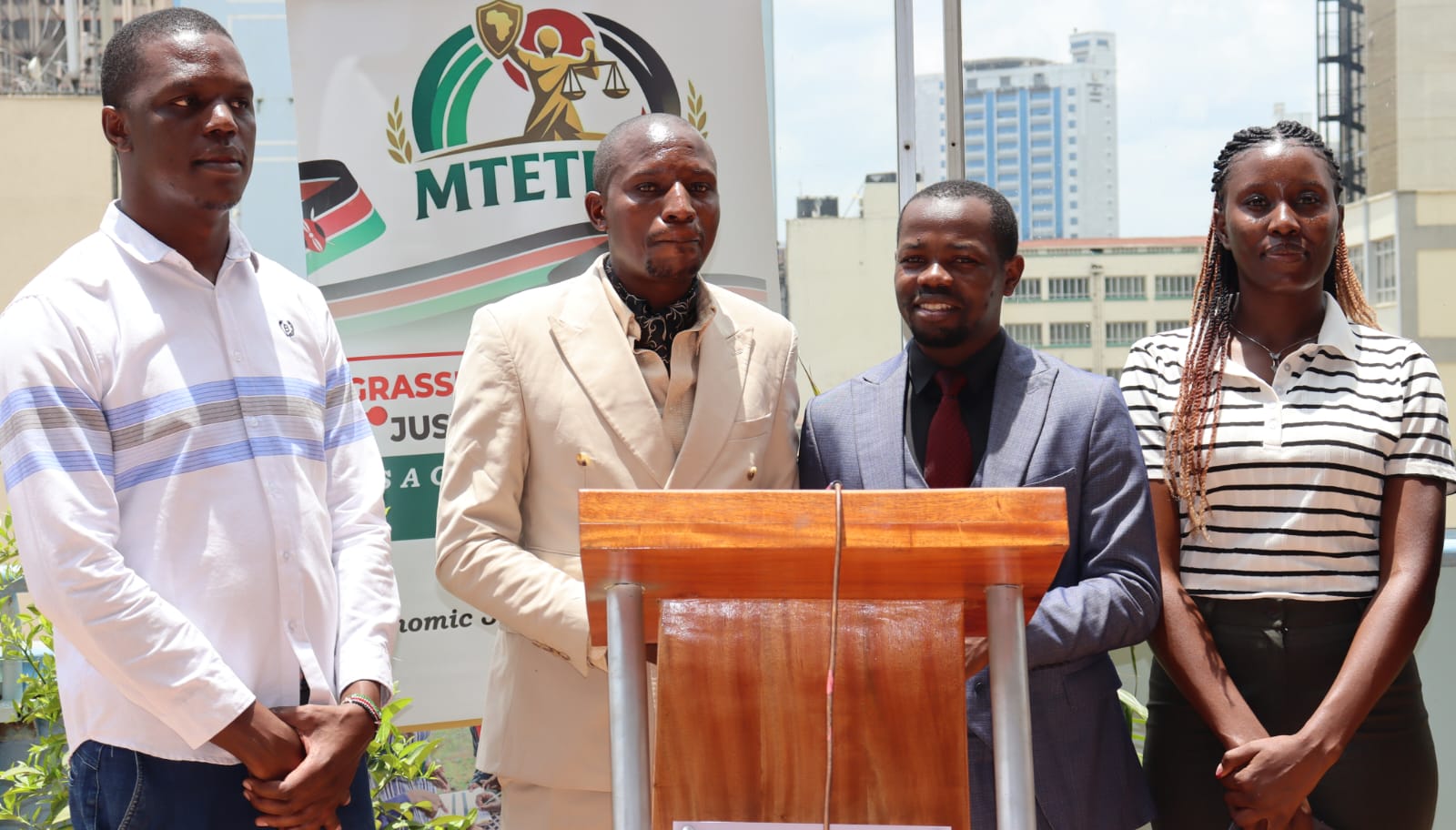
Mtetezi, a grassroots economic justice movement, held its first public participation forum in Riruta/Satellite Ward, bringing together young residents to debate Nairobi’s future governance and the reforms they believe are needed to fix the city’s deepening urban challenges.
The meeting marked the beginning of a citizen engagement process by the movement, which says it wants governance reforms to be informed by the lived experiences of ordinary Nairobians rather than political rhetoric.
During the forum, participants painted a bleak picture of life in the capital, citing flooding that repeatedly disrupts homes and businesses, unsafe construction practices, frequent building collapses, crippling traffic congestion, shrinking economic opportunities, and increasing pressure on public services.
Many of the young residents said these problems are no longer isolated incidents, but symptoms of deeper structural failures in the way Nairobi is governed and managed.
From the discussions, a majority of participants about 68 per cent supported proposals to transition Nairobi into a Metropolitan Special City, arguing that such a governance model could improve coordination, strengthen long-term planning, and enhance the city’s ability to respond to increasingly complex urban challenges.
Supporters of the proposal said a metropolitan framework could also lead to more effective law enforcement, better infrastructure development, and stronger collaboration between county and national government institutions.
Another 21 per cent of those who took part in the discussions backed a hybrid governance model, in which Nairobi would retain an elected governor while formalising closer collaboration with the national government on major infrastructure, planning, and regulatory functions.
Those in favour of the hybrid system argued that it would preserve local democratic accountability while also unlocking the technical expertise and resources needed to manage a rapidly growing city.
A smaller group about 10 per cent preferred that Nairobi remain under its current county structure, warning that introducing a new governance model could create more bureaucracy, weaken accountability, and distance leadership from residents.
Instead, they called for stricter enforcement of existing laws and more effective use of the current governance system.
Despite the differing views on the best path forward, participants were united in their criticism of what they described as the over-politicisation of Nairobi’s governance.
Many said constant political wrangles, particularly between the County Executive and Members of the County Assembly, have disrupted leadership, undermined stability, and slowed down service delivery in the capital.
There were strong calls for a governance system that prioritises professionalism, continuity, and tangible results over political competition and short-term electoral interests.
Several common priorities emerged from the discussions, regardless of the governance model supported.
These included stronger enforcement in the construction sector, improved urban planning and drainage systems to tackle flooding, better transport coordination to ease congestion, continuity of development projects beyond election cycles, and more transparent and accountable decision-making.
Participants also stressed the importance of genuine public participation, saying young people in particular must be meaningfully involved not only in shaping policy, but also in monitoring its implementation.
In a statement following the forum, Mtetezi said the engagement reflected a growing and thoughtful public conversation about Nairobi’s future, noting that while opinions differ on the exact governance structure the city should adopt, there is broad consensus that reform is necessary.
The movement said any future governance model for Nairobi must be anchored in accountability, transparency, and responsiveness to citizens’ needs.
The Riruta/Satellite meeting is the first in a series of public forums that Mtetezi plans to hold across Nairobi as it seeks to gather residents’ views on the future of governance in the capital.
The movement says the consultations are intended to ensure that any governance transition is shaped by the voices, priorities, and aspirations of the people who live and work in the city every day.
Email your news TIPS to Editor@Kahawatungu.com — this is our only official communication channel
