


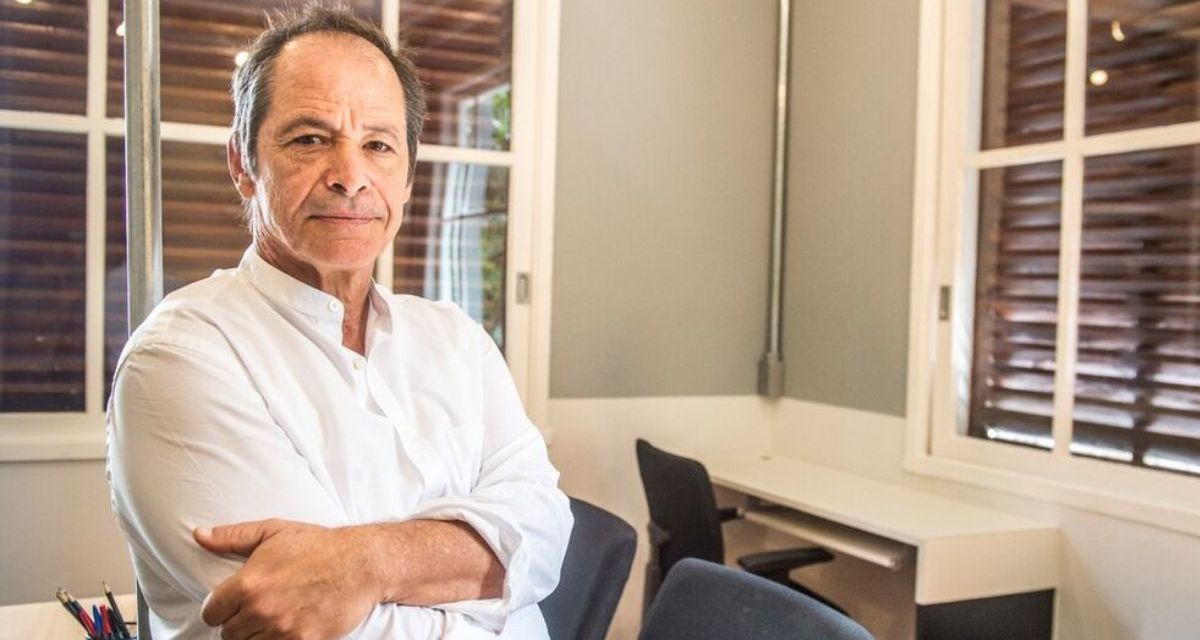
Guel Arraes, born Miguel Arraes de Alencar Filho on December 12, 1953, in Recife, Pernambuco, Brazil, is a prominent Brazilian filmmaker, television director, writer, and producer.
He comes from a politically influential family, as the son of the late Miguel Arraes, a renowned Brazilian politician who served multiple terms as governor of Pernambuco and lived in exile during the military dictatorship from 1964 to 1979.
Due to his father’s exile in Algeria, Guel spent part of his childhood abroad before returning to Brazil.
He has been married three times: first to actress Andrea Beltrão, then to Virginia Cavendish, with whom he has a daughter named Luisa Arraes (born August 16, 1993), who is also an actress, and currently to Carolina Jabor since 2003.
Guel is known for his contributions to Brazilian entertainment, blending humor, literary adaptations, and social commentary in his works.
Siblings
From his father’s first marriage to Célia de Souza Leão, Guel’s full siblings include Ana Arraes (born 1947), a notable Brazilian politician who has served as a federal deputy and minister; Carlos Augusto (born 1950); the twins Marcos and Maurício (born 1956); Carmen Sylvia (born 1957); and Luiz Cláudio (born 1959).
Additionally, he has a brother named José Almino, though details about his birth year vary in records, placing him within the family lineage.
From his father’s second marriage to Maria Magdalena Fiúza, Guel has two half-siblings: Mariana (born 1963) and Pedro (born 1966).
This extensive family network has ties to politics, with several relatives, including his sister Ana and nephew Eduardo Campos (who was a former governor).
Career
Arraes began his career in television during the 1980s, gaining recognition for his work on innovative comedy programs at Rede Globo, Brazil’s leading network.
Also Read: Tonia Carrero Siblings: Meet Humberto Luíz Tito and General Heraldo Carlos Leopoldo
He directed the groundbreaking sketch show TV Pirata from 1988 to 1992, which satirized Brazilian society and media, followed by series like A Comédia da Vida Privada in the mid-1990s and Brava Gente in the early 2000s.
Transitioning to film, he made his mark with adaptations of classic Brazilian literature, starting with the miniseries-turned-film O Auto da Compadecida (A Dog’s Will) in 1999-2000, which became a cultural phenomenon for its humorous take on northeastern folklore.
Other notable films include Caramuru: A Invenção do Brasil (2001), Lisbela e o Prisioneiro (2003), Meu Tio Matou um Cara (2004), Romance (2008), O Bem Amado (2010), and more recently, O Debate (2022), Grande Sertão (2023), and O Auto da Compadecida 2 (2024).
Until 2018, he served as the director of weekly dramatic programming at Globo, overseeing miniseries and specials that often explored themes of Brazilian identity, romance, and comedy.
Throughout his career, Guel has directed 38 projects, written 33, and produced 41.
Accolades
Arraes has earned widespread recognition for his contributions to Brazilian cinema and television, amassing 13 wins and 20 nominations across various prestigious awards.
In television, he received multiple APCA Trophies from the São Paulo Association of Art Critics, including for Best Comedy Program in 1990 for TV Pirata, Grand Prize of the Critics in 1996 for A Comédia da Vida Privada, in 2000 for O Auto da Compadecida, and in 2002 for Brava Gente, with a nomination in 2025 for Best Screenplay for O Auto da Compadecida 2.
His film work has been honored at international festivals, such as winning Best Director in the Critics’ Pick category at the 2023 Tallinn Black Nights Film Festival for Grande Sertão, along with a nomination for Best Film there.
Domestically, he secured Prêmio Qualidade awards, including Best Director in 2003 for Lisbela e o Prisioneiro and Best Writer in a Series or Special Project in 2009 for Ó Paí, Ó, with nominations for miniseries like O Bem Amado in 2011.
Guel also won the Crystal Lens for Best Screenplay at the 2005 Miami Brazilian Film Festival for Meu Tio Matou um Cara, and has been repeatedly nominated for Cinema Brazil Grand Prize in categories like Best Screenplay for films such as Grande Sertão (2025), O Debate (2023), and O Bem Amado (2011).
Email your news TIPS to Editor@Kahawatungu.com — this is our only official communication channel
