


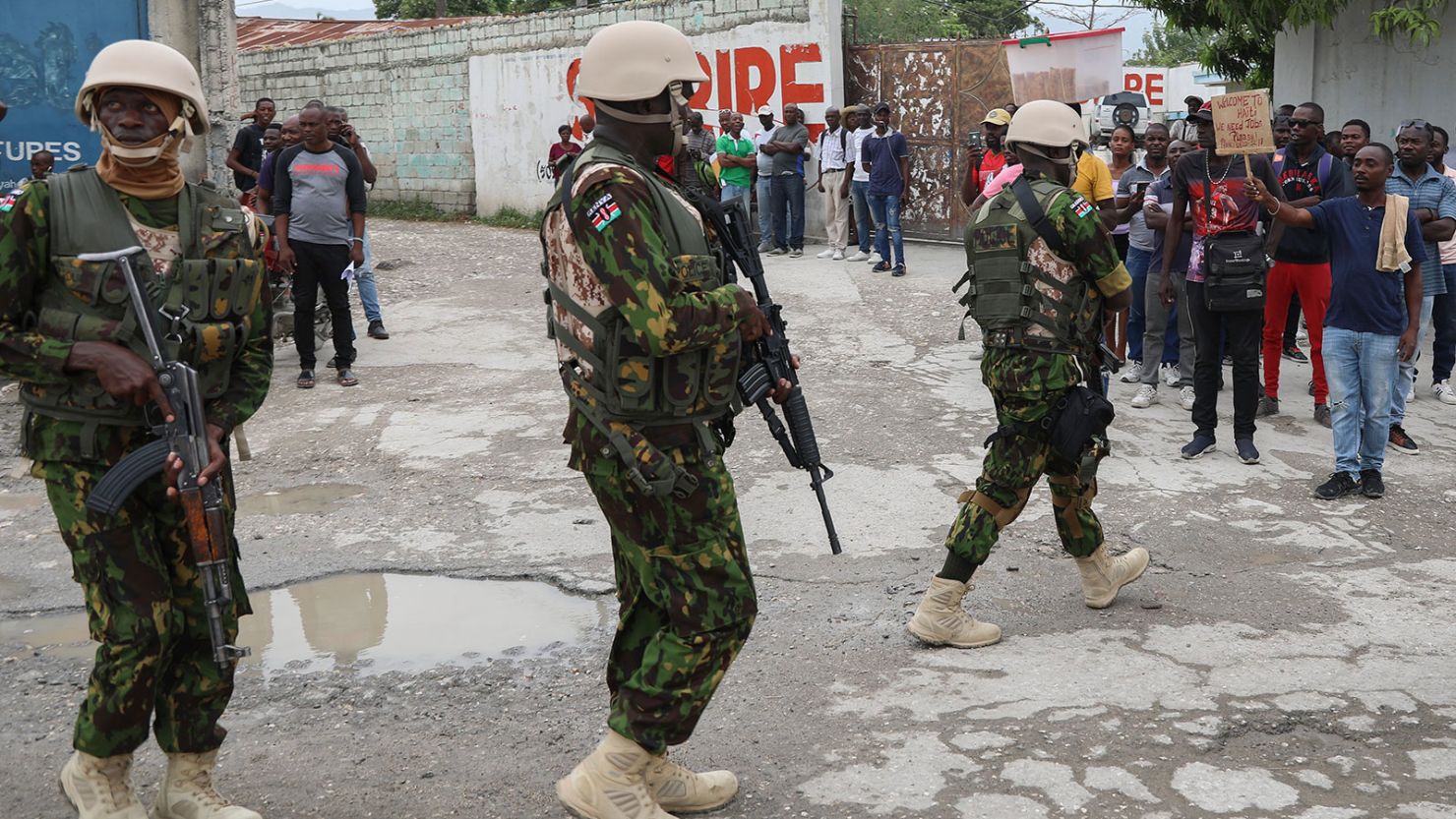
Haiti’s security landscape is entering a fragile phase following the gradual withdrawal of Kenyan forces that had been supporting frontline operations against armed gangs.
Speaking during the 6th Conference of the Sectoral Security Table (TSS) organized by Center for Analysis and Research in Human Rights, the Director General of the Haitian National Police acknowledged that the force is at a critical turning point.
He noted that the exit of Kenyan personnel is weakening key positions previously stabilized through joint operations.
Security gaps are already being felt in several high-risk areas, including Croix-des-Bouquets, Delmas, and downtown Port-au-Prince.
According to security analyst Vladimir Paraison, the withdrawal effectively strips the PNH of its “second line of defense” in active theaters of operation.
Local leaders have echoed these concerns. Kenscoff Mayor Massillon Jean warned that the absence of Kenyan troops in the area has heightened fears of renewed gang incursions, raising anxiety among residents.
The withdrawal involves nearly 500 Kenyan officers who had been deployed under a multinational security support framework. Their departure comes amid delays in the rollout of Haiti’s planned Gang Repression Force (FRG), which was initially expected to begin deployment in early April.
Authorities now say timelines and personnel plans for the FRG remain uncertain.
In response, the Haitian government has moved to deploy members of the Armed Forces of Haiti to reinforce security operations.
While initial deployments are limited, officials say troop numbers could rise to around 400 by the end of April.
Under the new arrangement, the PNH will take the lead in frontline engagements, while the military will focus on consolidating and holding reclaimed territory.
Defence Minister Mario Andrésol confirmed the strategy and announced plans to train 1,200 new recruits to strengthen the army’s operational capacity.
The initiative mirrors ongoing efforts within the police force to boost manpower through expanded recruitment.
Despite the immediate risks posed by the transition, some officials see a potential long-term opportunity.
With reduced reliance on foreign forces, Haitian security institutions may be compelled to develop greater autonomy and operational resilience.
For now, however, the situation remains delicate: Kenyan forces are leaving, the police are under pressure, and the army is only beginning to scale up—leaving Haiti’s security balance in a state of uncertainty.
The last team of the Kenyan police officers leave Haiti April 27, 2026 leaving the mantle to Chad.
Kenya deployed its police to Haiti in June 2024 to help in combating criminal gangs.
The exit of the Kenyan troops gives room for the Gang Suppression Force (GSF), approved by the United Nations Security Council in October 2025.
The new GSF will be led by Chadian forces. The first batch of Chadian police arrived in Haiti early April for the peace operation. They will take over the leadership of GSF.
Jack Christofides, a South African U.N. official will lead the GSF mission, taking over from Kenya’s Godfrey Otunge, who led the MSS mission.
Christofides, who has overseen various peacekeeping operations in Africa, was appointed as Special Representative of the GSF late last year.
Despite its successes, the mission recorded casualties, with at least three Kenyan officers killed in the line of duty.

Email your news TIPS to Editor@Kahawatungu.com — this is our only official communication channel
