


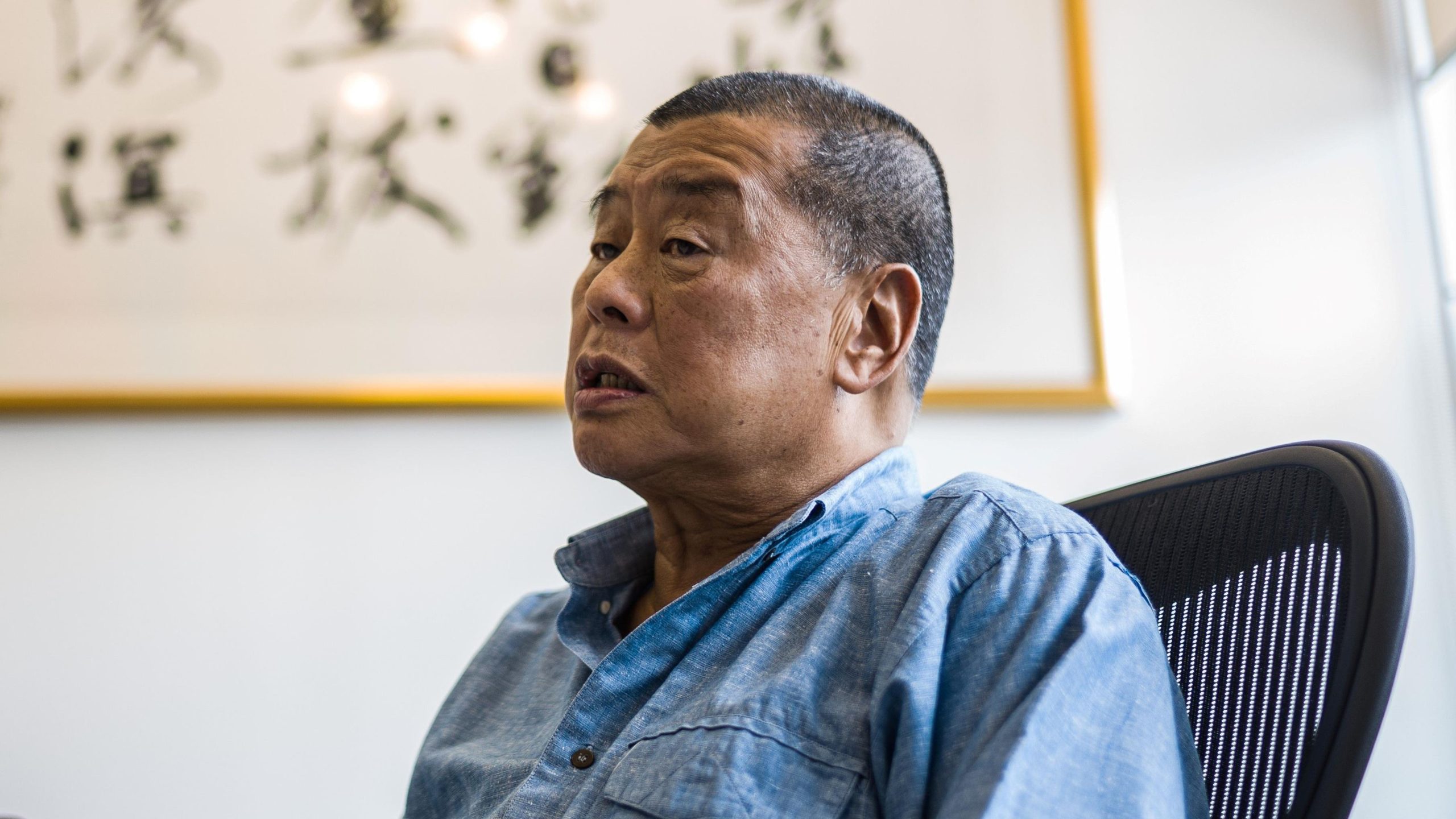
Jailed Hong Kong pro-democracy tycoon Jimmy Lai is not appealing his conviction under the city’s controversial national security law.
Members from his international legal team told the BBC that their domestic counterparts were given “clear and definitive” instructions from Lai not to appeal. They did not say why, and declined to comment further.
Lai was convicted for conspiracy with others to publish seditious material and conspiracy to collude with foreign forces – charges which he has always denied – and was sentenced to 20 years in jail last month.
The tycoon faced a separate conviction for fraud, which was overturned last month in an successful legal appeal.
Lai’s national security case had hinged on a meeting he had with the US’ then vice-president Mike Pence and then secretary of state Mike Pompeo at the height of the 2019 pro-democracy protests.
Lai has insisted that he has never used his foreign contacts to influence foreign policy on Hong Kong, and that the meeting was just to discuss the situation in Hong Kong at the time.
His 20-year sentence was the harshest punishment to be handed down under the national security law, which China imposed after the 2019 protests.
Lai, a British citizen, is the most prominent of the hundreds arrested under the law. A fierce critic of China, he often wielded his paper, Apple Daily, as a tool of protest.
Hong Kong’s chief executive John Lee has applauded the sentencing, saying Lai’s “evil deeds were beyond measure” and that his newspaper had influenced many young Hongkongers into taking part in the protests.
But rights groups and the United Nations’ human rights chief Volker Türk have condemned the conviction, with Türk saying the verdict should be “promptly quashed as incompatible with international law”.
Lai’s son Sebastien has said it was a “death sentence” for his 78-year-old father who has been in jail since 2020.
Jimmy Lai’s family members say his health has deteriorated to the point that his fingernails sometimes fall off and his teeth are rotten. Hong Kong authorities have strenuously denied all allegations of poor living conditions in jail and say that he is in good health.
Last month Lai’s fraud conviction and sentence of six years in jail for fraud, over the illegal subletting of office space, was quashed by Hong Kong’s court.
But Lai’s family and his international legal team have said the successful appeal did not change anything.
His daughter Claire called it “nothing more than a PR move by the Hong Kong authorities”, noting that her father is still in jail due to the conviction under the national security law.
“My father is still unjustly imprisoned and will remain so for nearly 20 years unless urgent action is taken to secure his release,” she told the BBC then.
Critics say the Beijing-imposed national security law has been used for repression and has created a climate of fear in the city.
Beijing and Hong Kong authorities argue the law is necessary to maintain stability and deny it has weakened the city’s autonomy.
By BBC News
Email your news TIPS to Editor@Kahawatungu.com — this is our only official communication channel
