


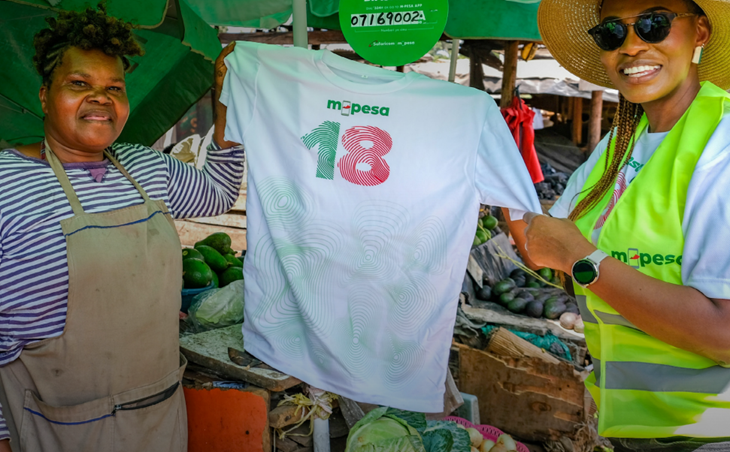
For years, conversations around Kenya’s digital economy have largely focused on big businesses, fintech innovation, and headline-grabbing mobile money milestones. But beneath the surface, a quieter transformation has been taking place in market stalls, kiosks, and small shops run by women across the country.
At the center of that shift is Safaricom’s Pochi La Biashara.
Originally launched in 2020 as a merchant wallet linked to M-PESA, Pochi La Biashara was designed to help small traders separate business money from personal funds while protecting them from payment reversals and fraud. What began as a simple financial tool is now emerging as a critical platform empowering women micro-entrepreneurs in Kenya.
According to a new GSMA report titled ‘Pochi la Biashara and Women Micro-Entrepreneurs in Kenya’, women now account for more than 52% of active Pochi users — one of the few M-PESA products where women form the majority of users. By December 2025, more than 900,000 women were actively using the platform.
The report paints a picture of women entrepreneurs increasingly turning to digital financial tools not just for convenience, but for survival, stability and growth.
Across Kenya, women-owned micro-enterprises form a major part of the economy, with women more likely than men to run their own businesses. Yet many continue to face challenges including limited access to financing, safety concerns, low digital confidence and difficulties separating household and business finances.
Pochi La Biashara appears to be addressing many of those pain points directly.
One of the most valued features among women users is the non-reversal function, which protects merchants from fraudulent payment reversals. Others cited the ability to separate personal and business funds, track transactions through mini-statements and access working capital through Taasi loans.
The impact is increasingly visible.
Women interviewed in the study reported higher savings, increased sales, improved financial discipline and greater reinvestment into their businesses after adopting Pochi. Some said the platform helped them avoid impulsive spending by creating clearer boundaries between business income and household expenses.
“It has changed sales because now many people are cashless so they will opt to buy here because they won’t have to withdraw. So, business sales have increased,” one woman entrepreneur from Murang’a County said in the report.
Another trader in Kajiado described the service as giving her greater financial control, saying: “Pochi makes me feel like the CEO of my business.”
Beyond the social impact, Safaricom is also seeing strong commercial returns from targeting women-owned businesses.
The number of Pochi accounts grew by 72.6% year-on-year to about 1.5 million accounts by Half-Year 2026, while revenue from the service rose by 95% to KES 1.68 billion.
The GSMA report notes that Safaricom’s strategy has gone beyond product development. The company has invested heavily in customer education, field agents, targeted messaging and peer-to-peer onboarding among women entrepreneurs to improve adoption and long-term usage.
Industry observers say the success of Pochi La Biashara reflects a larger shift in Kenya’s digital finance landscape — one where financial products tailored specifically for informal traders and women entrepreneurs are becoming increasingly important.
As Kenya’s mobile money ecosystem continues to evolve, the rise of Pochi La Biashara suggests that the future of digital finance may not just be about technology, but about solving everyday problems for ordinary business owners.

Email your news TIPS to Editor@Kahawatungu.com — this is our only official communication channel
