


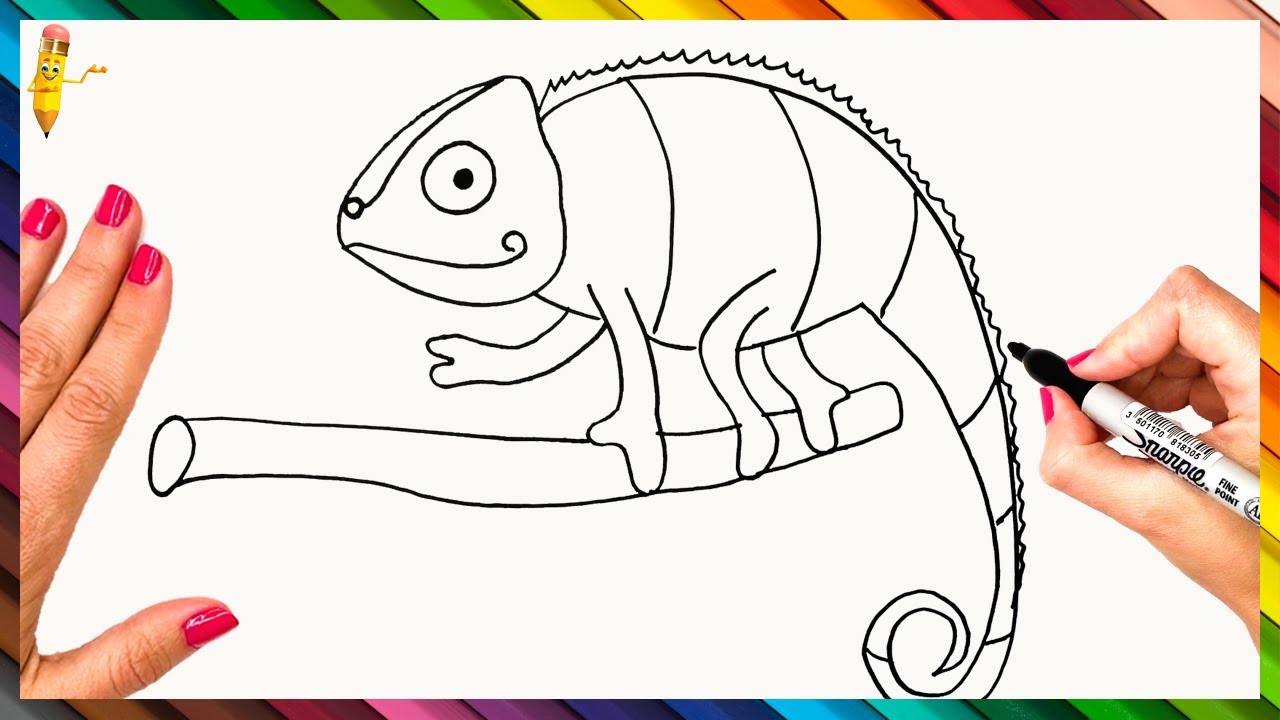
Drawing a chameleon is enjoyable because the creature has a unique shape, expressive features, and a curled tail that instantly stands out. Chameleons also have textured skin and large eyes that move independently, giving them an interesting appearance on paper. Although the animal looks complex at first glance, breaking the drawing into simple shapes makes the process smooth and manageable. With steady observation and a clear plan, you can create a chameleon that looks lively, well-proportioned, and full of personality.
- Observing the Chameleon’s Basic Shape
A chameleon’s body is curved, compact, and supported by a long tail that often curls in a spiral. Before drawing, imagine the body as a soft oval sitting on thin legs. Picture the tail as a long line that coils inward. Visualising these shapes helps you place the chameleon correctly on the page and ensures the proportions look natural before adding any detail.
- Sketching the Body and Tail Outline
Start with a light oval to represent the main body. Extend a long curved line from the back of the body to form the tail. Allow the tail to curl into a spiral because this is one of the chameleon’s most recognisable features. Keep your strokes gentle so you can adjust the curve until it flows smoothly.
- Adding the Head and Facial Features
Chameleons have a distinctive head shape with a slightly angular top and a short snout. Draw a small rounded rectangle or wedge shape at the front of the body. Inside this shape, place a large round eye that sits outward from the head. Draw a small curve for the mouth, keeping it simple. The eye is the focal point, so make it large enough to give the chameleon personality.
- Drawing the Legs and Feet
The legs are thin but strong, and the feet grip branches tightly. Sketch four narrow legs that angle downward from the body. At the ends, draw feet that look like small claws or mitten-like shapes because chameleons have split toes for gripping. Make sure the legs appear slightly bent, as if the chameleon is holding onto a branch or balancing on a surface.
- Adding Texture and Body Details
Chameleons have rough, patterned skin that can be suggested with small, gentle lines. Add a line running along the back to show the ridge often seen on many species. Lightly place tiny dots or scales across the body to create texture without overwhelming the drawing. You can also add a small crest on top of the head depending on the type of chameleon you want to depict.
- Drawing the Branch or Surface
Chameleons are commonly seen perched on branches. Draw a simple horizontal branch under the feet so the creature has something to hold onto. Add a few bark lines or gentle texture to make the branch look natural. This detail grounds the drawing and helps the chameleon look comfortable and balanced.
- Refining the Drawing and Adding Shading
Once the shapes and details are in place, refine your lines to make the chameleon look clean and expressive. Add shading under the belly, behind the legs, and along the curl of the tail to create depth. Light shading near the eye and around the mouth brings the face to life. Keep the shading soft so the drawing maintains a natural flow.
Also Read: How To Delete Incognito History
Email your news TIPS to Editor@Kahawatungu.com — this is our only official communication channel
