


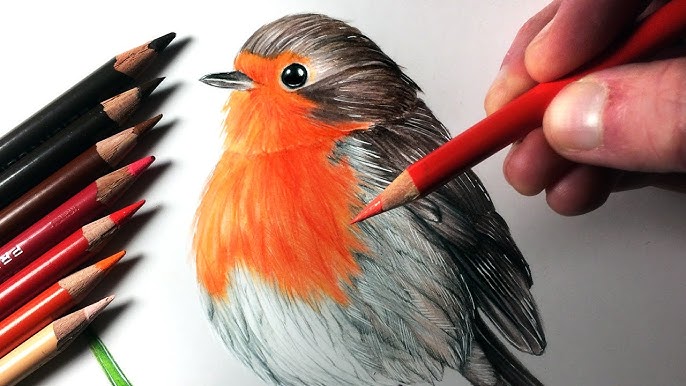
Drawing a robin is a lovely way to practice sketching birds because robins have a simple, rounded body and clear features that are easy to recognize. Their gentle posture, short beak and smooth feathers make them ideal for beginners, school projects and nature drawings. You do not need to draw every feather perfectly; focusing on shape, balance and a few key details is enough to create a charming robin. This guide explains how to draw a robin in an easy and enjoyable way by breaking the bird into simple shapes and building the details gradually.
- Start with the Basic Body Shape
Begin by sketching the main shape of the robin’s body.
- Draw a medium-sized oval for the body.
- Keep the oval slightly wider at the bottom.
- Tilt it gently to give the bird a natural pose.
- Use light pencil strokes so changes are easy.
This oval forms the foundation of your robin drawing.
- Add the Head
The robin’s head is small and rounded.
- Draw a small circle at the top front of the body oval.
- Connect the head to the body with short curved lines.
- Keep the head proportional and not too large.
- Make sure it sits naturally on the body.
A well-placed head helps your robin look balanced and lifelike.
- Draw the Beak and Eye
Simple facial features give the bird character.
- Draw a short, pointed triangle for the beak.
- Angle the beak slightly downward.
- Add a small round eye near the center of the head.
- Leave a tiny white space in the eye to suggest shine.
These small details make the robin look alert and friendly.
- Sketch the Wing
The wing is one of the most visible features.
- Draw a curved teardrop shape on the side of the body.
- Let the wing follow the curve of the body oval.
- Add a few gentle lines inside the wing to suggest feathers.
- Keep the feather lines light and simple.
The wing adds structure and helps define the bird’s posture.
- Add the Tail
The tail helps show movement and balance.
- Draw a short, straight or slightly angled shape at the back.
- Keep the tail narrow and simple.
- Add two or three light lines to show feather direction.
- Make sure it aligns with the body angle.
A neat tail completes the bird’s silhouette.
- Draw the Legs and Feet
Robin legs are thin and delicate.
- Draw two thin lines extending down from the body.
- Add small bends at the joints.
- Sketch tiny toes spreading forward and backward.
- Keep the feet simple and lightly drawn.
These details help ground the robin and give it a natural stance.
- Add the Chest and Feather Details
The robin’s chest is one of its most recognizable features.
- Draw a soft curved line to outline the chest area.
- Add light shading or short strokes inside the chest.
- Keep feather lines short and curved.
- Avoid heavy detail to maintain a clean look.
These touches give the robin a soft, fluffy appearance.
- Finalize with Clean Lines and Shading
The final step brings the drawing together.
- Darken your final outlines carefully.
- Erase extra sketch lines.
- Add light shading under the wing and belly.
- Shade one side of the body to show light direction.
- Keep shading gentle so the bird looks soft and natural.
These finishing touches give your robin drawing a polished and complete look.
Also Read: How To Draw A Palm Tree
Email your news TIPS to Editor@Kahawatungu.com — this is our only official communication channel
