


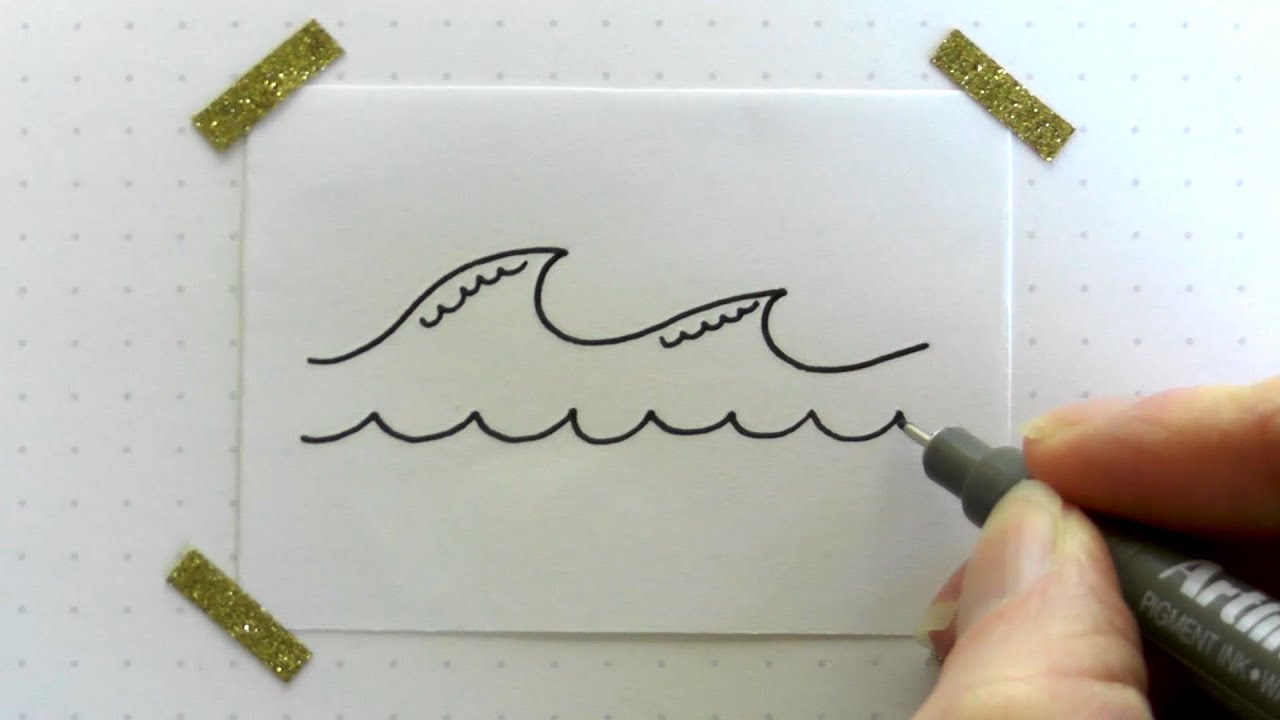
Drawing waves is a great way to add movement, energy, and realism to ocean and beach drawings. Waves can look calm and gentle or powerful and dramatic, depending on how you draw them. Many beginners think waves are difficult because of their flowing shapes and textures, but they become much easier when you understand their basic structure and movement. By breaking waves into simple curves and layers, you can draw convincing waves for seascapes, backgrounds, or school art projects. This guide explains how to draw waves in an easy and clear way for beginners and improving artists.
- Understand the Shape of Waves
Before drawing, it helps to understand how waves move.
- Waves are made of smooth, flowing curves
- The top of a wave curls forward
- The base of the wave is wider and heavier
- Waves move in a repeated rhythm
Understanding the structure makes waves easier to draw.
- Draw a Horizon Line
Start by setting the ocean level.
- Draw a straight horizontal line across the page
- Keep it light and even
- Place it higher or lower depending on the scene
- Use a ruler if needed
The horizon line helps with depth and balance.
- Sketch the Basic Wave Curves
Now draw the main wave shapes.
- Draw long, curved lines across the water
- Vary the height and spacing of the curves
- Avoid making all waves identical
- Keep the lines loose and flowing
Irregular curves make waves look natural.
- Draw a Breaking Wave
For a more dynamic look, add a breaking wave.
- Draw a tall curved shape rising upward
- Curl the top forward like a hook
- Make the front edge thinner
- Keep the back thicker and rounder
Breaking waves add energy to your drawing.
- Add Foam and Splash Details
Foam makes waves look alive.
- Draw small curved lines along the wave edge
- Add irregular shapes for sea foam
- Keep foam lighter and broken
- Avoid straight or sharp lines
Foam adds texture and realism.
- Show Water Flow and Movement
Movement is key when drawing waves.
- Add flowing lines inside the wave
- Curve the lines to follow the wave shape
- Use longer lines for calm water
- Use shorter lines for rough water
Flow lines guide the viewer’s eye.
- Add Shading for Depth
Shading helps define the wave shape.
- Shade the underside of the wave
- Keep the top lighter where light hits
- Blend shading smoothly
- Use darker tones near the base
Shading makes waves look three-dimensional.
- Draw Multiple Wave Layers
Oceans are made of many waves.
- Draw smaller waves behind the main one
- Make distant waves shorter and lighter
- Overlap waves slightly
- Keep spacing natural
Layering creates depth in ocean scenes.
- Add Background Elements (Optional)
Enhance the scene with simple details.
- Draw clouds in the sky
- Add a sun or moon reflection
- Include rocks or a shoreline
- Keep background simple
Background elements add context without distraction.
- Clean Up the Drawing
Refine your wave drawing.
- Darken final outlines carefully
- Erase sketch lines
- Smooth uneven curves
- Check overall balance
Clean lines improve the final look.
- Color the Waves (Optional)
Color adds life to the ocean.
- Use blues and greens for water
- Add white for foam
- Blend darker tones at the base
- Keep highlights bright
Color enhances depth and movement.
- Practice Different Wave Styles
Try drawing different types of waves.
- Calm ocean ripples
- Strong crashing waves
- Rolling beach waves
- Stormy sea waves
Practicing variety improves your skill.
- Final Tips for Drawing Waves
Keep these tips in mind as you improve.
- Use smooth, curved lines
- Avoid stiff or straight shapes
- Observe real ocean photos
- Practice regularly
Also Read: How To Draw Shadow
Email your news TIPS to Editor@Kahawatungu.com — this is our only official communication channel
